
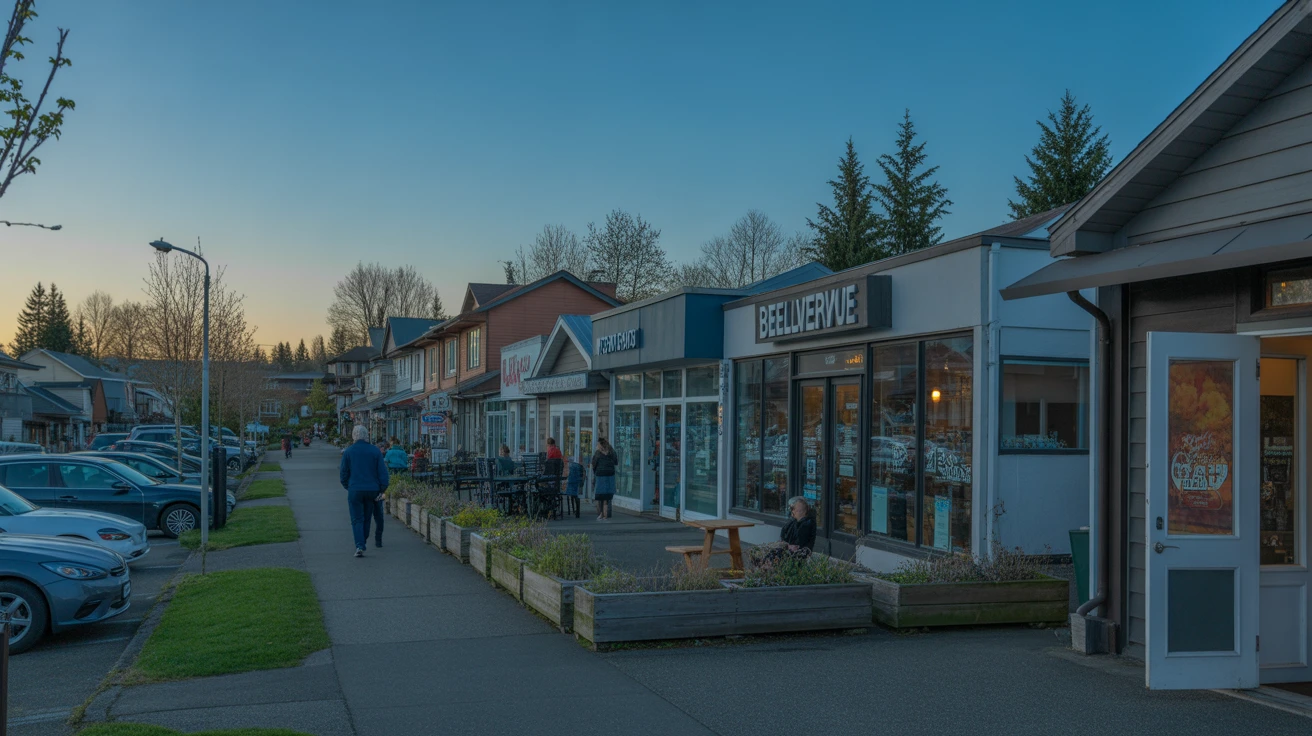
Median rent in Bellevue sits at $2,422 per month, while Renton’s median is $1,864—a gap that shapes every other cost decision between these two Seattle-area cities in 2026. Both sit in the same metro, share the same utility providers and gas stations, and pull from the same regional job market. Yet the way cost pressure shows up—and which households feel it most—depends less on line-item prices and more on how housing, commute patterns, and daily logistics interact with income and lifestyle priorities.
Bellevue offers walkable pockets, rail transit access, and a vertical, mixed-use urban form that reduces car dependence and concentrates errands within shorter distances. Renton, by contrast, shows longer average commutes, lower work-from-home rates, and a cost structure that trades lower housing entry barriers for higher transportation time and fuel exposure. The decision isn’t about which city costs less overall—it’s about which cost structure aligns with your household’s non-negotiables.
This comparison explains where cost pressure concentrates in each city, how the same income feels different depending on what you prioritize, and which households gain the most control by choosing one over the other.
Housing Costs
Bellevue’s median home value of $1,139,500 creates a steep entry barrier for buyers, while Renton’s $576,800 median opens ownership to households with lower down payment capacity or tighter debt-to-income ratios. For renters, the gap narrows but remains significant: Bellevue’s $2,422 per month median gross rent reflects proximity to tech employment centers and walkable mixed-use neighborhoods, while Renton’s $1,864 reflects a more car-oriented layout with longer commutes baked into the tradeoff.
The difference isn’t just magnitude—it’s predictability and flexibility. Bellevue’s higher rent often includes access to transit, shorter distances to groceries and services, and reduced need for a second vehicle. Renton’s lower rent leaves more monthly cash available, but households often absorb that savings through transportation costs, longer commutes, and the time friction of running errands across a more dispersed layout. For families prioritizing space—extra bedrooms, yards, or single-family layouts—Renton’s housing stock offers more options at accessible price points. For singles or couples prioritizing walkability and schedule flexibility, Bellevue’s higher rent buys infrastructure that reduces daily logistics burden.
First-time buyers face different thresholds in each city. Bellevue’s entry cost requires either substantial savings, dual high incomes, or acceptance of condo or townhome formats in vertical developments. Renton’s lower home values make ownership feasible for households earning closer to the regional median, though buyers should account for the likelihood of needing reliable transportation and the time cost of commuting to Seattle-area job centers.
| Housing Type | Bellevue | Renton |
|---|---|---|
| Median Home Value | $1,139,500 | $576,800 |
| Median Gross Rent | $2,422/month | $1,864/month |
Housing takeaway: Bellevue’s housing costs are front-loaded and high, but they buy proximity, walkability, and reduced transportation dependence. Renton’s lower entry costs appeal to households prioritizing space and ownership access, but the savings often shift into transportation time and fuel exposure. Renters sensitive to monthly cash flow may prefer Renton; households valuing shorter commutes and walkable errands may find Bellevue’s premium worth the tradeoff.
Utilities and Energy Costs
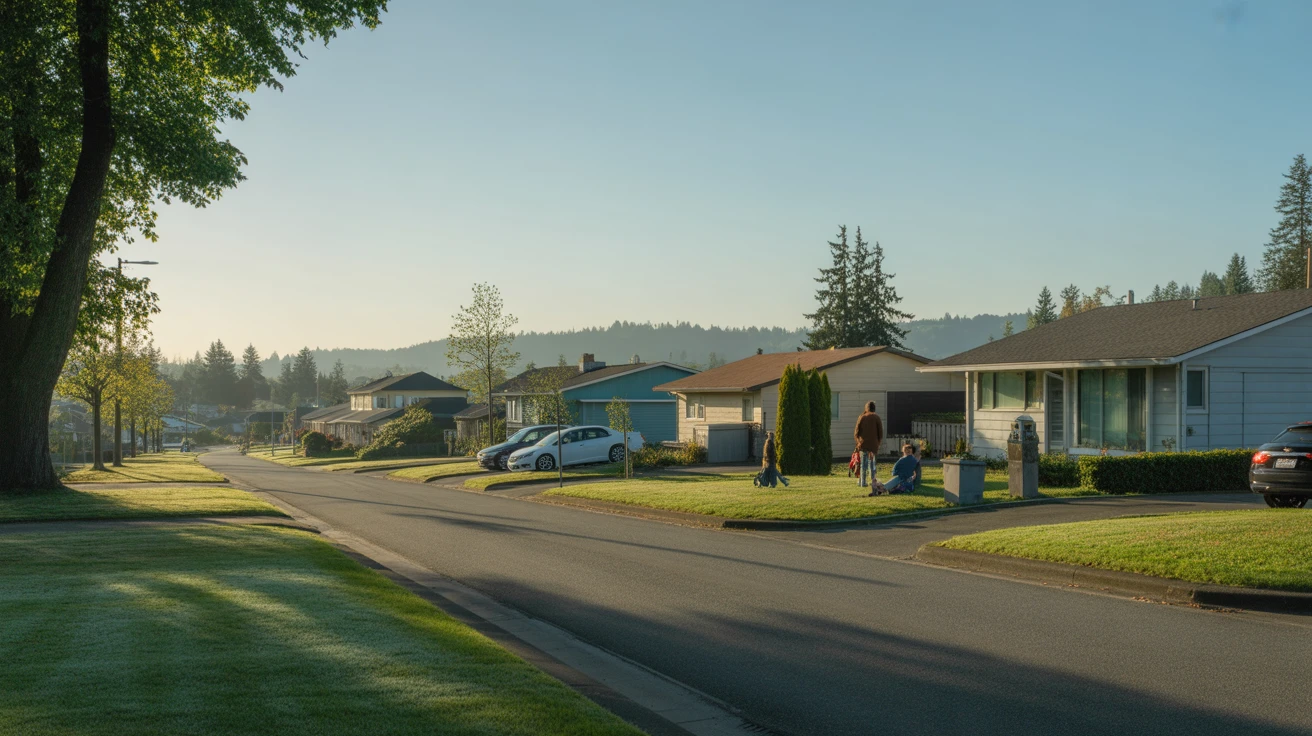
Both cities share identical utility rate structures: 14.06¢ per kWh for electricity and $24.71 per MCF for natural gas. The difference in exposure comes from housing form, building age, and climate interaction with daily routines. Bellevue’s more vertical, mixed-use developments—particularly newer mid-rise and high-rise buildings—tend to insulate households from extreme seasonal swings. Shared walls, modern construction standards, and smaller square footage reduce heating and cooling loads, making utility bills more predictable month to month.
Renton’s housing stock skews toward single-family homes and older apartment complexes, where larger floor plans, detached structures, and aging insulation increase baseline energy usage. Households heating or cooling standalone homes face higher winter gas bills and summer electricity spikes, particularly in older construction. The Pacific Northwest’s mild but damp climate means heating dominates utility exposure from October through April, and homes without efficient furnaces or weatherization upgrades see that pressure compound over time.
For small households in Bellevue apartments, utility costs remain stable and low relative to rent. For families in Renton single-family homes, utilities represent a larger share of monthly obligations and introduce more volatility depending on seasonal weather and home condition. Renters in both cities should clarify whether utilities are included in lease terms; in Bellevue’s newer developments, some landlords bundle water, sewer, and trash into rent, reducing variability. In Renton, tenants more commonly pay utilities separately, adding another layer of monthly budget management.
Utility takeaway: Bellevue households in newer, smaller, or shared-wall housing experience lower and more predictable utility costs. Renton households in single-family or older housing face higher baseline usage and more seasonal swings. The rate is the same; the exposure depends on what you’re heating, cooling, and how much square footage you’re maintaining.
Groceries and Daily Expenses
Both Bellevue and Renton sit in the same regional price environment, with identical Regional Price Parity indices of 113, meaning grocery and everyday goods cost roughly 13% more than the national baseline. The difference isn’t price—it’s access, convenience, and how daily errands fit into household routines. Bellevue’s high grocery and food establishment density, combined with walkable pockets and mixed-use corridors, allows households to shop frequently, compare prices across nearby stores, and reduce reliance on bulk buying or long drives to discount chains.
Renton’s grocery landscape is more car-dependent and spread across commercial corridors, meaning households often consolidate trips to big-box retailers or regional chains rather than making quick stops on foot or by transit. This layout favors households with storage space, vehicles, and time to plan larger shopping runs, but it increases friction for singles, couples, or anyone without a car. Convenience spending—grabbing coffee, picking up a forgotten ingredient, or stopping for takeout—becomes more intentional in Renton and less spontaneous, which can reduce creep but also limit flexibility.
For families managing larger grocery volumes, Renton’s access to warehouse clubs and big-box stores offers better per-unit pricing and the space to store bulk purchases. For smaller households or those prioritizing walkability, Bellevue’s density of neighborhood markets, cafes, and prepared food options reduces the need for a car and allows more granular, responsive shopping habits. Dining out costs are similar in both cities, but Bellevue’s concentration of restaurants and cafes within walking distance of residential areas makes frequent dining more frictionless, which can increase spending if not monitored.
Grocery takeaway: Bellevue’s density and walkability reduce the logistics burden of daily errands but can increase convenience spending if households don’t track frequency. Renton’s car-oriented layout rewards planning and bulk buying but adds time and fuel costs to every grocery run. Families with storage and vehicles may prefer Renton’s access; singles and couples prioritizing spontaneity and walkability may find Bellevue’s structure easier to navigate.
Taxes and Fees
Washington State has no income tax, so both Bellevue and Renton households avoid that burden entirely. The primary tax exposure comes from property taxes for homeowners and sales taxes for everyone. Both cities sit in King County, meaning the baseline sales tax structure is shared, though minor city-level variations may apply depending on specific purchases or services. For renters, tax exposure is limited to consumption; for owners, property taxes represent a significant ongoing obligation that scales with home value.
Bellevue homeowners face higher absolute property tax bills due to elevated assessed values, even if the millage rate is comparable to Renton. A home valued at over $1 million generates substantially more annual tax liability than one valued at under $600,000, and that gap persists every year regardless of income or usage. Renton homeowners benefit from lower assessed values, which translates to lower annual tax bills and more predictable long-term obligations. For households planning to stay in place for a decade or more, this difference compounds significantly.
Fees for utilities, trash, water, and sewer are structured similarly in both cities, though Bellevue’s newer developments sometimes bundle services into HOA dues or monthly rent, reducing the number of separate bills households manage. Renton households more commonly pay these fees directly, adding administrative overhead but also transparency. HOA fees are more prevalent in Bellevue’s condo and townhome developments, where they can range from modest to substantial depending on amenities and building age. Renton’s single-family-dominated housing stock involves fewer HOA obligations but may require more out-of-pocket spending on landscaping, maintenance, and repairs.
Tax and fee takeaway: Bellevue homeowners face higher property tax exposure due to elevated home values, even with similar rates. Renton homeowners benefit from lower assessed values and lower annual obligations. Renters in both cities experience similar sales tax exposure, but Bellevue’s bundled fee structures in newer buildings can simplify monthly budgeting. Long-term owners should weigh the cumulative property tax difference as a significant ongoing cost.
Transportation & Commute Reality
Renton’s average commute time of 30 minutes reflects its role as a bedroom community for Seattle-area employment centers, with over half of workers—52.4%—facing commutes longer than 30 minutes. Only 10.9% work from home, meaning the vast majority of Renton households absorb daily transportation time and fuel costs as a baseline obligation. Gas prices in Renton sit at $3.80 per gallon, slightly lower than Bellevue’s $3.85, but the difference is negligible when commute distance and frequency dominate the equation.
Bellevue’s infrastructure tells a different story. Rail transit is present, bike infrastructure is extensive, and pedestrian-to-road ratios exceed high thresholds, meaning households can reduce or eliminate car dependence depending on where they live and work. For residents working in Bellevue’s downtown core or along transit corridors, commutes shrink to walking, biking, or short rail trips. For those commuting to Seattle or Redmond, Bellevue’s transit access provides viable alternatives to solo driving, reducing both fuel costs and the time friction of traffic congestion.
The transportation tradeoff is structural: Renton’s lower housing costs assume car ownership and longer commutes, while Bellevue’s higher housing costs buy proximity and the option to reduce or eliminate vehicle dependence. For dual-income households where both partners work in different directions, Renton’s central location within the metro may reduce total commute time compared to Bellevue. For households where one or both partners work in Bellevue or can walk to transit, the time and fuel savings compound quickly.
Commute takeaway: Renton households should budget for longer commutes, higher fuel usage, and the time cost of car dependence. Bellevue households gain access to transit, walkability, and shorter commutes, which reduces transportation costs and frees up schedule flexibility. The choice depends on where you work, how much you value time, and whether you’re willing to pay more in rent to reduce daily logistics friction.
Where Cost Pressure Shows Up Differently
Housing dominates the cost experience in Bellevue, where high rent and home values create a steep entry threshold but buy proximity, walkability, and reduced need for transportation infrastructure. Households paying Bellevue’s premium gain shorter commutes, denser access to groceries and services, and the option to live without a car or with one vehicle instead of two. The cost pressure is front-loaded and ongoing, but it consolidates expenses into fewer categories and reduces the time burden of daily logistics.
Renton’s cost structure distributes pressure differently. Lower housing costs free up monthly cash flow, but that flexibility often shifts into transportation—longer commutes, higher fuel usage, and the need for reliable vehicles. For families prioritizing space, yards, and single-family layouts, Renton delivers more housing per dollar, but the tradeoff is time and distance. Households sensitive to commute length or car dependence may find that Renton’s savings evaporate once transportation time and fuel costs are accounted for.
Utilities introduce more volatility in Renton, where single-family homes and older housing stock increase seasonal exposure to heating and cooling costs. Bellevue’s newer, more vertical housing stock insulates households from extreme swings, making utility bills more predictable and easier to budget. Groceries and daily expenses behave similarly in both cities from a price perspective, but Bellevue’s walkable density reduces the friction of running errands, while Renton’s car-oriented layout requires more planning and consolidation.
For households where both partners work locally or remotely, Bellevue’s higher rent buys infrastructure that reduces daily friction and opens up time for other priorities. For households where one or both partners commute long distances regardless of where they live, Renton’s lower housing costs provide more financial flexibility without sacrificing much in transportation exposure. The decision isn’t about which city costs less—it’s about which cost structure aligns with your household’s priorities and where you’re willing to absorb pressure.
How the Same Income Feels in Bellevue vs Renton
Single Adult
In Bellevue, rent becomes the non-negotiable anchor, consuming a larger share of gross monthly income but eliminating the need for a car payment, insurance, and daily fuel costs if work and errands align with transit or walkable corridors. Flexibility exists in dining, entertainment, and convenience spending, but housing leaves less room for aggressive savings or discretionary purchases. In Renton, rent takes a smaller bite, freeing up cash for transportation, savings, or lifestyle spending, but the tradeoff is time—longer commutes, more driving, and the logistical overhead of maintaining a vehicle and planning errands around a car-dependent layout.
Dual-Income Couple
In Bellevue, combined income can absorb higher rent more comfortably, and the ability to share transportation costs—or eliminate one vehicle entirely—creates meaningful savings over time. The cost pressure remains concentrated in housing, but the couple gains schedule flexibility and reduced commute friction, which matters more as both partners juggle work and personal obligations. In Renton, lower rent allows for faster savings accumulation, larger living space, or more discretionary spending, but both partners likely need vehicles, and coordinating schedules around longer commutes introduces time costs that don’t show up on a spreadsheet but affect daily quality of life.
Family with Kids
In Bellevue, housing costs escalate sharply as families seek more bedrooms or single-family layouts, and the premium for space in walkable, transit-accessible neighborhoods can stretch even high dual incomes. Flexibility disappears quickly as childcare, groceries, and school-related expenses layer onto high rent or mortgage payments. In Renton, families gain more space per dollar, access to yards, and proximity to schools and playgrounds, but the car dependence intensifies—multiple vehicles become necessary, and the time cost of driving kids to activities, running errands, and commuting to work compounds. The financial pressure is lower, but the logistical complexity is higher, and the time budget tightens even as the cash budget loosens.
Decision Matrix: Which City Fits Which Household?
| Decision Factor | If You’re Sensitive to This… | Bellevue Tends to Fit When… | Renton Tends to Fit When… |
|---|---|---|---|
| Housing entry + space needs | Down payment capacity, monthly rent ceiling, or desire for single-family layout | You prioritize location over square footage and can absorb high rent for walkability | You need more space per dollar and can trade proximity for lower entry costs |
| Transportation dependence + commute friction | Daily commute time, fuel costs, or ability to live without a car | You work locally or value transit access enough to pay more in rent | You’re willing to drive longer distances to preserve housing affordability |
| Utility variability + home size exposure | Seasonal bill swings, heating and cooling costs, or budget predictability | You prefer smaller, newer, or shared-wall housing with stable utility costs | You’re managing a larger home and can absorb seasonal volatility |
| Grocery strategy + convenience spending creep | Frequency of shopping trips, walkable access, or ability to plan bulk purchases | You value spontaneous errands and walkable access to food and services | You prefer planning larger trips and have storage space for bulk buying |
| Fees + friction costs (HOA, services, upkeep) | Ongoing obligations beyond rent or mortgage, or administrative complexity | You prefer bundled services and fewer separate bills even at higher cost | You want transparency and control over individual service payments |
| Time budget (schedule flexibility, errands, logistics) | Daily time spent commuting, running errands, or managing household logistics | You’re willing to pay more to reduce daily friction and reclaim schedule flexibility | You have time flexibility and prioritize financial savings over proximity |
Lifestyle Fit
Bellevue’s urban form reflects its role as a regional employment and retail hub, with a downtown core of high-rise office and residential towers, mixed-use corridors, and extensive park access. The city’s pedestrian infrastructure supports walking and biking as viable daily transportation modes, and rail transit connects residents to Seattle and the broader metro without requiring a car. For households prioritizing walkability, access to restaurants and cafes, and proximity to cultural amenities, Bellevue delivers a lifestyle that reduces logistical overhead and maximizes schedule flexibility. Park density exceeds high thresholds, and water features add recreational variety, making outdoor access integrated into daily life rather than a weekend destination.
Renton’s character is more residential and car-oriented, with commercial activity concentrated along major corridors and employment centers rather than distributed throughout neighborhoods. The city serves as a practical base for households working across the Seattle metro, offering more affordable housing and family-friendly infrastructure—schools and playgrounds meet density thresholds—but requiring reliable transportation to access most services and activities. For families seeking space, yards, and a quieter residential environment, Renton provides a suburban foundation without the isolation of more distant exurbs. The tradeoff is time: errands, commutes, and activities require more driving and planning than in Bellevue’s denser layout.
Both cities benefit from the Pacific Northwest’s mild, temperate climate, though Bellevue’s more vertical housing stock and newer construction standards reduce exposure to seasonal heating and cooling costs. Renton’s older, more spread-out housing requires more active management of energy usage, particularly during damp winter months when heating dominates utility bills. For households valuing outdoor recreation, Bellevue’s integrated green space and proximity to Lake Washington offer immediate access; Renton provides similar access but often requires a short drive to reach parks, trails, or waterfront areas.
Bellevue’s median household income of $149,551 per year reflects its concentration of high-wage tech and professional employment. Renton’s median of $92,292 per year reflects a broader mix of industries and household types. Both cities share a regional unemployment rate of 4.1%, indicating stable labor market conditions across the metro. The income gap doesn’t determine affordability in isolation—it signals which households each city’s cost structure is designed to serve.
Frequently Asked Questions
Is Bellevue or Renton more affordable for renters in 2026?
Renton’s median gross rent of $1,864 per month is lower than Bellevue’s $2,422, making it more accessible for renters with tighter monthly budgets or those prioritizing space over location. However, Bellevue’s higher rent often includes proximity to transit, walkable errands, and reduced need for a vehicle, which can offset the difference depending on your transportation needs and work location. The better choice depends on whether you value lower monthly rent or reduced transportation and time costs.
How do commute patterns differ between Bellevue and Renton in 2026?
Renton’s average commute time is 30 minutes, with over half of workers facing commutes longer than 30 minutes and only 10.9% working from home. Bellevue offers rail transit, extensive bike infrastructure, and walkable pockets, allowing many residents to shorten or eliminate car commutes depending on where they work. Households prioritizing shorter commutes or transit access may find Bellevue’s infrastructure worth the higher housing costs; those willing to drive longer distances to preserve affordability may prefer Renton.
Which city is better for families comparing Bellevue vs Renton in 2026?
Renton offers more affordable single-family housing, larger lots, and strong family infrastructure—schools and playgrounds meet density thresholds—making it appealing for families prioritizing space and lower entry costs. Bellevue provides walkable neighborhoods, integrated parks, and proximity to services, which reduces the logistical burden of managing kids’ schedules and errands. The decision depends on whether your family values space and affordability or proximity and reduced car dependence.
Do Bellevue and Renton have different utility costs in 2026?
Both cities share identical utility rates—14.06¢ per kWh for electricity and $24.71 per MCF for natural gas—but exposure differs based on housing type and age. Bellevue’s newer, more vertical housing stock tends to insulate households from seasonal swings, while Renton’s older single-family homes face higher baseline usage and more volatility. Households in smaller, shared-wall units experience lower and more predictable utility bills; those in larger, detached homes should budget for higher seasonal exposure.
What are the main cost tradeoffs when choosing between Bellevue and Renton in 2026?
Bellevue’s cost structure is front-loaded in housing but reduces transportation, time, and logistics friction through walkability, transit access, and dense service availability. Renton’s lower housing costs free up monthly cash flow but shift pressure into transportation—longer commutes, higher fuel usage, and car dependence. The tradeoff isn’t about which city costs less overall; it’s about which cost structure aligns with your household’s priorities, work location, and tolerance for time versus money tradeoffs.
Conclusion
Bellevue and Renton sit in the same metro, share the same utility providers, and pull from the same regional job market, yet the way cost pressure shows up in each city creates fundamentally different household experiences in 2026. Bellevue’s higher housing costs buy proximity, walkability, and transit access, reducing transportation dependence and daily logistics friction. Renton’s lower entry barriers provide more space and financial flexibility, but households absorb that savings through longer commutes, car dependence, and the time cost of navigating a more dispersed layout.
The decision depends on where cost pressure matters most to your household. If you prioritize shorter commutes, walkable errands, and reduced car dependence, Bellevue’s infrastructure justifies the premium. If you need more space, lower entry costs, and can manage longer commutes, Renton offers a practical foundation without the isolation of distant suburbs. Neither city is universally cheaper—each serves different priorities, and the right choice depends on where your household is willing to absorb pressure and what tradeoffs align with your long-term plans.
How this article was built: In addition to public economic data, this article incorporates location-based experiential signals derived from anonymized geographic patterns—such as access density, walkability, and land-use mix—to reflect how day-to-day living actually feels in Bellevue, WA.
For households planning a move between these cities, comparing moving company costs and options early in the process can help you budget for the transition and avoid last-minute logistics friction.