
In informal surveys and community discussions, roughly 74 out of 100 residents say they’re happy in Bellevue—a figure that reflects both the city’s polished infrastructure and the tension that comes with living in one of the region’s most expensive suburbs. Bellevue sits at the intersection of convenience and cost, offering strong schools, integrated parks, walkable pockets, and rail transit access while demanding a financial threshold that shapes who feels at home here and who feels stretched.
The city’s emotional tone isn’t defined by a single sentiment. Instead, it’s shaped by tradeoffs: families appreciate the safety and amenities but wrestle with housing pressure; tech professionals value the proximity to employers and modern feel but sometimes miss the grit and spontaneity of Seattle; retirees enjoy the healthcare access and green space but notice the pace and polish can feel a bit sterile. Understanding whether Bellevue fits you means understanding which side of these tradeoffs feels more rewarding than limiting.
What Shapes the Emotional Landscape
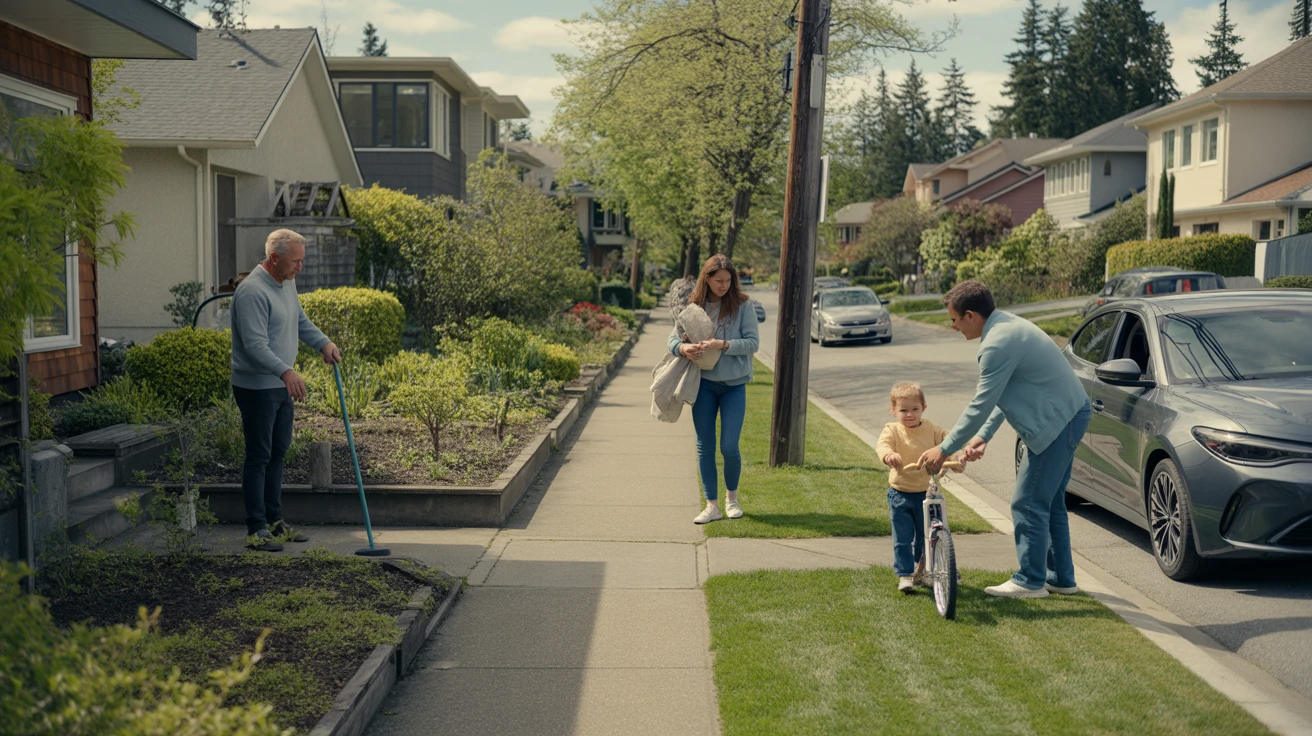
Bellevue’s vibe is built on infrastructure that works. Grocery stores, parks, clinics, and schools are broadly accessible—not just present, but woven into neighborhoods in a way that reduces daily friction. The pedestrian-to-road ratio is high in certain pockets, meaning you can walk to errands, coffee, or dinner without feeling like you’re navigating a car-only grid. Rail transit connects Bellevue to Seattle and the Eastside, making it possible to live here without a car if your routine aligns with the system. Parks aren’t just scattered—they’re integrated, with water features and green space that show up in everyday life, not just weekend plans.
This level of access creates a lived experience where day-to-day costs aren’t just about prices—they’re about time saved, logistics simplified, and the mental load reduced. Families can send kids to nearby schools and playgrounds without complex carpools. Professionals can grab groceries on foot after work. Retirees can reach a hospital, pharmacy, and park within a short trip. The city’s design rewards people who value efficiency and convenience over spontaneity and surprise.
But that convenience comes with a price tag—and not just in dollars. The high median income and housing pressure create a baseline expectation of polish. Homes are well-kept, streets are clean, and amenities are modern. For some, this feels like quality of life. For others, it feels like a lack of texture, a place where everything works but nothing feels raw or unexpected. The city’s more vertical building profile and mixed land use signal urban density, but the overall character leans suburban: organized, predictable, and a bit reserved.
Social Media Buzz in Bellevue
Online discussions about Bellevue tend to cluster around a few recurring themes: affordability anxiety, comparisons to Seattle, debates about growth and change, and pride in the city’s infrastructure. On platforms like Reddit and local Facebook groups, the tone is often pragmatic—people acknowledge what works while venting about what doesn’t.
Cost is a constant undercurrent. “We love the schools and parks, but every rent renewal feels like a test of whether we can still afford to stay,” one composite sentiment reflects. Another common thread: “Bellevue has everything you need, but it’s expensive to access the things that make life feel full, not just functional.” These aren’t complaints about the city failing—they’re frustrations about the financial threshold required to participate.
Comparisons to Seattle come up frequently, often framed as tradeoffs rather than rankings. “Seattle has more edge and variety, but Bellevue has better schools and less chaos,” captures a typical sentiment. Another: “I moved here for the convenience and safety, but I miss feeling like I’m in a city that surprises me.” The discussion isn’t about which place is better—it’s about which set of tradeoffs feels more aligned with your priorities.
Growth and development spark mixed reactions. Some residents celebrate new restaurants, transit connections, and mixed-use projects as signs of progress. Others worry about losing the quieter, more suburban character that drew them here in the first place. The tension isn’t hostile—it’s more like a community negotiating its identity in real time.
Local News Tone
Local coverage of Bellevue tends to frame the city through themes of growth, infrastructure investment, and community debate about what kind of place it wants to become. Headlines and story angles often reflect these ongoing conversations:
- “Community Debates What Growth Should Look Like”
- “New Amenities Arrive as Eastside Identity Evolves”
- “Residents Weigh Convenience Against Affordability”
- “Transit Expansion Reshapes Daily Routines”
- “Parks and Green Space Remain Central to City Appeal”
The tone is generally constructive, focusing on planning, investment, and quality of life rather than crisis or conflict. Coverage reflects a city that’s changing but not chaotic, prosperous but not without tension. The framing tends to assume readers care about schools, safety, and amenities—and that they’re willing to engage with the costs and tradeoffs those priorities require.
Review-Based Public Perception
On platforms like Google Reviews, Yelp, and Nextdoor-style forums, Bellevue earns praise for what it delivers reliably: clean parks, good schools, accessible healthcare, and a range of grocery and dining options. Families and professionals who wanted a polished, functional suburban environment tend to feel their expectations were met or exceeded.
Common positive themes include: “Everything you need is close by, and it all works.” “The parks are beautiful and well-maintained—we use them constantly.” “Great place to raise kids if you can afford it.” The qualifier in that last sentiment shows up often: satisfaction is high among those who cleared the financial bar, but the bar itself is a recurring point of tension.
Criticism tends to focus on cost, lack of spontaneity, and a sense that the city feels more corporate than communal. “It’s convenient but kind of soulless,” one composite review reflects. Another: “Great infrastructure, but it doesn’t feel like a place where you run into neighbors and chat—it’s more transactional.” People who wanted walkable urban texture or nightlife variety sometimes feel disappointed, not because Bellevue fails at what it promises, but because what it promises isn’t what they were hoping for.
Neighborhood variation exists but is often described in broad terms: newer planned areas feel more vertical and mixed-use, while older pockets retain a quieter, more traditional suburban layout. Both can feel polished, but the density and walkability differ.
Comparison to Nearby Cities
| Dimension | Bellevue | Seattle | Redmond |
|---|---|---|---|
| Overall Vibe | Polished, convenient, suburban-urban hybrid | Gritty, diverse, culturally dense | Tech-focused, quieter, family-oriented |
| Walkability | Strong in pockets, car-optional viable | Highly walkable in core neighborhoods | Moderate, more car-dependent overall |
| Cost Pressure | High housing costs, high income baseline | High costs, broader income mix | High costs, similar income profile |
| Cultural Texture | Clean, organized, a bit reserved | Eclectic, spontaneous, edgier | Corporate, efficient, less varied |
| Family Appeal | Strong schools, parks, safety focus | Varied by neighborhood, more urban trade-offs | Very family-focused, quieter pace |
Choosing between these cities isn’t about finding the “best” option—it’s about matching your priorities to the tradeoffs each place demands. If you want urban variety and cultural spontaneity, Seattle’s grittier texture may feel more alive, even if it means navigating more chaos and less predictability. If you want a quieter, tech-centered suburb with strong family infrastructure, Redmond offers that, though it may feel even more corporate and less walkable than Bellevue. Bellevue sits in the middle: more polished and convenient than Redmond, more suburban and predictable than Seattle. It works best for people who want efficiency and access without sacrificing too much green space or safety—and who can meet the financial threshold that access requires.
What Locals Are Saying
“We moved here for the schools and parks, and they’ve been everything we hoped for. But the cost structure is relentless—every year we wonder if we’ll still be able to afford it.”
— Family with young children, living in Bellevue for four years
“I love that I can walk to groceries, take the train to Seattle, and still have access to trails and green space. It’s the best of both worlds if you don’t need nightlife or spontaneous culture.”
— Young professional, renting near downtown Bellevue
“Bellevue is clean, safe, and convenient, but it doesn’t feel like a community where people linger. Everyone’s efficient, polite, and moving on to the next thing.”
— Retiree who relocated from the Midwest
“The infrastructure is incredible—transit, parks, healthcare, schools—all within reach. But the cost of entry is so high that it feels exclusive, even if you’re doing well financially.”
— Tech worker, homeowner for two years
“I miss the texture and variety of Seattle, but I don’t miss the chaos or the commute. Bellevue feels like a trade I’m okay with most days.”
— Remote worker who moved from Seattle
“It’s a great place to raise kids if you can clear the financial bar. If you can’t, the pressure is constant and the city doesn’t feel like it’s designed for you.”
— Long-time local, renting with family
“Everything works here, but nothing surprises you. It’s predictable in a way that’s comforting and a little boring at the same time.”
— Newcomer from the East Coast
Does Bellevue Feel Like a Good Fit?
Bellevue’s emotional profile is defined by what it delivers reliably: convenience, safety, access, and polish. The city works for people who value efficiency over spontaneity, who want walkable pockets without giving up suburban green space, and who prioritize schools, parks, and transit over nightlife and cultural variety. It rewards high earners who can meet the financial threshold without constant strain, and it appeals to families and professionals who want infrastructure that reduces daily friction rather than adding texture or surprise.
But that same polish creates friction for others. The high cost of housing and the income baseline required to participate comfortably make Bellevue feel exclusive, even to people doing well by national standards. The predictability and organization that some experience as quality of life, others experience as sterility. The city’s identity as a suburban-urban hybrid works beautifully for people who want both—and feels like a compromise for people who wanted one or the other more fully.
If you’re deciding whether Bellevue fits, the question isn’t whether people here are happy—it’s whether the tradeoffs that shape happiness here align with what you need. If you want a place where daily logistics are smooth, where schools and parks are accessible, and where you can walk to errands in certain neighborhoods while still feeling suburban, Bellevue delivers. If you need affordability, spontaneous culture, or a slower, more intimate pace, the city’s strengths may not offset its limitations.
Ultimately, Bellevue works best for people who value what it prioritizes—and who can afford to access it without constant financial anxiety. For everyone else, the question isn’t whether the city is good, but whether it’s good for you.
How this article was built: In addition to public economic data, this article incorporates location-based experiential signals derived from anonymized geographic patterns—such as access density, walkability, and land-use mix—to reflect how day-to-day living actually feels in Bellevue, WA.
The perspectives shown reflect commonly expressed local sentiment and recurring themes in public discussion, rather than individual accounts.