
Answer: Bellevue is considered expensive in 2026, with a median home value of $1,139,500 and median rent of $2,422 per month. The value proposition depends on housing entry cost versus the degree of car dependence your household requires—transit and walkability infrastructure reduce transportation pressure but don’t eliminate it.
When Maya transferred to Bellevue for work, she expected Seattle-area prices. What surprised her wasn’t the rent itself—she’d budgeted for that—but how much the structure of costs differed from her previous city. Housing dominated, yes, but the presence of rail transit and walkable errands access meant she could avoid a second car payment. Her coworker, who’d bought a house farther out, faced the opposite tradeoff: lower monthly housing costs, but a daily commute that added back much of the savings in fuel, time, and vehicle wear.
Bellevue’s cost reality isn’t just about high numbers—it’s about which expenses lock you in and which ones you can control.
Overall Cost of Living Snapshot
Bellevue sits 13% above the national cost baseline, according to its regional price parity index of 113. That premium isn’t evenly distributed: housing absorbs the vast majority of cost pressure, while utilities, groceries, and transportation each add smaller but meaningful layers depending on household structure and location within the city.
The primary cost driver is housing entry—whether you’re buying or renting. A median home value of $1,139,500 creates an extraordinary barrier to ownership, requiring substantial down payment capital and ongoing mortgage exposure. Renting at $2,422 per month avoids the entry hurdle but commits you to high recurring costs with limited equity accumulation.
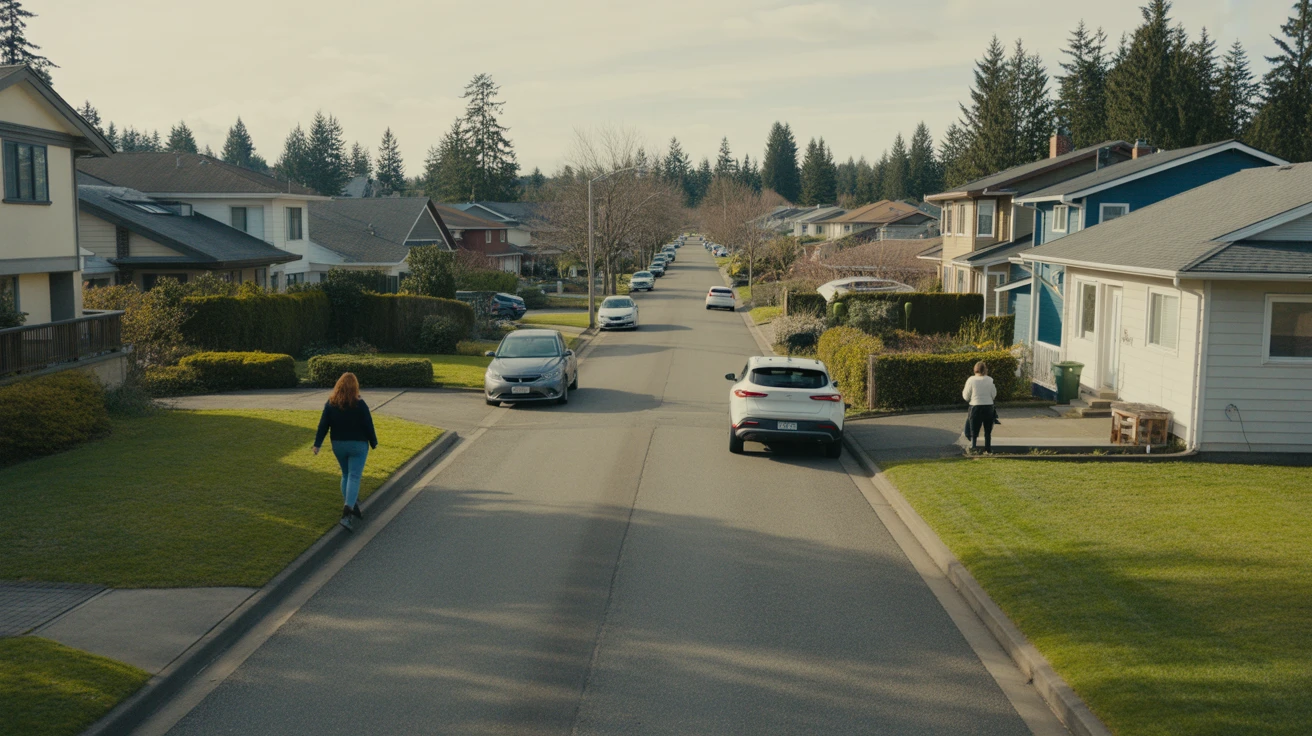
What separates Bellevue from many other expensive markets is its infrastructure. The city features substantial pedestrian pathways, rail transit service, notable cycling infrastructure, and high-density access to groceries and food establishments. These elements reduce—but don’t eliminate—the need for car ownership and the transportation costs that come with it. For households able to structure their lives around transit and walkability, the cost equation shifts meaningfully.
Driver verdict: Housing dominates cost structure, but transportation exposure varies widely based on whether your household can leverage transit, cycling, and walkable errands access. Surprises come from the interaction between these two: high rent can be partially offset by avoiding a car payment, while lower suburban housing costs often reintroduce transportation expenses.
Housing Costs (Primary Driver)
Bellevue’s housing market operates on two parallel tracks, both expensive but in different ways. Ownership requires navigating a median home value of $1,139,500—a figure that demands significant capital reserves, strong creditworthiness, and tolerance for long-term mortgage exposure. Renting, at a median of $2,422 per month, trades entry barriers for recurring costs and limited control over annual increases.
The renting-versus-owning decision here isn’t about affordability in the abstract—it’s about capital access and risk tolerance. Renters avoid the down payment hurdle and property tax exposure but face the possibility of lease renewals that adjust to market conditions. Owners lock in a mortgage payment (assuming fixed-rate financing) but absorb maintenance, insurance, and tax volatility, plus the opportunity cost of capital tied up in the home.
Bellevue functions as a high-barrier market for both tenure types. It’s not a transitional city where renting is cheap and buying is aspirational—both paths require substantial income or savings to sustain.
| Housing Type | Cost Anchor | What That Buys You |
|---|---|---|
| Ownership | $1,139,500 median home value | Equity accumulation, payment stability (fixed-rate), but high entry barrier and maintenance exposure |
| Rental | $2,422/month median rent | Lower entry cost, flexibility, but no equity and exposure to lease renewal increases |
Conclusion: Bellevue is a dual-market, high-barrier city. Ownership is capital-intensive; renting is income-intensive. Neither path is a “stepping stone” to the other without significant financial repositioning.
Utilities & Energy Risk
Electricity in Bellevue is billed at 14.06¢ per kWh, a rate that sits above many national averages and reflects the broader Pacific Northwest utility landscape. For a household using around 1,000 kWh per month—a typical baseline for moderate usage—this translates to noticeable recurring exposure, especially during months when heating or cooling demands rise.
Natural gas is priced at $24.71 per MCF (roughly 100 therms). In Bellevue’s temperate climate, heating season is real but not extreme. Winter months bring cold, wet conditions that require consistent indoor heating, but the city avoids the prolonged, severe cold that defines high-latitude or continental climates. Gas costs rise predictably in winter and fall in summer, creating moderate seasonal swings rather than dramatic spikes.
The risk here is moderate. Utility bills aren’t negligible, and they respond to both usage patterns and seasonal weather, but they don’t represent the kind of volatile, high-magnitude exposure seen in regions with extreme heat or cold. Households that manage thermostat settings, improve insulation, or reduce phantom electrical loads can exert meaningful control over this cost category.
Risk classification: Moderate. Utilities add recurring pressure but remain manageable with attention to usage and efficiency.
Groceries & Daily Costs
Bellevue’s regional price parity index of 113 suggests grocery costs run about 13% above the national baseline, reflecting the broader cost structure of the Seattle metro area. The city offers broadly accessible food and grocery options, with high-density availability that reduces the need to drive long distances for routine shopping. This infrastructure lowers the friction and time cost of daily errands, even if the prices themselves remain elevated.
For households, this means grocery spending will be higher in absolute terms than in many other U.S. cities, but the impact depends on household size, dietary preferences, and shopping habits. A single person buying prepared foods will feel the pressure differently than a family of four cooking from staples. The key difference isn’t whether groceries cost more—they do—but whether the city’s walkable, transit-accessible errands infrastructure lets you avoid adding transportation costs on top of food costs.
Grocery pressure in Bellevue is real but not extreme. It’s a steady, recurring cost layer that compounds with housing and utilities but doesn’t typically dominate household decision-making the way rent or mortgage payments do.
Transportation Reality
Bellevue’s transportation cost exposure is unusually variable because the city’s infrastructure creates real alternatives to car dependency. The presence of rail transit, notable cycling infrastructure, and walkable access to errands means some households can function without a personal vehicle—or with one car instead of two. For those households, transportation costs shrink to transit fares, occasional rideshare, and bike maintenance.
For households that do drive, gasoline is priced at $3.85 per gallon, a figure that reflects West Coast refining costs and state fuel taxes. A typical commuter driving 25 miles round trip in a vehicle averaging 25 MPG would use about one gallon per day, or roughly 20 gallons per month—translating to around $77 in fuel alone, before insurance, maintenance, registration, or parking.
The decision point isn’t whether Bellevue requires a car—it often doesn’t, depending on where you live and work within the city—but whether your specific household can structure routines around transit, cycling, and walkability. If you can, transportation becomes a minor cost category. If you can’t, it becomes a significant recurring exposure that layers on top of housing and utilities.
Car dependency here is a choice variable, not a given. That makes Bellevue different from many suburban markets where vehicle ownership is non-negotiable.
Cost Exposure Profiles
Bellevue’s cost structure creates distinct exposure profiles depending on how households navigate housing, transportation, and infrastructure access.
Low-exposure situation: A renter living near a rail station, able to bike or walk to groceries and errands, working locally or via transit. Housing costs remain high at $2,422/month, but transportation costs stay minimal—no car payment, no fuel, no insurance. Utilities are moderate and controllable. This profile still requires substantial income to sustain rent, but it avoids compounding transportation expenses.
High-exposure situation: A homeowner with a long car commute, requiring two vehicles for a dual-income household. Ownership brings mortgage exposure on a $1,139,500 home, plus property taxes, insurance, and maintenance. Transportation adds fuel, vehicle payments, insurance, and depreciation. Utilities remain moderate but add another recurring layer. This profile demands both high income and significant capital reserves.
The contrast isn’t about who can or cannot afford Bellevue—it’s about which combination of housing tenure, location, and transportation mode creates manageable versus compounding cost pressure. Households that can align their housing choice with transit and walkability access face a simpler cost equation. Those that can’t face multiple simultaneous exposures that interact and amplify each other.
What makes Bellevue unusual is that the city’s infrastructure—pedestrian pathways, rail service, cycling routes, and dense errands access—gives households real leverage to reduce transportation costs. That leverage doesn’t eliminate housing pressure, but it changes the tradeoff calculus in ways that matter for day-to-day financial management.
How this article was built: In addition to public economic data, this article incorporates location-based experiential signals derived from anonymized geographic patterns—such as access density, walkability, and land-use mix—to reflect how day-to-day living actually feels in Bellevue, WA.
Frequently Asked Questions
Is Bellevue more affordable than Seattle in 2026? Bellevue and Seattle both operate as expensive markets with similar regional price pressures. Bellevue’s median home value of $1,139,500 and rent of $2,422/month place it firmly in the high-cost tier, though specific neighborhood-level differences within each city can create variability. The cost structures are comparable, with housing dominating in both.
What does a typical cost profile look like in Bellevue? A typical profile centers on high housing costs—whether a $2,422/month rent or mortgage payments on a home valued over $1 million—layered with moderate utility bills, elevated grocery prices, and variable transportation costs depending on car dependency. Households able to use transit and walkability infrastructure face lower transportation exposure than those requiring personal vehicles.
Do utilities cost more in Bellevue than in nearby areas? Bellevue’s electricity rate of 14.06¢/kWh and natural gas price of $24.71/MCF reflect broader Pacific Northwest utility pricing. Costs are elevated compared to national averages but not extreme, with moderate seasonal swings tied to heating in winter months. Utility exposure is manageable with attention to usage.
What costs tend to surprise newcomers in Bellevue? Newcomers often underestimate how much transportation costs vary based on infrastructure access. The city’s rail transit, cycling routes, and walkable errands access mean car ownership isn’t always necessary—but those who assume they need a vehicle without exploring alternatives can add significant recurring expenses unnecessarily. The interaction between housing location and transportation mode is less obvious than rent or mortgage figures.
Are property taxes higher in Bellevue than in Tacoma? Property tax rates vary by jurisdiction and are influenced by local levies, school district funding, and municipal budgets. Bellevue’s higher home values mean absolute tax bills tend to be higher even if rates are similar, since taxes are calculated as a percentage of assessed value. Tacoma’s lower median home values generally result in lower absolute tax payments, though rate structures differ.
Can you live in Bellevue without a car? Yes, depending on where you live and work within the city. Bellevue has rail transit service, notable cycling infrastructure, and broadly accessible grocery and food options, which allow some households to function without personal vehicles. Success depends on proximity to transit stations, job location, and willingness to structure errands around walking, biking, or transit schedules.
How does Bellevue’s cost of living compare to smaller Washington cities? Bellevue’s regional price parity index of 113 and housing costs significantly exceed those in smaller Washington cities like Spokane, Yakima, or Bellingham. The difference is most pronounced in housing, where Bellevue’s median home value of $1,139,500 far outpaces smaller markets. Utilities and groceries also tend to cost more, though the gap narrows in those categories.
What’s the biggest cost lever households can control in Bellevue? Transportation represents the most variable and controllable cost category. Households that can reduce or eliminate car dependency—by choosing housing near transit, cycling to errands, or working remotely—can avoid vehicle payments, fuel, insurance, and maintenance. Housing costs are high regardless of tenure, and utilities are moderate, but transportation exposure ranges from minimal to substantial depending on infrastructure access and [commute](https://indexyard.com/best-moving-companies-guide/) patterns.
—