
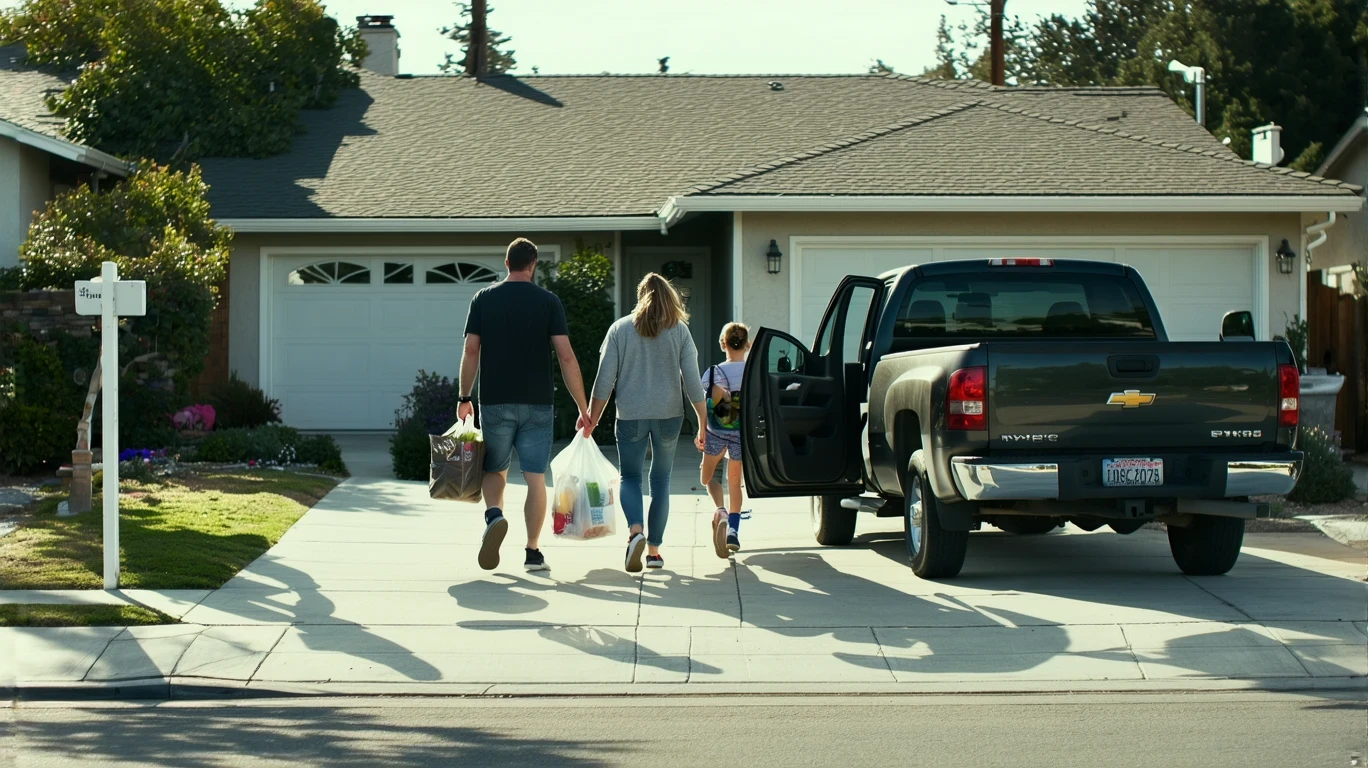
How Grocery Costs Feel in Carlsbad
Grocery prices in Carlsbad run noticeably higher than the national average, reflecting the broader cost structure of coastal Southern California. The city’s regional price parity sits 11% above the national baseline, meaning everyday staples—milk, eggs, bread, produce—carry a premium that shows up every time you check out. For households earning near or above Carlsbad’s median income of $134,139 per year, that premium is manageable, absorbed into the rhythm of weekly shopping without much friction. But for retirees on fixed incomes, service workers, or single-income families, the elevated grocery floor creates steady pressure that compounds over time.
The experience of grocery costs in Carlsbad isn’t uniform. Dual-income professional households often navigate the premium without adjusting habits significantly—they shop where it’s convenient, pick up organic options when they want them, and don’t track every dollar. Singles and smaller households, by contrast, feel the price elevation more acutely; their per-person costs don’t benefit from the economies of scale that larger families enjoy when buying in bulk. Retirees, especially those who moved to Carlsbad for its quality of life and moderate climate, sometimes find that grocery spending takes a larger share of their budget than anticipated, particularly if they’re accustomed to lower costs elsewhere.
What makes grocery costs in Carlsbad distinct isn’t just the price level—it’s the interaction between cost, access, and household composition. Food and grocery establishments cluster along commercial corridors rather than spreading evenly across neighborhoods, meaning some residents drive to shop while others can walk to a nearby store. That access pattern shapes not just convenience but also which stores people use and how often they shop, which in turn influences how much they spend. The city’s walkable pockets and notable bike infrastructure make errands easier for some households, but the corridor-clustered layout means grocery access still depends heavily on where you live and whether you’re willing to travel for better prices.
Grocery Price Signals (Illustrative)
These prices illustrate how staple items tend to compare locally—not a full shopping list. They’re derived estimates based on the national baseline adjusted by regional price parity, useful for understanding relative cost positioning but not precise enough to simulate a checkout total.
| Item | Price |
|---|---|
| Bread | $1.99/lb |
| Cheese | $5.24/lb |
| Chicken | $2.27/lb |
| Eggs | $3.17/dozen |
| Ground Beef | $7.26/lb |
| Milk | $4.44/half-gallon |
| Rice | $1.18/lb |
Derived estimate based on national baseline adjusted by regional price parity; not an observed local price.
Ground beef and cheese show the steepest premiums, making protein-heavy meal plans more expensive than carbohydrate- or vegetable-focused diets. Eggs and chicken remain relatively accessible, but even these basics cost more than they would in inland or lower-cost metro areas. Households that cook from scratch and plan meals around sales can mitigate some of the pressure, but the baseline cost floor in Carlsbad means there’s less room to maneuver than in cities with lower regional price parities.
These item-level prices don’t account for brand choice, organic premiums, or store tier—all of which shift the actual checkout experience significantly. A household buying name-brand products at a mid-tier grocer will spend considerably more than one buying store brands at a discount chain, even for identical items. That variability is why store choice and shopping habits matter as much as the baseline price level when understanding grocery pressure in Carlsbad.
Store Choice & Price Sensitivity
Grocery price pressure in Carlsbad varies sharply by store tier, and understanding that variation is essential for managing food costs effectively. Discount grocers—chains that emphasize private-label products, limited selection, and no-frills layouts—offer the lowest prices, often running 20–30% below mid-tier competitors on comparable items. These stores attract budget-conscious shoppers, retirees stretching fixed incomes, and families prioritizing cost over convenience or brand variety. The tradeoff is less selection, fewer prepared foods, and sometimes longer checkout lines, but for households where grocery spending is a significant budget concern, the savings are meaningful.
Mid-tier grocers dominate Carlsbad’s commercial corridors, offering broader selection, familiar national brands, and more consistent stock of specialty items. Prices here reflect the regional premium without the discount tier’s aggressive cost-cutting, making them the default choice for households that value convenience and variety over maximum savings. These stores often run weekly promotions and loyalty programs, which can narrow the gap with discount chains if shoppers plan around sales. For dual-income households with limited time to comparison-shop, mid-tier stores represent a reasonable compromise between cost and convenience.
Premium grocers—specialty markets, organic-focused chains, and upscale independents—charge significantly more, sometimes 40–50% above discount pricing for similar staples. These stores cater to households prioritizing organic certification, local sourcing, prepared foods, and curated selection. In Carlsbad, where the median income supports discretionary spending, premium grocers maintain steady traffic, but they’re not where most residents do their primary shopping. Households that split their trips—buying staples at discount or mid-tier stores and specialty items at premium outlets—often achieve a better balance between cost control and quality than those who shop exclusively at one tier.
The corridor-clustered layout of grocery access in Carlsbad means store choice isn’t always frictionless. Some neighborhoods sit within walking or biking distance of multiple options, while others require a drive, and that travel cost—both in time and fuel—factors into the real cost of groceries. Households willing to drive a few extra miles to reach a discount grocer can offset the regional price premium significantly, but those who prioritize proximity or lack flexible transportation often pay more by default.
What Drives Grocery Pressure Here
Income is the primary lens through which grocery costs in Carlsbad are experienced. The city’s high median household income creates a bifurcated grocery landscape: for households near or above that threshold, the 11% regional premium is noticeable but not constraining, while for those earning significantly below—service workers, part-time employees, retirees on Social Security—the elevated baseline creates persistent budget tension. Unlike housing or utilities, where costs are relatively fixed, grocery spending is elastic, meaning lower-income households can adjust by buying cheaper cuts, skipping fresh produce, or reducing portion sizes. That flexibility prevents crisis but doesn’t eliminate pressure.
Household size amplifies grocery cost sensitivity in predictable ways. A single adult buying for one pays nearly as much per trip as a couple, but without the per-person efficiency that comes from shared staples and bulk purchases. Families with multiple children face the opposite challenge: their total grocery spending is high in absolute terms, even if per-person costs are lower, and the volume of food required limits their ability to shop exclusively at discount stores or wait for sales. Single parents, in particular, often face the worst of both dynamics—high total costs without the income buffer of a dual-earner household.
Carlsbad’s corridor-clustered grocery access creates uneven cost exposure across neighborhoods. Residents near commercial corridors with multiple store options can comparison-shop easily, switching between discount and mid-tier grocers depending on what’s on sale. Those in more residential pockets, especially areas where walkability is limited and car dependency is high, face higher effective costs because their nearest store becomes their default, regardless of pricing. The city’s notable bike infrastructure and walkable pockets help some households avoid that trap, but the overall layout still favors drivers when it comes to accessing the lowest prices.
Seasonal variability in grocery prices is less pronounced in Carlsbad than in regions with harsher climates. Coastal Southern California’s mild year-round weather means produce availability stays relatively stable, and heating-related demand spikes—which drive up prices for shelf-stable goods in colder regions—don’t apply here. That stability is an advantage for budgeting, but it also means there are fewer dramatic seasonal sales to exploit. Households looking to reduce grocery costs in Carlsbad benefit more from strategic store choice and consistent habits than from waiting for seasonal price drops.
Practical Ways People Manage Grocery Costs
Store rotation is one of the most effective strategies for controlling grocery spending in Carlsbad without sacrificing quality or variety. Households that buy shelf-stable staples and frozen proteins at discount grocers, then supplement with fresh produce and specialty items at mid-tier or premium stores, often achieve significant savings compared to single-store shopping. The key is treating discount stores as the baseline for predictable, high-volume purchases—rice, pasta, canned goods, dairy—and reserving higher-cost outlets for items where quality or selection matters more. This approach requires planning and an extra trip, but for households where grocery costs are a meaningful budget line, the time investment pays off.
Meal planning reduces waste and prevents the expensive habit of filling gaps with convenience purchases. Households that plan a week’s worth of dinners before shopping tend to buy only what they’ll use, avoiding the cycle of overbuying perishables that spoil before they’re eaten. In Carlsbad, where the regional price premium makes every wasted item more costly, this discipline has outsized impact. Planning also enables bulk buying on sale items, which works best for families with storage space and the ability to use large quantities before expiration. Singles and couples benefit less from bulk purchasing unless they’re willing to freeze portions or cook in batches.
Private-label products—store brands sold by grocers themselves—offer one of the simplest ways to cut costs without changing diet or habits. These products are often produced by the same manufacturers as national brands, differing primarily in packaging and marketing, yet they typically cost 15–25% less. In Carlsbad’s elevated price environment, switching staples like milk, bread, pasta, and canned vegetables to store brands can reduce monthly grocery spending noticeably without requiring coupons, apps, or complex strategies. The tradeoff is minimal for most staples, though some households prefer name brands for specific items where taste or texture differences are more pronounced.
Shopping frequency also influences total spending. Households that shop once a week with a detailed list tend to spend less than those who make multiple small trips, because each visit to the store creates opportunities for impulse purchases and unplanned additions. In Carlsbad, where grocery access is corridor-clustered and some residents need to drive to shop, consolidating trips also saves time and fuel. The exception is households near walkable grocery options, where frequent small trips can work well if discipline is maintained—buying only what’s on the list and resisting the convenience-food aisle.
Loyalty programs and digital coupons, offered by most mid-tier grocers, provide modest but consistent savings for households willing to engage with them. These programs typically require scanning a card or app at checkout and occasionally clipping digital offers in advance. The savings per trip are rarely dramatic—usually 5–10% on select items—but over time they add up, especially for households that shop at the same store regularly. Discount grocers generally don’t offer loyalty programs, because their pricing model already reflects aggressive cost-cutting, but mid-tier stores use these programs to narrow the price gap and retain customers who might otherwise switch to cheaper competitors.
Groceries vs Eating Out (Directional)
The tradeoff between cooking at home and eating out in Carlsbad tilts heavily toward home cooking from a cost perspective, but the gap isn’t as wide as it is in lower-cost metro areas. Coastal Southern California’s dining scene is robust, and restaurant prices reflect the same regional premium that drives up grocery costs. A meal out for two at a mid-tier restaurant—nothing fancy, just reliable casual dining—can easily cost what a household might spend on groceries for two or three home-cooked dinners. For families, the multiplier effect makes frequent dining out prohibitively expensive unless income is well above the median.
That said, the convenience and time savings of prepared food or takeout appeal strongly to dual-income households where both partners work full-time and cooking feels like a burden rather than a choice. In Carlsbad, where the median income supports discretionary spending, many households treat dining out or ordering in as a regular budget line rather than an occasional splurge. The cost difference between cooking and eating out still exists, but it’s weighed against time, energy, and lifestyle preferences, not just dollars. Households trying to reduce overall cost structure often find that cutting back on dining out—even by one or two meals per week—frees up meaningful budget room without requiring extreme grocery discipline.
Prepared foods from grocery stores—rotisserie chickens, pre-cut vegetables, meal kits—occupy a middle ground between cooking from scratch and dining out. They’re more expensive than raw ingredients but cheaper and often healthier than restaurant meals. In Carlsbad’s mid-tier and premium grocers, prepared food sections are extensive, catering to time-pressed shoppers willing to pay a convenience premium. For households that struggle with meal planning or cooking fatigue, these options can reduce the temptation to order takeout, effectively saving money compared to the alternative even if they cost more than home cooking.
FAQs About Grocery Costs in Carlsbad (2026)
Is it cheaper to shop in bulk in Carlsbad? Bulk buying works well for families with storage space and the ability to use large quantities before expiration, especially for shelf-stable staples like rice, pasta, and canned goods. Singles and couples benefit less unless they freeze portions or split purchases, because the per-unit savings are offset by waste if food spoils.
Which stores in Carlsbad are best for low prices? Discount-tier grocers offer the lowest prices, typically running 20–30% below mid-tier competitors on comparable items. These stores emphasize private-label products and limited selection, making them ideal for budget-conscious households willing to trade convenience for savings. Mid-tier stores offer broader variety and frequent promotions, while premium grocers charge significantly more for organic and specialty items.
How much more do organic items cost in Carlsbad? Organic products typically carry a premium of 30–50% over conventional equivalents, with the gap widest for produce, dairy, and meat. In Carlsbad’s elevated price environment, that premium compounds the baseline cost, making organic shopping a significant budget commitment unless households prioritize selectively—buying organic for high-pesticide produce like berries and greens while choosing conventional for lower-risk items.
How do grocery costs for two adults in Carlsbad tend to compare to nearby cities? Carlsbad’s grocery costs reflect the broader San Diego metro premium, running higher than inland cities but comparable to other coastal Southern California communities. The 11% regional price parity means staples cost more than the national average, but the gap is smaller than in the Bay Area or Los Angeles core, making Carlsbad moderately expensive rather than extreme within the state.
How do households in Carlsbad think about grocery spending when cooking at home? Many households treat grocery spending as a controllable expense, adjusting store choice, meal planning, and brand selection to fit their budget. Those near or above the median income often prioritize convenience and quality over maximum savings, while lower-income households and retirees focus more on discount stores, private-label products, and strategic shopping to manage the regional premium.
Does Carlsbad’s climate affect grocery costs? The mild year-round weather reduces seasonal price volatility compared to regions with harsh winters or extreme summers. Produce availability stays relatively stable, and there are fewer dramatic seasonal sales to exploit. That consistency is helpful for budgeting but means households benefit more from strategic store choice than from timing purchases around seasonal price drops.
Are there ways to reduce grocery costs without changing what you eat? Switching to private-label products, shopping at discount-tier stores for staples, and using loyalty programs at mid-tier grocers can reduce spending significantly without altering diet or meal preferences. Store rotation—buying shelf-stable items at discount chains and fresh or specialty items elsewhere—also helps control costs while maintaining variety and quality.
How Groceries Fit Into the Cost of Living in Carlsbad
Grocery costs in Carlsbad are a noticeable but secondary component of the city’s overall cost structure. Housing—whether renting at a median of $2,477 per month or owning a home valued at $1,070,500—dominates household budgets, and utilities, transportation, and insurance all compete for attention before groceries become the primary financial concern. That doesn’t mean grocery spending is trivial; for households earning below the median or managing fixed incomes, the 11% regional premium on food creates steady pressure that compounds over time. But for most residents, grocery costs are manageable through strategic shopping, even if they’re higher than expected compared to other parts of the country.
The interaction between grocery costs and other expenses is where the real budget tension emerges. A household that stretches to afford Carlsbad’s housing market may find that the elevated grocery baseline leaves less room for discretionary spending, dining out, or savings than anticipated. Conversely, a household with manageable housing costs—perhaps because they bought years ago or secured below-market rent—can absorb the grocery premium without significant lifestyle adjustment. Understanding what a budget has to handle in Carlsbad requires looking at how all these costs interact, not just isolating grocery spending in a vacuum.
For households considering a move to Carlsbad, grocery costs are best understood as part of the broader Southern California price environment. The regional premium applies across categories—housing, utilities, dining, services—and groceries are no exception. The city’s quality of life, moderate climate, and proximity to San Diego justify the cost for many residents, but it’s essential to enter with realistic expectations about day-to-day expenses. Grocery spending in Carlsbad isn’t prohibitive, but it’s not cheap either, and managing it well requires attention to store choice, meal planning, and household habits.
How this article was built: In addition to public economic data, this article incorporates location-based experiential signals derived from anonymized geographic patterns—such as access density, walkability, and land-use mix—to reflect how day-to-day living actually feels in Carlsbad, CA.