
Is Encinitas the kind of place you grow roots—or just pass through? That depends less on the city itself and more on what you’re willing to trade for it. Encinitas sits along the San Diego County coast with a reputation for laid-back surf culture, walkable village pockets, and a fiercely protected small-town identity. But beneath the postcard appeal lies a more textured reality: housing costs that filter who stays, infrastructure that rewards certain lifestyles over others, and a community that’s constantly negotiating what growth should look like. If you thrive on outdoor access, value pedestrian-friendly neighborhoods, and can absorb the financial premium, Encinitas tends to feel like home. If you need urban density, diverse nightlife, or entry-level affordability, the friction shows up quickly.
The Emotional Landscape of Encinitas
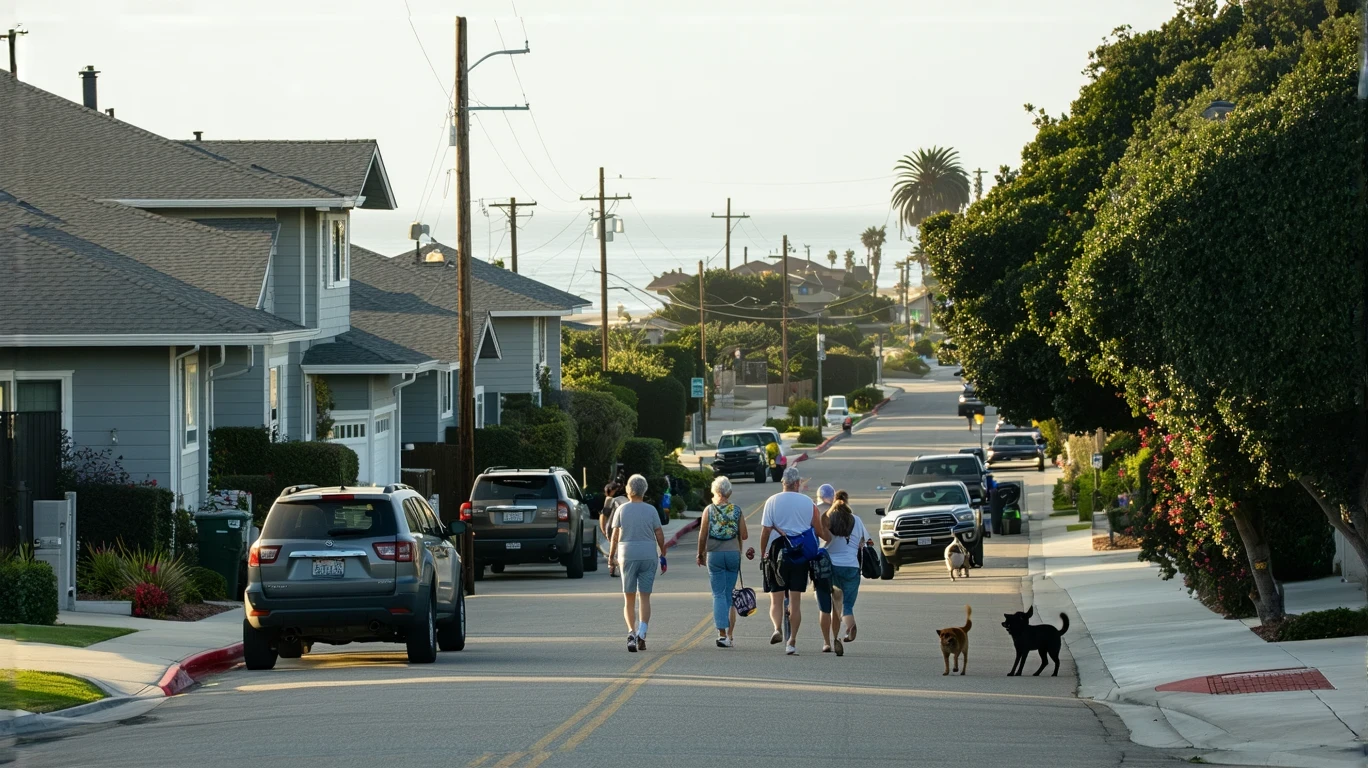
Encinitas carries a duality that shapes how people experience it. On one hand, it’s a place where you can bike to the beach, grab coffee on foot, and find playgrounds and schools woven into everyday geography. The city’s walkable pockets and rail access mean that car-optional living is genuinely possible in certain areas—a rarity in Southern California suburbs. Families appreciate the strong infrastructure: schools and playgrounds meet density thresholds, and errands feel broadly accessible rather than car-dependent by necessity.
On the other hand, the cost structure is unforgiving. With a median home value of $1,354,600 and median rent at $2,480 per month, Encinitas selects for established households. The median household income of $142,506 per year reflects this selectivity, but even at that level, housing pressure is real. The city’s retirement-friendly designation hints at its appeal to people who’ve already built wealth elsewhere and are now prioritizing quality of life over career proximity.
What tends to feel rewarding here: coastal access without the density of a true city, the ability to walk or bike for daily needs in certain neighborhoods, a strong sense of place protection, and outdoor recreation that’s integrated rather than distant. What tends to feel limiting: the cost barrier that makes long-term stability precarious for younger or single-income households, the lack of a hospital (clinics handle routine care, but serious needs require travel), and the tension between preserving character and accommodating growth.
What People Talk About Online
Public discussion in Encinitas—across neighborhood groups, local subreddits, and social platforms—tends to cluster around a few recurring themes. There’s pride in the city’s identity, but also protectiveness that can read as resistance. Growth, density, and development spark emotional responses, with some residents celebrating new amenities and others mourning the loss of “old Encinitas.” The tone is rarely neutral.
“I love that I can walk to the farmer’s market and actually see neighbors I know. It feels like a real community, not just a place people sleep.”
“The cost of staying here keeps going up, and it’s hard not to feel like the city is slowly pricing out anyone who isn’t already wealthy or retired.”
“Traffic and parking near the beach on weekends can be a nightmare. Sometimes it feels like we’re a tourist destination first and a neighborhood second.”
Conversations about transportation reveal a split experience. Those living in walkable pockets or near the rail line describe a lifestyle that feels less car-dependent than typical Southern California suburbs. Others, especially in areas farther from the core, describe the usual frustrations: errands require driving, and getting to work or accessing specialized services means time in the car. The bike infrastructure gets praise from cyclists, but non-cyclists often don’t notice it at all.
How Local Coverage Frames the City
Local news and community coverage in Encinitas tends to focus on identity preservation, infrastructure adaptation, and the ongoing negotiation between growth and character. Headlines and story angles often reflect these tensions in broad, recurring ways:
- “Community Debates What Growth Should Look Like”
- “New Amenities Arrive as Coastal Character Evolves”
- “Residents Weigh Density vs Charm in Planning Discussions”
- “Outdoor Access Remains a Draw as Housing Costs Climb”
- “Local Infrastructure Adapts to Changing Household Needs”
The tone is rarely alarmist, but it’s also rarely celebratory. Coverage reflects a community that’s aware of its appeal and protective of what makes it distinct, but also grappling with the practical consequences of that appeal: more demand, higher costs, and pressure on infrastructure that was built for a smaller population. There’s a sense that Encinitas is in transition, and not everyone agrees on where it should land.
What Reviews and Public Perception Reveal
Public reviews—whether on Google, Yelp, or neighborhood platforms—tend to reflect expectation matching more than objective quality. People who moved to Encinitas seeking a coastal, walkable, family-friendly environment with strong outdoor access tend to feel satisfied, even if they acknowledge the cost. People who expected urban amenities, nightlife variety, or easy access to major job centers tend to feel disappointed.
Positive themes cluster around lifestyle fit: “Great for families,” “Love the beach access,” “Feels safe and community-oriented,” “Can actually bike places.” Mixed reviews often mention cost as a persistent stressor: “Beautiful place, but financially exhausting,” “Wish there were more affordable housing options,” “Feels exclusive in a way that’s uncomfortable.”
Critiques tend to focus on limitations rather than failures. The lack of a local hospital comes up for families with medical needs. The limited nightlife and dining variety frustrate younger residents or those used to urban density. Parking and weekend crowding near the coast annoy locals who feel like they’re competing with tourists for access to their own neighborhood. Newer planned areas get described as convenient but generic, while older pockets get praised for character but critiqued for aging infrastructure.
How Encinitas Compares to Nearby Cities
| Dimension | Encinitas | Carlsbad | Solana Beach |
|---|---|---|---|
| Overall Vibe | Laid-back surf town with walkable pockets and strong identity protection | More polished and family-corporate, with newer development and resort feel | Quieter and more residential, smaller scale with less commercial density |
| Walkability | Notable in core areas, mixed elsewhere | Pockets exist but more car-oriented overall | Limited; more residential and spread out |
| Cost Pressure | High baseline, filters for established households | Comparable or slightly higher in newer areas | Similar premium, smaller inventory |
| Community Tone | Protective, identity-conscious, slightly countercultural | Growth-friendly, business-oriented, more transient | Low-key, privacy-valuing, less visible community activity |
Choosing between these cities often comes down to lifestyle priorities rather than objective superiority. If you value walkability, bike infrastructure, and a community that actively debates its identity, Encinitas tends to feel more aligned. If you prefer newer construction, more polished amenities, and a business-friendly environment, Carlsbad might fit better. If you want coastal access with minimal commercial activity and a quieter residential feel, Solana Beach offers that tradeoff. None of these cities is affordable by national standards, but they attract different kinds of households within the same income band.
Voices from the Community
“We moved here for the schools and the beach access, and it’s delivered on both. But the cost of everything—rent, groceries, gas—adds up faster than we expected. We’re making it work, but there’s no cushion.”
“I can walk to coffee, the library, and the train station from my place. That’s rare in Southern California, and it’s worth a lot to me. I don’t feel as car-trapped as I did in other suburbs.”
“Encinitas has this reputation for being chill, but honestly, it feels pretty exclusive. If you’re not already established financially, it’s hard to see how you’d build a life here.”
“The outdoor access is incredible—parks, trails, the ocean. My kids are outside constantly. But I do wish there were more options for dining and entertainment. It can feel a little sleepy.”
“I’m retired, and this place is exactly what I was looking for: active, safe, beautiful, and not too dense. I don’t need nightlife or a big job market anymore, so the tradeoffs don’t bother me.”
“Traffic near the beach on weekends is brutal. I’ve started avoiding certain areas entirely during peak times. It’s frustrating when you live here and can’t easily access your own neighborhood.”
“There’s a real sense of community here if you plug in—farmer’s markets, local events, neighborhood groups. But you have to make the effort. It’s not automatic.”
Does Encinitas Feel Like a Good Fit?
Encinitas doesn’t offer universal appeal, and that’s by design—or at least by consequence. The city’s high housing costs, strong family and outdoor infrastructure, and walkable core areas create a specific kind of alignment. It tends to work for established professionals, retirees, and families who prioritize coastal access, pedestrian-friendly living, and outdoor recreation over urban density or affordability. It tends to frustrate younger households stretching financially, people who need diverse nightlife or cultural amenities, and anyone who requires hospital-level healthcare locally.
The emotional experience of living here is shaped by whether the tradeoffs feel worth it. If you can absorb the cost and value what Encinitas offers—beach access, walkable neighborhoods, strong schools, bike infrastructure, and a community that debates its future—it tends to feel like home. If the cost creates constant stress, or if you need amenities the city doesn’t provide, the friction accumulates quickly.
Understanding where money goes each month and how housing, transportation, and daily expenses interact can clarify whether the financial reality aligns with the lifestyle you’re seeking. Encinitas isn’t a place you settle into casually. It’s a place you choose deliberately, with full awareness of what you’re gaining and what you’re giving up.
How this article was built: In addition to public economic data, this article incorporates location-based experiential signals derived from anonymized geographic patterns—such as access density, walkability, and land-use mix—to reflect how day-to-day living actually feels in Encinitas, CA.
The perspectives shown reflect commonly expressed local sentiment and recurring themes in public discussion, rather than individual accounts.