
Budgeting Smarter in El Cajon
Understanding the monthly budget in El Cajon starts with recognizing that this inland San Diego County city operates on a different cost rhythm than its coastal neighbors. With a median gross rent of $1,686 per month and a median household income of $64,128 per year ($5,344 gross monthly), households here navigate a cost structure where housing anchors the budget, but transportation and utilities create the real variability. Newcomers often underestimate how car dependence and extended cooling seasons stack friction into what initially looks like a straightforward suburban budget.
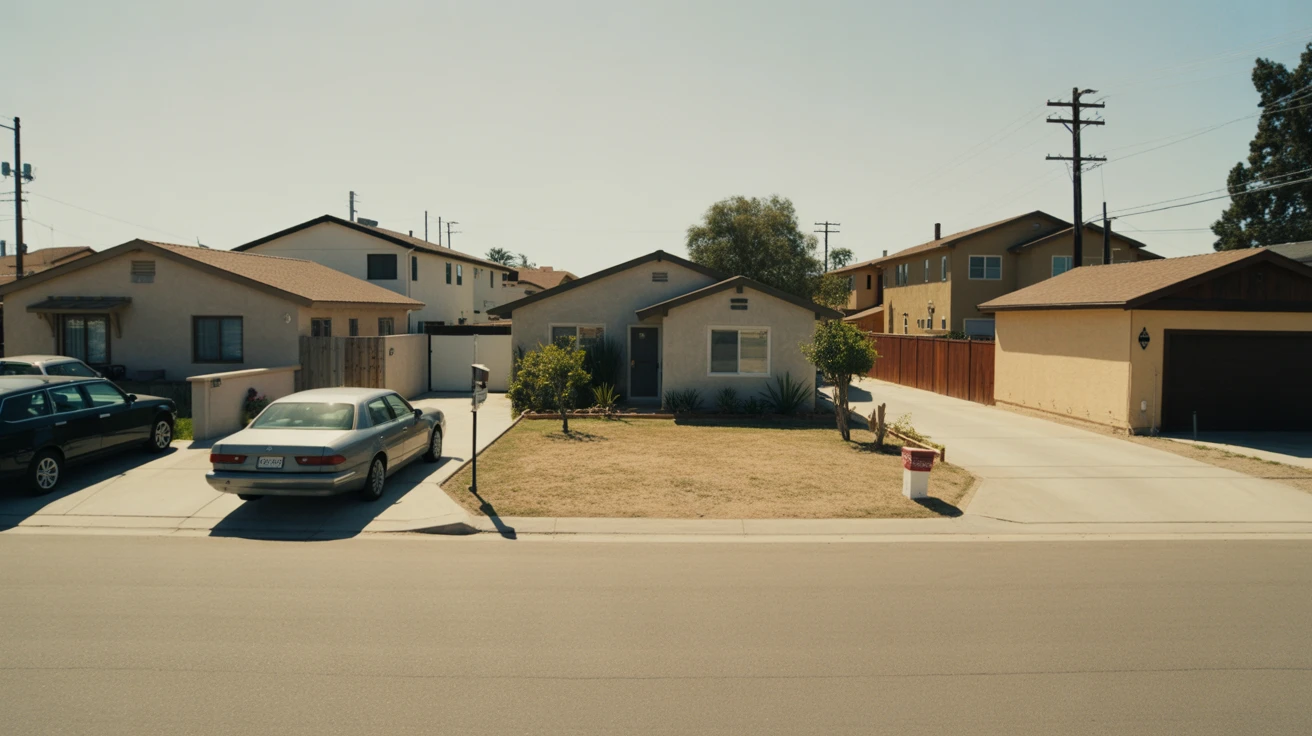
El Cajon sits in a low-rise, mixed-use landscape where grocery stores and daily errands are broadly accessible—food and grocery establishment density exceeds high thresholds—but the street infrastructure itself remains car-oriented. Pedestrian paths are sparse relative to roads, and while rail transit is present, most households still organize their days around driving. This creates a budget tension: you can reach what you need without long drives, but you still need the car, the fuel, the insurance, and the parking to make it work. That duality shapes how money moves here.
Let’s walk through a realistic month, line by line, to see where the budget pressure actually lives.
A Simple Budget Map: How Costs Behave by Household Type
The table below illustrates how cost behavior and exposure differ across three household types in El Cajon. Cells describe cost stability, volatility, and control—not total spending.
| Category | Jasmine (single renter) | Sam & Elena (couple) | Ortiz family (2 kids, owners) |
|---|---|---|---|
| Housing (Rent or Mortgage) | Fixed at $1,686/month; stable but dominant | Shared rent or early mortgage; fixed and predictable | Mortgage on $593,500 median home; fixed principal + interest, but property tax and insurance add volatility |
| Utilities | Moderate; electricity-sensitive in summer (31.91¢/kWh); smaller unit limits exposure | Shared usage; electricity exposure scales with cooling needs; natural gas minimal ($21.94/MCF) | High exposure; larger home in low-rise area = extended cooling season; efficiency matters |
| Food (Groceries + Eating Out) | Flexible; broad grocery access reduces friction; solo shopping limits bulk savings | Shared grocery runs; meal planning reduces waste; broad access supports variety | Volume-driven; feeding four requires planning; broad grocery density helps but frequency increases |
| Transportation | Commute-dependent; car-oriented texture despite rail; gas at $4.38/gal; solo cost burden | Exposure doubles if both commute; car-oriented infrastructure limits transit substitution | Admin-heavy; two vehicles common; maintenance, insurance, registration stack; school proximity reduces some trips |
| Fees / Friction Costs | Minimal if no HOA; trash/water often separate; parking may apply | Moderate; depends on housing type; HOA possible; admin coordination required | High; HOA common in ownership; water/sewer separate; maintenance episodic but material |
| Discretionary (life + surprises) | Compressed after fixed costs; volatility in car maintenance hits hard | Shared discretionary pool; more flexibility but still exposure-sensitive | Tightly managed; family size and homeownership leave little buffer; surprises (HVAC, appliances) disrupt |
| What Changes This Most | Commute distance and summer cooling | Dual commutes and housing choice (rent vs own) | Home size, cooling efficiency, and vehicle count |
Methodology: This guide uses only city-level figures provided in the IndexYard data feed for 2026. Where exact category totals aren’t provided, categories are described directionally to show budget behavior rather than a receipt-accurate total.
The Real Cost Drivers in El Cajon
In El Cajon, housing pressure sets the baseline, but it’s the interaction of car dependence, warm-climate utilities, and friction costs that determines whether a household feels stable or stretched. The city’s car-oriented street texture means that even though grocery stores, clinics, and schools are broadly accessible, nearly every trip still requires a vehicle. Rail transit exists, but the pedestrian infrastructure to support it remains sparse, so most residents default to driving. For a typical 25-mile round-trip commute at 25 MPG and $4.38 per gallon, fuel alone runs roughly $88 per month (illustrative, assuming a standard work schedule)—before insurance, maintenance, or registration. Households with two commuters double that exposure, and the cost becomes a primary budget lever.
Utilities in El Cajon behave seasonally but predictably. Electricity at 31.91¢/kWh drives cooling costs during the extended warm season—current conditions sit at 74°F, and triple-digit summer heat is common. For illustrative context, a household using 1,000 kWh per month would face roughly $319 in electricity charges before fees, and larger homes in the low-rise landscape here often exceed that threshold. Natural gas at $21.94/MCF plays a smaller role given the mild winters, but water heating and cooking still add modest exposure. The real budget skill in El Cajon is managing cooling efficiency without sacrificing comfort during the long, hot months.
Then come the friction costs—the budget line items that don’t fit neatly into rent or groceries but add up quickly. Many ownership properties carry HOA dues that bundle landscaping, common-area maintenance, or trash service, but the amounts vary widely and aren’t always disclosed upfront. Water and sewer are often billed separately from rent or mortgage, creating another monthly variable. Renters may face parking fees if their complex doesn’t include covered or assigned spaces. Homeowners deal with episodic but material costs: HVAC servicing before summer, occasional pest control, and the slow creep of property insurance adjustments. These aren’t catastrophic individually, but together they form a secondary cost layer that compresses discretionary spending more than newcomers expect.
In El Cajon, the budget stress point is rarely one big bill—it’s the stack of small ‘friction’ costs that show up after move-in.
Common Friction Costs in El Cajon
- HOA or association dues: Common in ownership communities; often cover landscaping, exterior maintenance, and shared amenities; amounts vary widely.
- Trash and recycling: May be bundled in rent or HOA, or billed separately by the city; structure depends on housing type.
- Water and sewer: Typically billed separately from rent or mortgage; usage-based and can fluctuate with household size and outdoor watering.
- Parking permits or fees: Some rental complexes charge for covered or assigned spaces; street parking may require city permits in certain areas.
- Seasonal upkeep: HVAC servicing before summer heat, occasional pest control, and air filter replacements add episodic costs for homeowners and some renters.
How Households Keep the Budget Under Control (Without Living Like a Monk)
Budgeting in El Cajon isn’t about deprivation—it’s about timing, tradeoffs, and understanding which levers actually move the needle. The most effective controls target the categories with the highest volatility: transportation, utilities, and discretionary spending. Households that treat these as fixed costs get surprised; those that actively manage them build breathing room without sacrificing quality of life.
Transportation tradeoffs start with commute planning. Carpooling, even a few days a week, cuts fuel and wear-and-tear exposure in half. Some couples stagger work schedules to share a vehicle, eliminating a second insurance and registration burden entirely. Consolidating errands into fewer trips—taking advantage of El Cajon’s broadly accessible grocery and retail density—reduces fuel waste and the mental load of constant driving. The rail transit option exists for those whose work destinations align, but the car-oriented street texture means most households still need at least one vehicle for daily logistics.
Utilities respond to behavioral changes more than most people expect. Running cooling during peak afternoon hours costs the same per kilowatt-hour, but shifting laundry, dishwashing, and other high-draw activities to early morning or evening reduces the strain on the system and the psychological weight of a high bill. Ceiling fans and strategic window shading lower cooling demand without requiring expensive retrofits. Homeowners who service HVAC systems before summer—cleaning coils, replacing filters—maintain efficiency and avoid mid-season breakdowns that cost far more than preventive care. These aren’t dramatic interventions, but they reduce exposure during the months when electricity dominates the budget.
Discretionary spending benefits from a simple rule: separate planned expenses from reactive ones. Grocery shopping with a list and a meal plan reduces impulse purchases and food waste, which matters more for families managing volume. Dining out becomes a planned event rather than a fallback when time runs short. Households that build a small monthly buffer—even $100—create space to absorb surprises (a car repair, a medical co-pay, a school fee) without derailing the entire budget. The goal isn’t to eliminate flexibility; it’s to make flexibility intentional rather than reactive.
Practical Budget Controls for El Cajon Households
- Consolidate errands: Take advantage of accessible grocery and retail density to reduce trip frequency and fuel waste.
- Shift high-energy tasks: Run dishwashers, laundry, and other electricity-heavy activities during cooler parts of the day to reduce cooling load.
- Service HVAC before summer: Preventive maintenance (filter changes, coil cleaning) maintains efficiency and avoids costly mid-season breakdowns.
- Carpool or stagger schedules: Share commutes or vehicles when possible to cut fuel, insurance, and maintenance exposure.
- Use ceiling fans strategically: Supplement cooling with airflow to reduce thermostat demand without sacrificing comfort.
- Plan grocery trips: Shop with a list and meal plan to reduce impulse purchases and food waste, especially for larger households.
- Build a small monthly buffer: Set aside $50–$100 to absorb surprises (car repairs, co-pays) without disrupting fixed costs.
- Review water usage: Monitor outdoor watering and household habits to manage separately billed water/sewer costs.
FAQs About Monthly Budgets in El Cajon (2026)
What’s a realistic monthly budget for a single person renting in El Cajon?
With median rent at $1,686 per month, a single renter should plan for housing to anchor the budget, with transportation and utilities as the primary variables. Commute distance and summer cooling exposure will determine how much flexibility remains after fixed costs. Broadly accessible grocery options help control food costs, but car dependence means fuel and insurance are unavoidable.
How does El Cajon’s cost structure compare for couples versus families?
Couples benefit from shared housing and utility costs, but transportation exposure can double if both partners commute. Families face higher grocery volume, larger utility bills in bigger homes, and admin-heavy ownership costs (HOA, maintenance, insurance). The Ortiz family profile in the table above shows how homeownership on a $593,500 median home value adds property tax and episodic maintenance that compress discretionary spending.
Is $5,000 per month enough to live comfortably in El Cajon?
At $5,000 gross monthly income (close to the city’s median household income of $5,344), a household can manage in El Cajon, but comfort depends heavily on housing choice and transportation exposure. Renters near the median rent of $1,686 have more flexibility than owners managing mortgage, property tax, and maintenance on a $593,500 home. Families with two commuters or high cooling costs will feel tighter than couples in smaller units with shorter commutes.
What budget surprises do newcomers to El Cajon typically face?
Newcomers often underestimate the cumulative impact of separately billed utilities (water, sewer, trash), HOA dues in ownership communities, and the car dependence required despite rail transit availability. The extended cooling season also catches renters off guard if they’re used to milder climates—electricity at 31.91¢/kWh adds up quickly in summer. Friction costs like parking fees, pest control, and HVAC servicing create a secondary cost layer that doesn’t show up in rent or mortgage alone.
How much should I budget for transportation in El Cajon in 2026?
Transportation costs depend on commute distance and vehicle count. For illustrative context, a 25-mile round-trip commute at $4.38 per gallon and 25 MPG runs roughly $88 per month in fuel alone, before insurance, maintenance, or registration. Households with two commuters or longer distances will see that figure climb quickly. The car-oriented street texture means most residents need at least one vehicle, even with rail transit present, so budgeting for full ownership costs—not just fuel—is essential.
Planning Your Next Step
Budgeting in El Cajon comes down to three core drivers: housing sets the baseline, transportation exposure depends on how far and how often you drive, and utilities respond to home size and cooling habits during the extended warm season. The city’s low-rise, mixed-use landscape makes daily errands accessible, but the car-oriented infrastructure means you’ll still need a vehicle to make it all work. Friction costs—HOA dues, separately billed water and sewer, parking fees, and episodic maintenance—add a secondary layer that compresses discretionary spending more than most newcomers expect.
For a deeper look at how rent and ownership costs behave in El Cajon, explore what drives housing costs here. If you want to understand how electricity and natural gas bills fluctuate across the year, the utilities breakdown offers seasonal context and efficiency strategies. And for households trying to control food expenses without sacrificing variety, the grocery costs guide explains how to navigate the city’s broadly accessible food landscape.
The budget reality in El Cajon isn’t about cutting everything to the bone—it’s about knowing which costs are fixed, which are flexible, and where small changes create meaningful breathing room. Start with the categories that match your household type, focus on the levers you can actually control, and build a buffer for the surprises that always show up. You’ll find your rhythm faster than you think.
How this article was built: In addition to public economic data, this article incorporates location-based experiential signals derived from anonymized geographic patterns—such as access density, walkability, and land-use mix—to reflect how day-to-day living actually feels in El Cajon, CA.