
Is El Cajon the kind of place you grow roots—or just pass through? For some, it’s an affordable anchor in the expensive San Diego metro—a place where families can stretch their housing dollars and still reach the coast in under half an hour. For others, it’s a compromise: practical but not picturesque, accessible but not walkable, close to everything but not quite of anything. The city’s emotional tone reflects that tension. People who land here tend to either appreciate what it offers on its own terms—or spend their time wishing it felt more like somewhere else.
El Cajon sits in a peculiar position: it has rail transit and dense grocery access, yet the street fabric remains car-first. Errands are broadly accessible, but you’ll drive to most of them. Parks exist, schools are present, but the infrastructure feels uneven depending on where you settle. The result is a city that works well for households who prioritize function and cost over walkability and charm—but leaves others feeling like they’re always in transit, never quite arrived.
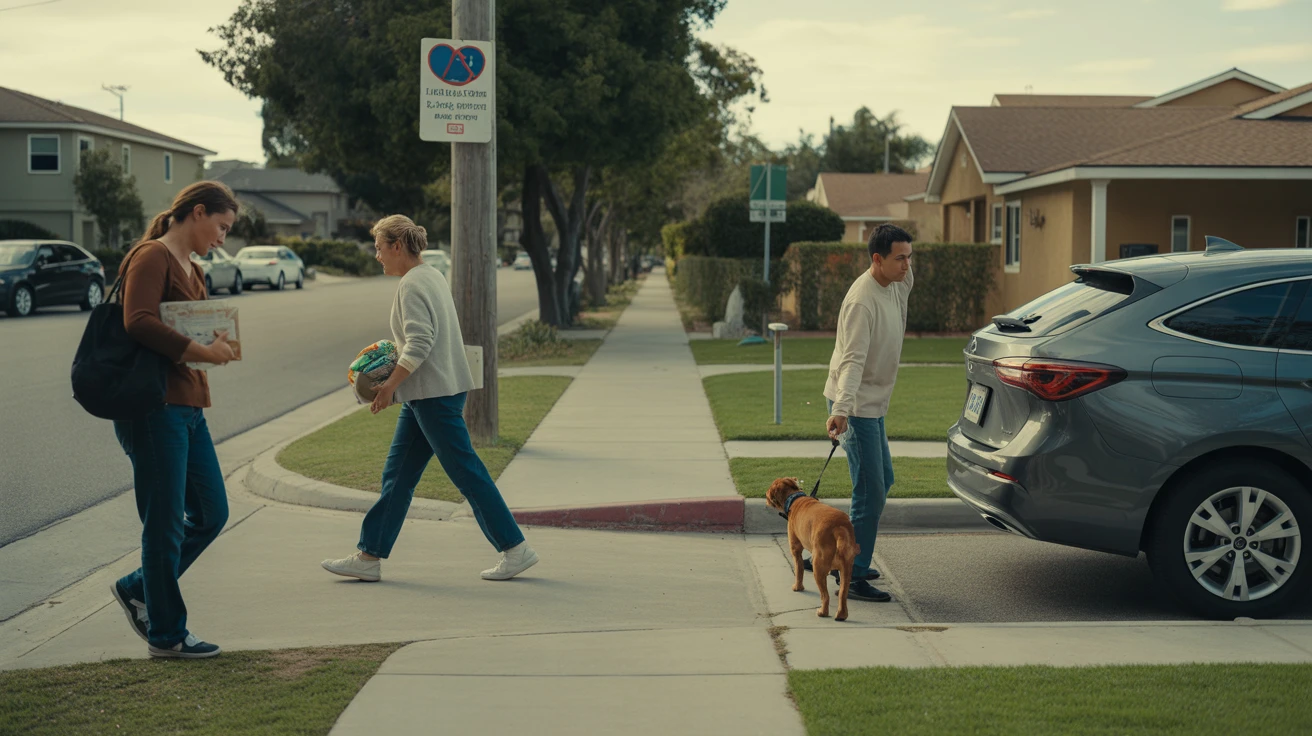
What Shapes the Emotional Landscape
El Cajon’s vibe is rooted in its role as an inland suburban alternative within a high-cost metro. It’s not trying to be La Jolla or North Park, and locals who accept that tend to feel more at home. The city offers space, relative affordability, and access to jobs and amenities across the region—but it asks you to drive for almost all of it. The pedestrian infrastructure is minimal relative to the road network, and while bike lanes exist in pockets, they don’t form a cohesive system. For car-comfortable households, this is a non-issue. For those hoping to walk to coffee or stroll to dinner, it’s a daily friction point.
What keeps coming up in local conversation is the gap between proximity and experience. You’re close to the coast, close to downtown San Diego, close to hiking and breweries and beaches—but you’re not in those places. You’re near them. And for some people, that’s exactly the tradeoff they want: lower [housing pressure](/el-cajon-ca/housing-costs/) in exchange for a 20-minute drive. For others, it feels like living in the waiting room of someone else’s city.
Conversations Across Social Platforms
On local social media—Reddit threads, neighborhood Facebook groups, and community pages—El Cajon’s identity comes up often, usually in the context of comparison. Residents describe it as “the practical choice,” “the place you can actually afford,” or “not fancy, but it works.” There’s a recurring theme of defensiveness mixed with pragmatism, as if people feel the need to justify their decision to live here—or to explain why it’s underrated.
“It’s not the prettiest part of San Diego, but we got a house with a yard for what a one-bedroom costs in Hillcrest. That matters more to us than walkable brunch spots.”
“People sleep on El Cajon. Yeah, it’s car-dependent, but so is most of the county. At least we have Trolley access and actual grocery options.”
“I moved here thinking it’d feel more like a real town. It’s more like a place people drive through to get somewhere else.”
The tone isn’t bitter, but it’s not celebratory either. It’s the language of tradeoff acceptance—of people who’ve made peace with what they’re getting and what they’re giving up. There’s pride in the value proposition, but also a quiet acknowledgment that the city doesn’t inspire the same emotional attachment as more distinctive neighborhoods.
How Local Coverage Frames the City
Local news and community outlets tend to frame El Cajon through the lens of growth, change, and identity negotiation. The city is in transition—adding housing, updating infrastructure, attracting new retail—but the conversation is less about excitement and more about adjustment. Headlines and story themes often reflect this ambivalence:
- “New Development Brings Amenities, But Residents Ask: For Whom?”
- “Balancing Growth and Character in a Changing Suburb”
- “Transit Access Expands, But Most Still Drive”
- “Families Flock to Affordability as Coastal Prices Climb”
- “Community Debates What ‘Improvement’ Really Means”
The framing is rarely negative, but it’s not boosterish either. It’s the journalism of a place figuring out what it wants to be—and whether the people who live there now will still recognize it in ten years. There’s a sense that El Cajon is becoming more functional and more connected, but also more generic, losing some of the specificity that made it feel like a distinct place rather than just an affordable zip code.
What Review Platforms Reveal
On Google Reviews, Yelp, and Nextdoor-style platforms, El Cajon’s public perception splits along expectation lines. People who wanted suburban comfort, practical access, and lower costs tend to leave positive reviews. People who wanted walkability, nightlife, or coastal charm tend to leave disappointed ones.
Praise often centers on grocery density, chain retail availability, and the ability to “get everything done in one area.” The city has high food and grocery establishment density, and locals notice. You’re rarely more than a few minutes from a supermarket, pharmacy, or big-box store. For households managing errands with kids, jobs, and tight schedules, that’s a meaningful quality-of-life win.
Complaints, meanwhile, focus on aesthetics, walkability, and the feeling of placelessness. Newer planned areas get described as “clean but soulless,” while older pockets get called “worn but more authentic.” The lack of pedestrian-friendly streets comes up often, especially from transplants who moved from denser parts of San Diego or other cities. The low-rise building character and car-oriented layout make the city feel sprawling, even when destinations are technically close.
“Everything you need is here, but nothing makes you want to linger.”
“Great for families who just want space and easy errands. Not great if you want to feel like you’re part of a neighborhood.”
“It’s fine. That’s the best word for it. Fine.”
How El Cajon Compares to Nearby Cities
| Dimension | El Cajon | La Mesa | Santee |
|---|---|---|---|
| Overall Vibe | Practical, car-first, value-oriented | Walkable village feel, higher charm factor | Family suburban, more spacious, quieter |
| Walkability | Low; drive to most errands despite density | Higher; downtown core supports foot traffic | Very low; fully car-dependent layout |
| Transit Access | Trolley present, but most still drive | Trolley accessible, more integrated | Limited; bus-only service |
| Errands & Access | Broadly accessible, high grocery density | Concentrated in village, less elsewhere | Big-box corridors, spread out |
| Identity & Character | In transition; functional but generic | Established village identity, more cohesive | Suburban family haven, less urban aspiration |
La Mesa tends to attract people who want a bit more walkability and village charm without leaving the East County. It’s pricier, but the tradeoff is a more defined sense of place. Santee skews even more suburban—quieter, more spacious, and fully car-dependent, but without the identity tension El Cajon carries. If you want the lowest cost and broadest access, El Cajon wins. If you want a neighborhood you can stroll through, La Mesa wins. If you want space and simplicity without the comparison to urban alternatives, Santee wins. None of them are wrong; they’re just solving for different priorities.
Voices from the Community
“We moved here from Clairemont and honestly, it’s been great for us. We have a yard, the kids’ school is solid, and we’re not drowning in rent. Yeah, we drive everywhere, but we did that before too.”
— Family with young children, homeowners
“I thought being near the Trolley would mean I could ditch my car. That lasted about two weeks. The station’s here, but nothing around it is walkable. You still need to drive to the station or drive past it to wherever you’re actually going.”
— Young professional, renter
“El Cajon gets a bad rap, but I think people just expect it to be something it’s not. It’s not trying to be trendy. It’s a place where working families can actually live without being house-poor.”
— Long-time resident, homeowner
“I like that I can get to the beach, the mountains, and downtown all in under 40 minutes. But I do wish there was more to do here. It feels like a hub, not a destination.”
— Remote worker, renter
“The parks are fine, but they’re not the kind of places you go to hang out. They’re the kind of places you go because your kid needs to burn off energy. There’s a difference.”
— Parent, homeowner
“It’s affordable, it’s central, and it’s got everything you need. I just wish it had more of what you want.”
— Newcomer from out of state
“People complain, but I don’t know what they expected. It’s a suburban city in San Diego County. If you wanted walkable and cool, you should’ve moved somewhere else—and paid double.”
— Longtime resident, retired
Who Tends to Feel at Home Here
El Cajon works best for households who prioritize cost, space, and access over walkability and aesthetic charm. Families with kids, especially those who’ve been priced out of coastal or central San Diego, tend to feel the most alignment. The city offers what they need—[monthly expenses](/el-cajon-ca/monthly-budget/) that don’t crush them, schools that function, errands that don’t require an expedition—without asking them to sacrifice square footage or yard space.
Car-comfortable households also tend to settle in easily. If you’re already driving everywhere, El Cajon’s layout doesn’t feel like a compromise—it just feels like suburbia. The rail access is a bonus for occasional trips downtown, but it’s not the primary mode for most residents. The city’s infrastructure assumes you have a car, and if you do, it works smoothly.
People who struggle here are usually those hoping for walkability, spontaneity, or a stronger sense of place. The low pedestrian infrastructure and car-oriented texture make it hard to build the kind of neighborhood rhythms that come from strolling to a café or walking to a friend’s house. The city feels more like a logistics base than a community hub—efficient, but not emotionally sticky.
Does El Cajon Feel Like a Good Fit?
El Cajon doesn’t ask you to fall in love with it. It asks you to appreciate what it offers: affordability in an expensive region, broad access to necessities, and proximity to the rest of San Diego without the coastal price tag. For households who value those things and don’t mind driving, it’s a strong fit. For those who want walkable streets, distinctive character, or a neighborhood that feels like a destination in itself, it’s going to feel like settling.
The city’s vibe reflects that pragmatism. It’s not unhappy, but it’s not celebratory either. It’s the emotional tone of a place that works well enough for the people who need it to—and leaves others wondering what they’re missing. If you’re the kind of person who measures [lifestyle requirements](/el-cajon-ca/lifestyle-requirements/) in function rather than feeling, El Cajon will likely feel like a smart choice. If you measure them in walkability, charm, and spontaneity, you’ll probably spend your time looking elsewhere.
How this article was built: In addition to public economic data, this article incorporates location-based experiential signals derived from anonymized geographic patterns—such as access density, walkability, and land-use mix—to reflect how day-to-day living actually feels in El Cajon, CA.
The perspectives shown reflect commonly expressed local sentiment and recurring themes in public discussion, rather than individual accounts.