
Answer: El Cajon is considered moderately priced in 2026, with a median home value of $593,500 and median rent of $1,686 per month. The value proposition depends on housing entry cost versus car dependence—transportation infrastructure here requires vehicle ownership despite rail access, which shifts the true cost burden beyond rent or mortgage alone.
Overall Cost of Living Snapshot
Over the last five years, El Cajon’s cost structure has tightened around two pressure points: housing entry barriers and transportation dependence. The regional price parity index of 111 places the city 11% above the national baseline, but that premium is unevenly distributed. Housing dominates the expense profile, but it’s the combination of moderate rent with high car dependency that defines the financial reality here.
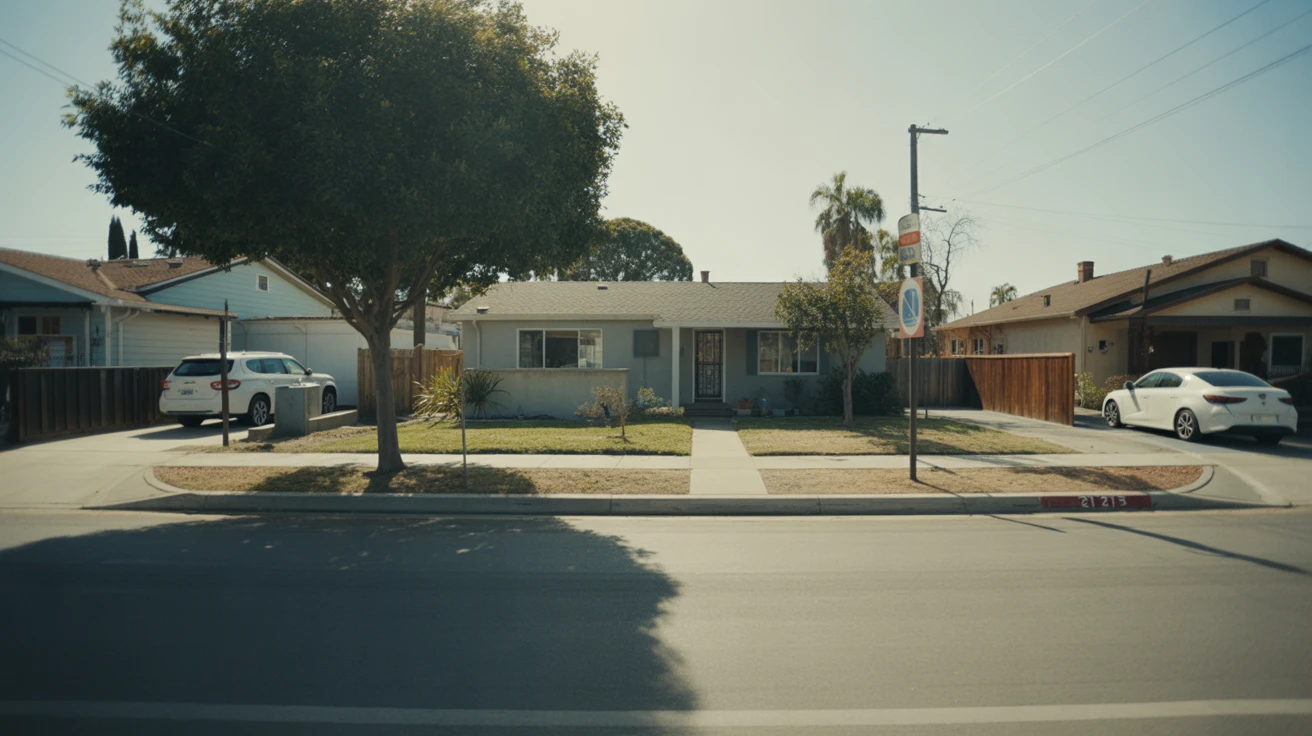
Unlike coastal San Diego neighborhoods where transit density can offset housing premiums, El Cajon’s infrastructure is car-oriented. Pedestrian infrastructure sits below regional thresholds, and while rail service exists, the street network and land-use patterns still require personal vehicles for reliable daily mobility. That structural dependency converts what looks like a housing discount into a multi-category exposure: fuel at $4.38 per gallon, insurance, maintenance, and the time cost of driving become recurring, non-negotiable expenses.
Electricity rates of 31.91¢ per kWh add a third layer. Inland heat drives summer cooling loads, and because the building stock skews low-rise and detached, individual households absorb the full seasonal swing. Natural gas pricing at $21.94 per MCF (roughly $0.22 per therm) remains moderate, but heating demand is minimal in this climate—cooling is the dominant utility driver.
Driver verdict: Housing entry cost sets the baseline, but car dependency and summer electricity exposure determine whether the city delivers value or simply relocates cost pressure into transportation and utilities.
Housing Costs (Primary Driver)
The median home value of $593,500 positions El Cajon as a lower-cost alternative within the San Diego metro, but “lower” is relative—this is still a substantial entry threshold. For renters, $1,686 per month offers more accessible entry, though it reflects a market where ownership remains the long-term norm. The urban form here is low-rise and predominantly detached, meaning rental stock often consists of single-family homes or small multifamily buildings rather than large apartment complexes.
The tradeoff between renting and owning hinges on timeline and transportation exposure. Renters avoid property tax, maintenance, and insurance volatility, but they also forgo equity accumulation in a market where home values have appreciated steadily. Owners face higher upfront costs and ongoing expenses, but they gain stability against rent increases and benefit from fixed-rate mortgage predictability.
El Cajon functions as a transitional city—a place where renters often arrive seeking affordability within the metro, then either move toward ownership locally or relocate to lower-cost regions if car dependency and utility loads prove unsustainable.
| Housing Type | Cost Anchor | What That Buys You |
|---|---|---|
| Median Rent | $1,686/month | Access to metro employment without coastal premiums; car dependency required |
| Median Home Value | $593,500 | Ownership entry in San Diego metro; detached low-rise housing stock; long-term equity exposure |
Utilities & Energy Risk
Electricity at 31.91¢ per kWh ranks among the highest residential rates in the country, and El Cajon’s inland location ensures that cooling dominates summer usage. Homes here—predominantly low-rise and detached—lack the thermal buffering of multifamily construction, so each household absorbs the full seasonal load. A typical 1,000 kWh month in summer translates to meaningful exposure, and because rate structures often include tiered pricing, high-usage households face compounding costs.
Natural gas at $21.94 per MCF (approximately $0.22 per therm) remains moderate, but heating demand is minimal. The climate rarely requires sustained furnace use, so gas bills stay low outside of water heating. The asymmetry matters: summer electricity swings are large and predictable, while winter heating costs are negligible.
Risk classification: moderate. Electricity is the primary volatility driver, and because cooling is non-discretionary during extended heat, households have limited ability to reduce exposure without efficiency upgrades or behavioral shifts in usage timing.
Groceries & Daily Costs
The regional price parity index of 111 suggests grocery costs run about 11% above the national baseline, but the city’s infrastructure mitigates some of that pressure. Food and grocery establishment density exceeds high thresholds, meaning competitive options are broadly accessible. That density doesn’t eliminate the price premium, but it does reduce the need for long trips to access variety or discount formats.
For context, derived estimates place staples like ground beef around $7.42 per pound and eggs near $3.01 per dozen—figures that reflect California’s broader cost structure rather than El Cajon-specific pricing. The practical takeaway is that grocery pressure here is structural (driven by state-level costs and supply chain positioning) rather than local (driven by access gaps or market concentration).
Households that prioritize bulk purchasing, seasonal produce, and store-brand flexibility can compress grocery spending, but the baseline remains elevated compared to inland or non-coastal metros.
Transportation Reality
El Cajon’s infrastructure is car-oriented. Pedestrian path density sits below low thresholds, and the ratio of walkable infrastructure to road network is minimal. Rail transit is present, but the street layout, land-use separation, and low density of pedestrian amenities mean that most daily errands, employment commutes, and household logistics require a personal vehicle.
Gas at $4.38 per gallon is a recurring cost anchor, but the larger exposure is the requirement of car ownership itself: insurance, registration, maintenance, and depreciation. Households that attempt to rely on transit or cycling face friction in the form of longer trip times, limited route coverage, and infrastructure gaps that make non-car mobility impractical for routine needs.
The city’s errands accessibility—high food and grocery density—reduces the frequency of trips, but it doesn’t eliminate the need for a vehicle. Even with nearby options, the built environment assumes car access. That structural dependency shifts where money goes: what looks like savings on rent compared to coastal alternatives often reappears as transportation spending.
Cost Exposure Profiles
El Cajon’s cost structure creates distinct exposure profiles depending on housing tenure, vehicle count, and cooling-season usage:
Low-exposure situation: A renter in a smaller unit with one fuel-efficient vehicle, moderate cooling usage, and a short commute faces manageable monthly pressure. Rent at $1,686 is the dominant fixed cost, electricity stays within predictable bounds, and transportation remains a known recurring expense. The city’s errands accessibility—broadly distributed grocery and food options—means trip frequency stays low, and the mixed land-use presence allows some consolidation of errands.
High-exposure situation: A homeowner with a long commute, multiple vehicles, and a detached home faces compounding costs. The $593,500 entry price translates to mortgage, insurance, and property tax obligations; summer electricity bills spike with cooling loads in a low-rise building that offers no thermal buffering; and transportation costs multiply with each additional vehicle. The car-oriented infrastructure means there’s no practical way to reduce vehicle dependency, so fuel, maintenance, and insurance become fixed rather than flexible expenses.
The difference between these profiles isn’t income—it’s structure. Ownership, commute length, and household size determine whether El Cajon’s moderate baseline costs remain contained or escalate into multi-category pressure. The city rewards those who can limit vehicle count and cooling exposure, but it penalizes those whose circumstances require both.
Frequently Asked Questions
Is El Cajon more affordable than coastal San Diego in 2026? Yes, housing entry costs are lower—both rent and home values sit below coastal neighborhoods—but the savings are partially offset by higher transportation dependence and similar utility rates.
What does a typical cost profile look like in El Cajon? Housing dominates at $1,686 rent or mortgage equivalent, followed by transportation (fuel, insurance, maintenance for at least one vehicle) and summer electricity exposure driven by inland heat and high per-kWh rates.
Do utilities cost more in El Cajon than in nearby cities? Electricity rates at 31.91¢ per kWh are high across the region, but El Cajon’s inland location and low-rise housing stock amplify cooling costs compared to coastal areas with milder temperatures or denser building types.
What costs tend to surprise newcomers in El Cajon? The structural requirement of car ownership catches many off guard—rail transit exists, but the built environment assumes vehicle access for daily errands, employment, and household logistics.
Are property taxes higher in El Cajon than in other San Diego County cities? Property tax rates are set at the county level, so the base rate is consistent; differences arise from assessed home values and local assessment districts, but no property tax data is available in this analysis.
Can you live in El Cajon without a car? Practically, no. Pedestrian infrastructure is minimal, bike infrastructure exists only in pockets, and while rail service is present, the car-oriented street network and land-use separation make non-car mobility impractical for routine needs.
How much does summer heat affect utility bills in El Cajon? Significantly. Inland temperatures drive extended cooling seasons, and at 31.91¢ per kWh, even moderate air conditioning usage translates to noticeable monthly increases during summer months.
Is El Cajon a good value for renters or buyers? It depends on your transportation exposure and cooling needs. Renters gain lower entry costs but remain vulnerable to rent increases; buyers gain stability and equity but absorb property tax, maintenance, and seasonal utility swings in full.
How this article was built: In addition to public economic data, this article incorporates location-based experiential signals derived from anonymized geographic patterns—such as access density, walkability, and land-use mix—to reflect how day-to-day living actually feels in El Cajon, CA.
—