
Is Cypress expensive to live in? Cypress is considered moderately priced in 2026, with costs aligning closely with the national baseline. The value proposition depends on housing entry cost versus car dependence, as the city’s layout requires frequent vehicle trips for daily errands despite pockets of walkable infrastructure.
Overall Cost of Living Snapshot
Between 2020 and 2025, cost of living trends in Houston-area suburbs like Cypress shifted from housing-driven growth to a more balanced pressure across transportation, utilities, and recurring household expenses. By 2026, Cypress sits at a regional price parity index of 100—meaning the overall cost structure mirrors the national average before accounting for how people actually live here.
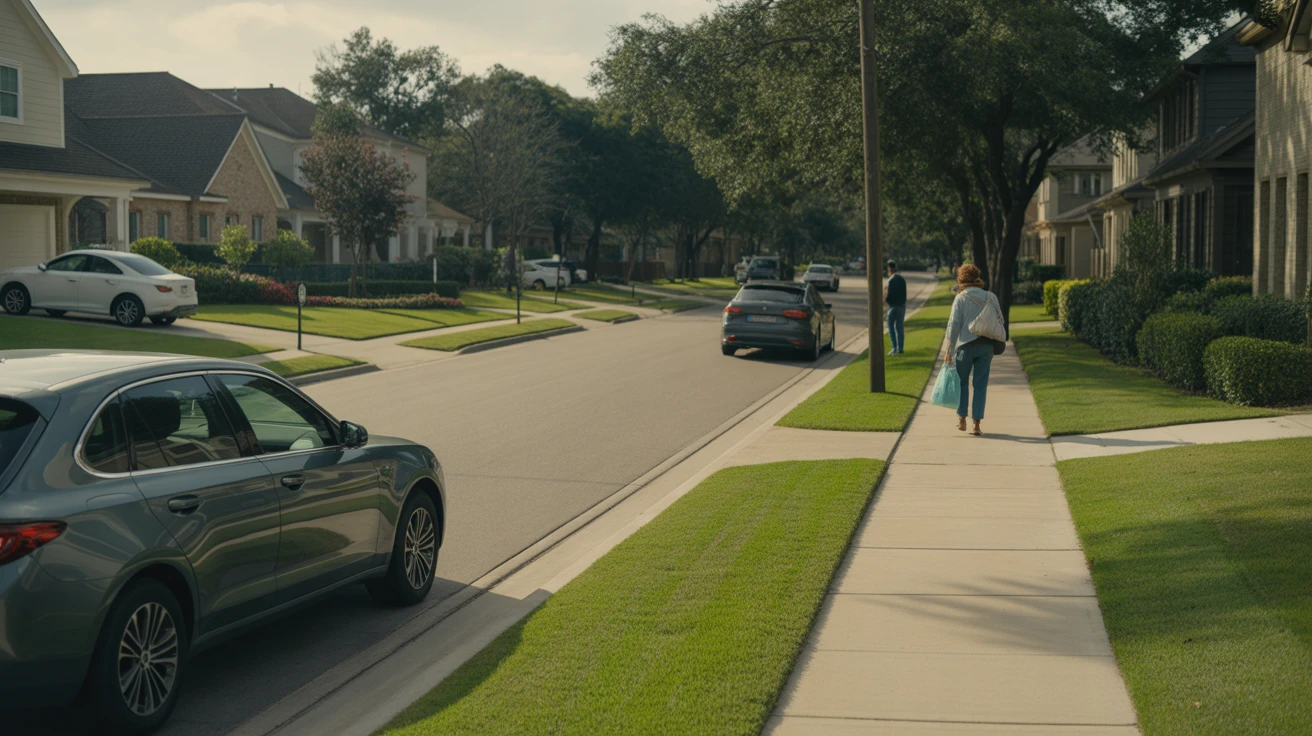
The shape of costs in Cypress is defined by two structural realities: housing affordability relative to core Houston, and the transportation load required to access daily needs. Food establishment density falls below typical thresholds, and grocery options cluster in moderate bands rather than being broadly accessible. That means residents drive more often, even for routine errands. Bus service exists, but the pedestrian-to-road ratio—while high in certain pockets—doesn’t translate into walkable daily life across the city. The result is a cost structure where the car is non-negotiable, and the expenses tied to it (fuel, maintenance, insurance, time) accumulate steadily rather than spiking.
Utility exposure is moderate but seasonal. Electricity rates of 16.04¢ per kWh combine with extended cooling seasons and high humidity to create summer bills that dominate the annual utility budget. Natural gas, priced at $30.71 per thousand cubic feet, plays a smaller role given the region’s mild winters. The unemployment rate of 4.4% suggests a stable local economy, but cost pressure comes less from income volatility and more from the recurring friction of distance, climate, and infrastructure gaps.
Driver verdict: Cypress costs are dominated by housing entry decisions and transportation exposure. The surprises come not from headline prices but from trip frequency, cooling intensity, and the logistics cost of managing a household across dispersed services and amenities.
Housing Costs (Primary Driver)
Housing data for Cypress is limited in 2026, but the structural logic is clear: this is a commuter suburb where the value proposition hinges on trading proximity for space and entry cost. The city exhibits a mixed building height profile and a blend of residential and commercial land use, suggesting a range of housing types rather than a monoculture of single-family detached homes. That diversity creates options, but it also means the market segments sharply by age, condition, and location within the city.
For renters, the calculus is straightforward—lease rates reflect the Houston metro’s broader rental market, where affordability relative to core urban areas comes with the expectation of car ownership and longer trips for work, school, and errands. For buyers, the decision is more complex. Ownership in Cypress often means lower entry costs than inner-loop Houston neighborhoods, but it also means absorbing property taxes, insurance (in a state with rising climate-related premiums), and maintenance on properties that may require updates. The mixed land-use pattern and presence of parks (density exceeds high thresholds) add quality-of-life value, but they don’t reduce the transportation or utility load.
Conclusion: Cypress is a buying market for households prioritizing space and equity over walkability and transit access. Renting makes sense for those in transition or testing the commute before committing. This is not a city where renters gain significant transportation savings over owners—both groups face similar car dependency.
| Housing Type | Cost Anchor | What That Buys You |
|---|---|---|
| Single-family ownership | Entry cost + recurring property tax/insurance | Space, equity, yard access, but high transportation and cooling exposure |
| Apartment rental | Monthly lease + utilities | Flexibility, lower maintenance burden, but no equity and same car dependency |
| Townhome/condo | Mid-range entry, possible HOA | Compromise on space and autonomy, moderate maintenance, still car-reliant |
Utilities & Energy Risk
Electricity is the dominant utility expense in Cypress, driven by the extended cooling season and the intensity of summer heat. At 16.04¢ per kilowatt-hour, the rate itself is moderate, but the volume of usage during triple-digit summer months creates bills that can double or triple compared to mild-weather months. Air conditioning isn’t optional—it’s a baseline cost of living here, and homes with poor insulation, older HVAC systems, or west-facing exposure see the highest impact.
Natural gas, priced at $30.71 per thousand cubic feet, plays a smaller role. Winters are mild, and heating demand is low compared to cooling. For homes with gas water heaters or ranges, the expense is steady but not a major swing factor. The real volatility comes from electricity, and that volatility is predictable—it peaks in summer, eases in spring and fall, and drops in winter. Households that manage cooling exposure (through insulation, thermostat discipline, or time-of-use awareness) reduce their largest recurring variable cost.
Risk classification: moderate. Utility costs in Cypress are not a surprise, but they are a recurring pressure that scales with home size, occupancy, and cooling behavior. The exposure is manageable for households that plan for seasonal swings, but it’s a major factor for those entering the market without awareness of summer intensity.
Groceries & Daily Costs
Grocery costs in Cypress reflect the national baseline, adjusted for regional price parity. Derived estimates based on that adjustment suggest bread around $1.83 per pound, eggs near $2.71 per dozen, ground beef at $6.69 per pound, and milk close to $4.05 per half-gallon. These figures are illustrative—actual prices vary by store, brand, and season—but they indicate that grocery pressure in Cypress is moderate rather than extreme.
The bigger issue is access. With food establishment density below low thresholds and grocery density in the medium band, residents often drive several miles for a full shopping trip. That adds time and fuel cost to every grocery run, and it limits the ability to comparison-shop or make quick trips for missing items. Stores such as large regional chains and discount grocers are present, but they’re corridor-clustered rather than neighborhood-integrated. For households without flexible schedules or reliable transportation, that access gap becomes a recurring friction point.
The practical impact: grocery costs themselves are in line with national norms, but the logistics of grocery shopping—trip frequency, distance, and time—add hidden costs that don’t show up in per-item pricing.
Transportation Reality
Cypress is a car-dependent city. Bus service exists, and certain areas show high pedestrian-to-road ratios, but daily errands accessibility is sparse. That means most trips—work commutes, school drop-offs, grocery runs, medical appointments—require a vehicle. Gasoline is priced at $2.49 per gallon, which is relatively low, but the cost of transportation in Cypress isn’t just fuel. It’s insurance, maintenance, registration, and the time spent behind the wheel.
The unemployment rate of 4.4% suggests most adults in Cypress are working, and many are commuting to jobs in Houston or other parts of the metro. Even without specific commute data, the land-use pattern makes it clear: this is a bedroom community where transportation is a recurring exposure, not an occasional expense. Households with multiple drivers face multiplied costs—two cars means two insurance premiums, two maintenance schedules, two fuel budgets.
The integrated park network (density exceeds high thresholds) and presence of water features offer some relief for recreation without travel, but they don’t reduce the need for a car to reach work, school, or stores. Transportation tradeoffs in Cypress favor those who can work remotely, batch errands, or live close to their job. For everyone else, the car is the cost center.
Cost Exposure Profiles
Cost exposure in Cypress is shaped by three structural factors: housing entry versus long-term ownership, transportation dependence, and utility volatility. These factors don’t affect all households equally—exposure varies based on commute length, vehicle count, home size, and cooling behavior.
Low-exposure situations: Remote workers who batch errands and avoid daily commutes face lower transportation costs. Owners with established equity and updated HVAC systems manage utility swings more easily. Single-vehicle households in walkable pockets (where pedestrian infrastructure is denser) reduce trip frequency and fuel costs. Households that plan for seasonal utility peaks and maintain emergency funds absorb summer cooling bills without financial strain.
High-exposure situations: Multi-vehicle commuter households face compounded transportation costs—fuel, insurance, and maintenance multiply with each car. Renters navigating lease renewals absorb housing cost increases without equity offsets. Families managing school and activity trips across dispersed infrastructure (school density and playground density both fall below low thresholds) spend more time and money on logistics. Households in older homes with poor insulation see the highest summer utility bills, and those without savings buffers face stress during peak cooling months.
The difference between low and high exposure isn’t income—it’s structure. Cypress rewards households that can reduce trip frequency, manage cooling intensity, and lock in housing costs early. It penalizes those who must commute daily, drive multiple vehicles, or rent in a market where turnover resets costs regularly.
Frequently Asked Questions
Is Cypress more affordable than nearby Houston neighborhoods in 2026? Cypress tends to offer lower housing entry costs than inner-loop Houston areas, but transportation expenses are higher due to car dependency and longer commutes. The tradeoff is space and equity versus proximity and walkability.
What does a typical cost profile look like in Cypress? A typical household in Cypress faces moderate housing costs, high transportation exposure (fuel, insurance, maintenance for one or more vehicles), and seasonal utility swings driven by summer cooling. Grocery prices align with national norms, but access requires driving.
Do utilities cost more in Cypress than nearby areas? Electricity rates in Cypress are moderate at 16.04¢ per kWh, but the extended cooling season and intensity of summer heat drive higher usage. Utility costs are more about volume than rate, and they peak predictably in summer months.
What costs tend to surprise newcomers in Cypress? Newcomers often underestimate the cumulative cost of car dependency—not just fuel, but insurance, maintenance, and time. Summer cooling bills also surprise those unfamiliar with the intensity and duration of heat in the region. Trip frequency for errands adds up even when gas prices are low.
Are property taxes higher in Cypress than in other Texas suburbs? Texas relies heavily on property taxes to fund local services, and rates vary by jurisdiction within the Houston metro. Cypress property taxes are typical for the region, but they represent a significant recurring cost for homeowners and are capitalized into rental rates as well.
Is Cypress a good fit for families in 2026? Cypress offers integrated park access and a mixed land-use environment, but family infrastructure is limited—school density and playground density both fall below thresholds. Families should expect to drive for schools, childcare, and activities, which adds logistics complexity and cost.
How does car dependency in Cypress compare to other Houston suburbs? Cypress shows sparse daily errands accessibility and bus-only transit, making it highly car-dependent. Some pockets have walkable infrastructure, but the overall layout requires a vehicle for most trips. This is consistent with outer-ring Houston suburbs but more pronounced than inner-ring areas with denser services.
What’s the biggest cost lever residents can control in Cypress? Transportation exposure is the most controllable lever. Reducing trip frequency through remote work, batching errands, or living closer to work cuts fuel, maintenance, and time costs. Managing cooling behavior (insulation, thermostat settings, HVAC maintenance) is the second-largest lever, especially during summer months.
How this article was built: In addition to public economic data, this article incorporates location-based experiential signals derived from anonymized geographic patterns—such as access density, walkability, and land-use mix—to reflect how day-to-day living actually feels in Cypress, TX.
—