
Gallatin is considered moderately priced in 2026, with a median home value of $306,100 and median rent at $1,250 per month. The value proposition depends on housing entry cost versus car dependence—most daily movement requires a vehicle, and sparse food establishment density means errands involve planning rather than convenience.
You’re weighing a move to Gallatin, and the question isn’t just whether you can cover the rent or mortgage—it’s whether the entire cost structure aligns with how you actually live. A city can look affordable on paper but deliver surprises once you factor in commute length, grocery runs that require a car, and utility swings tied to Tennessee’s humid summers and occasional winter cold snaps.
This guide maps the cost drivers that shape household pressure in Gallatin: where money concentrates, which expenses stay predictable, and which ones fluctuate with season, behavior, or infrastructure access. It’s not a monthly budget—it’s a structural breakdown of what dominates your financial exposure here.
Overall Cost of Living Snapshot
Gallatin sits just below the national cost baseline, with a regional price parity index of 97, meaning the general price level is roughly 3% lower than the U.S. average. That modest relief shows up unevenly: housing offers some breathing room compared to Nashville proper, but transportation and daily errands introduce friction that offsets the headline affordability.
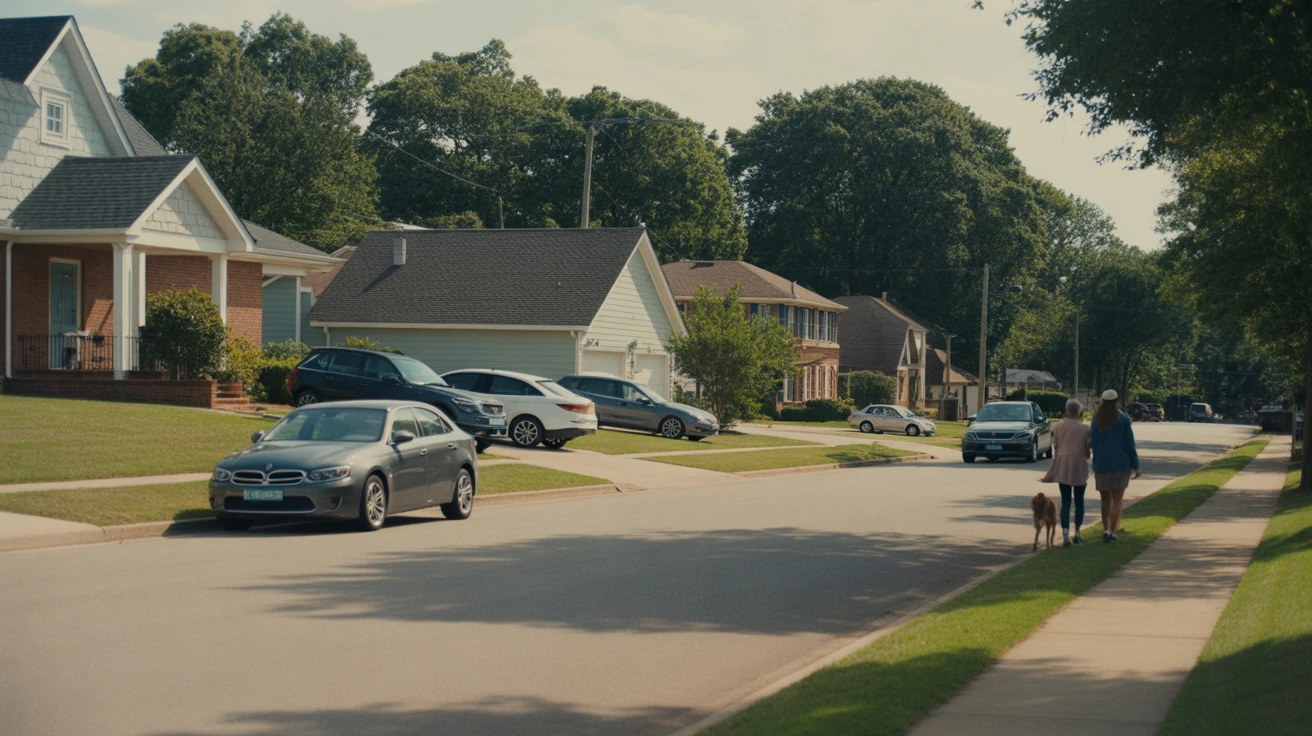
The primary cost driver is housing entry—whether you’re buying at $306,100 or renting at $1,250 per month, that anchor shapes everything else. The secondary driver is transportation structure: Gallatin’s infrastructure is car-oriented, with minimal pedestrian density and low bike-to-road ratios. Most households here depend on personal vehicles not just for commuting (average 26 minutes each way) but for nearly all errands, since food and grocery establishment density falls below typical thresholds.
Compared to Nashville’s urban core, Gallatin trades walkability and errand convenience for lower housing costs and more space. Compared to more rural Tennessee towns, it offers stronger family infrastructure—school and playground density both sit in the medium band—but without a hospital (clinics and pharmacies are present, but acute care requires travel).
Driver verdict: Housing cost dominates the budget anchor, but ongoing transportation exposure—fuel, maintenance, insurance, and time—is the variable that separates low-pressure from high-pressure households. Surprises come from the compounding effect of car dependency: every errand, appointment, and activity assumes vehicle access and the recurring costs that come with it.
Housing Costs (Primary Driver)
At $306,100, the median home value in Gallatin positions the city as accessible for buyers who can manage the down payment and qualify for financing, especially compared to Nashville’s tighter inventory and higher entry points. Median rent at $1,250 per month offers a lower-commitment alternative, though rental stock tends to be limited in suburban markets like this, and lease renewals can shift quickly if demand tightens.
The renting-versus-owning calculus here hinges on timeline and transportation tradeoffs. Renters gain flexibility and avoid maintenance exposure, but they’re still car-dependent and face the same errand and commute friction as owners. Buyers lock in a housing cost (minus taxes, insurance, and upkeep) and gain equity, but they’re also betting on Gallatin’s longer-term appeal as a commuter suburb within the Nashville metro.
This is a buying market with a commuter tradeoff: if you work in Nashville or another metro hub, the drive is part of the cost structure. If you work locally or remotely, the housing value proposition strengthens considerably.
| Housing Type | Cost Anchor | What That Buys You |
|---|---|---|
| Median Home | $306,100 | Ownership entry in a Nashville-adjacent suburb with space and school access, but full car dependency |
| Median Rent | $1,250/month | Flexibility and lower upfront cost, though rental supply is limited and lease renewals can be volatile |
Utilities & Energy Risk
Electricity in Gallatin runs 13.47¢ per kWh, slightly above the national average, and usage here is shaped by Tennessee’s climate: hot, humid summers drive extended air conditioning demand, while winters are generally mild with only occasional cold snaps. For illustrative context, a household using around 1,000 kWh per month would see a baseline electric cost near $135 before fees and taxes—but that figure can swing significantly during peak cooling months.
Natural gas is priced at $13.18 per MCF (roughly 100 therms), and while heating demand is lower than in northern climates, gas-heated homes will see seasonal variation in winter months. The bigger volatility risk is electricity: summer cooling can dominate the utility budget for weeks at a time, and older or poorly insulated homes amplify that exposure.
Risk classification: moderate. Utilities won’t destabilize a budget under normal conditions, but households in older housing stock or those sensitive to monthly swings should plan for summer spikes and consider efficiency upgrades—programmable thermostats, attic insulation, and air sealing—as ways to reduce peak exposure.
Groceries & Daily Costs
Grocery pricing in Gallatin reflects the regional price environment: costs sit slightly below the national baseline, consistent with the 97 RPP index. The pressure point isn’t the prices themselves—it’s the access structure. Food establishment density falls below typical thresholds, and grocery density sits in the medium band, meaning most households drive to stock up rather than making quick, convenient trips on foot or by bike.
That access pattern doesn’t raise the per-item cost, but it does shape household logistics: fewer spontaneous trips, more planning, and a stronger reliance on bulk shopping and meal prep. For households accustomed to walkable grocery access or dense retail corridors, the shift to car-dependent errands can feel like a hidden time and fuel cost, even if the grocery bill itself stays manageable.
The takeaway: grocery costs are modest, but the friction of getting to them is part of Gallatin’s broader transportation exposure.
Transportation Reality
Gallatin’s infrastructure is car-oriented, with pedestrian density and bike infrastructure both well below thresholds that would support routine non-car trips. The average commute is 26 minutes, and 41.5% of workers face long commutes (typically defined as over 30 minutes). Only 9.4% work from home, meaning the vast majority of employed residents are making regular vehicle trips.
Gas currently sits at $2.54 per gallon, which is manageable in isolation—but the cost structure here isn’t about fuel prices alone. It’s about the inevitability of car ownership: insurance, maintenance, registration, depreciation, and the time cost of driving to work, errands, appointments, and activities. Households with two working adults often need two vehicles, doubling that exposure.
Public transit is minimal (bus service exists but coverage is limited), and the urban form—low-rise, mixed land use present but not dense—means most destinations are separated by distances that require a car. Transportation isn’t optional here; it’s a recurring structural cost that scales with household size, work location, and activity level.
Cost Exposure Profiles
In Gallatin, cost pressure concentrates in two places: the upfront housing entry (whether buying or securing a rental) and the ongoing transportation load. The distinction between low-exposure and high-exposure households comes down to how those two factors interact.
Low-exposure situations: Owners who bought before recent price appreciation, remote workers or those employed locally (minimizing commute costs), single-vehicle households, and residents comfortable with planning-based errands rather than spontaneous access. These households benefit from Gallatin’s moderate price level and can avoid the compounding costs of long commutes and multi-car dependency.
High-exposure situations: Renters facing lease renewals in a tight market, dual-income households commuting to Nashville or other metro job centers, families requiring two vehicles, and anyone expecting walkable errand access or frequent discretionary trips. The car dependency here isn’t just about commuting—it’s about every grocery run, every school pickup, every pharmacy or clinic visit. That adds up in fuel, time, and vehicle wear, and it’s a cost structure that doesn’t ease once you’ve settled in.
Utility volatility introduces a secondary exposure, particularly in summer, but it’s manageable with efficiency measures and doesn’t typically rival the housing-plus-transportation load. The unemployment rate of 2.8% signals a stable local economy, but many residents work outside Gallatin, so job access and commute tolerance are part of the affordability equation.
The verdict: Gallatin rewards households that can lock in housing early, work locally or remotely, and accept car-dependent logistics as the baseline. It penalizes those who need walkability, face long commutes, or require two vehicles to function—because those costs don’t show up in the rent or mortgage, but they define the lived financial pressure.
Frequently Asked Questions
Is Gallatin more affordable than Nashville in 2026? Yes, particularly for housing—Gallatin’s median home value and rent are both lower than Nashville’s urban core. However, the savings come with a tradeoff: you’ll likely spend more on transportation due to car dependency and longer commutes if you work in Nashville.
What does a typical cost profile look like in Gallatin? Housing is the largest fixed cost, followed by transportation (vehicle ownership, fuel, insurance, and maintenance). Utilities are moderate with seasonal summer spikes, and groceries are slightly below the national average, though accessing them requires a car.
Do utilities cost more in Gallatin than in nearby Tennessee cities? Electricity rates in Gallatin are close to the state average, and natural gas pricing is typical for the region. The bigger factor is usage: Tennessee’s humid summers drive higher cooling costs, so utility bills can vary significantly by season and home efficiency.
What costs tend to surprise newcomers in Gallatin? The extent of car dependency often surprises people—not just for commuting, but for every errand, appointment, and activity. Households accustomed to walkable neighborhoods or public transit may underestimate the recurring cost of owning and operating one or two vehicles here.
Are property taxes higher in Gallatin than in nearby cities? Property tax rates vary by county and municipality in Tennessee, and specific figures aren’t included in this analysis. Gallatin sits in Sumner County, and prospective buyers should verify current millage rates and assessment practices with local authorities before committing.
Is Gallatin a good fit for families on a budget? Gallatin offers strong family infrastructure—school and playground density are both in the medium band—and housing costs are more accessible than Nashville. However, families should account for transportation costs (especially if multiple vehicles are needed) and the lack of a local hospital, which requires travel for acute care.
How does Gallatin’s cost of living compare to other Nashville suburbs? Gallatin tends to be more affordable than closer-in suburbs like Franklin or Brentwood, but it also involves longer commutes and less walkable infrastructure. The tradeoff is space and lower entry cost versus time and transportation expense.
What’s the biggest financial risk of moving to Gallatin? Underestimating the total cost of car dependency—fuel, insurance, maintenance, and depreciation—especially for households that need two vehicles or face long commutes. That recurring exposure can erode the housing savings if not planned for upfront.
How this article was built: In addition to public economic data, this article incorporates location-based experiential signals derived from anonymized geographic patterns—such as access density, walkability, and land-use mix—to reflect how day-to-day living actually feels in Gallatin, TN.
—