
“I thought the bus would work for my commute, and it does—three days a week. The other two, I drive because I need to pick up my daughter after school, and there’s no stop near her campus.”
That’s the reality of transportation options in Enterprise: transit exists, but it doesn’t eliminate the need for a car. Enterprise sits just south of Las Vegas, and while it shares some of the metro’s infrastructure, it functions more like a suburban edge than an urban core. The result is a transportation landscape where buses serve specific corridors, walkability appears in pockets, and most households still depend on driving for daily life.
Understanding how people actually get around here—and who can realistically rely on transit versus who can’t—matters as much as knowing what gas costs or where the bus stops are. This article explains the structure, the tradeoffs, and the fit.
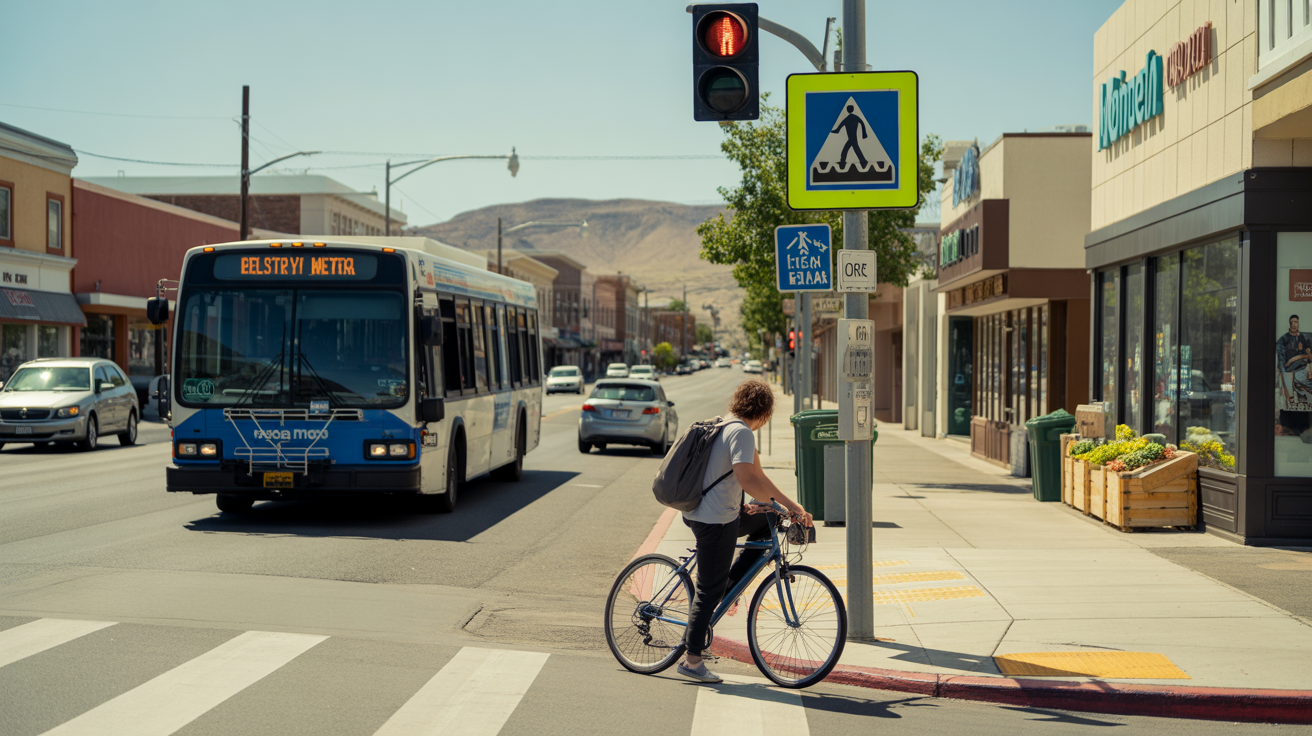
How People Get Around Enterprise
Enterprise is car-first by design. The street grid, the distance between daily destinations, and the layout of residential neighborhoods all assume most people will drive most of the time. That doesn’t mean transit is absent—bus service is present and connects parts of Enterprise to the broader Las Vegas metro—but it does mean that what a budget has to handle in Enterprise includes the assumption that at least one vehicle is part of the household.
The city’s building density is higher than many suburban areas, and there are pockets where pedestrian infrastructure is substantial relative to the road network. Mixed residential and commercial land use exists, which means some neighborhoods do support walking for certain errands. But those walkable pockets don’t extend citywide, and the clustering of food and grocery options along corridors rather than throughout neighborhoods means that even residents in denser areas often drive for weekly shopping, medical appointments, or school drop-offs.
Newcomers sometimes assume that proximity to Las Vegas means Enterprise has the same transit coverage. It doesn’t. The metro’s bus network reaches Enterprise, but frequency, span of service, and route density are all lower than in the urban core. If you’re moving here expecting to live car-free, you’ll need to choose your neighborhood carefully and accept significant constraints on where you can work, shop, and spend time.
Public Transit Availability in Enterprise
Public transit in Enterprise centers around bus service, often provided by systems such as the Regional Transportation Commission of Southern Nevada (RTC). There is no rail transit—no light rail, no commuter rail, no subway. What exists is a network of bus routes that connect Enterprise to Las Vegas, Henderson, and other parts of the metro, with some routes running through the community itself.
Bus service works best along major corridors where commercial activity clusters. If you live near one of these routes and your job or school is also along a served corridor, transit can be a practical option for regular commuting. But coverage thins quickly outside these arteries. Residential streets farther from main roads often have no nearby stops, and service frequency drops in the evenings and on weekends, which limits transit’s usefulness for shift workers, families with after-school activities, or anyone whose schedule doesn’t align with peak commuting hours.
The presence of bus stops doesn’t guarantee convenience. Wait times, transfer requirements, and the time cost of indirect routing all shape whether transit is realistic for a given trip. For someone commuting downtown five days a week along a single route, it might work. For someone making multiple stops—dropping kids at school, picking up groceries, getting to a medical appointment—it usually doesn’t.
Driving & Car Dependence Reality
Most people in Enterprise drive because the city’s layout makes driving faster, more flexible, and often necessary. Parking is generally available and free at most destinations, which removes one of the friction points that makes car ownership costly in denser cities. Roads are wide, traffic is manageable outside of peak hours, and the distance between home and daily destinations—work, school, healthcare, shopping—is often too far to walk or poorly served by transit.
Car dependence isn’t just about preference; it’s about structure. Schools are spread out, and the lower density of school infrastructure means families often drive children to campus rather than relying on walking or busing. The absence of a hospital in Enterprise means anyone needing acute or specialized care drives to facilities in Las Vegas or Henderson. Even grocery shopping, which is clustered along corridors, often requires a car unless you live in one of the few neighborhoods with a store within comfortable walking distance.
For households with two working adults, two cars are common. For single-income households or retirees, one car is usually sufficient, but going without any vehicle significantly limits access and convenience. The tradeoff is predictability: driving gives you control over timing, routing, and the ability to chain errands, but it also locks in fuel costs, insurance, maintenance, and the need for parking at home.
Commuting Patterns & Daily Mobility
Commuting in Enterprise typically means either driving to a job elsewhere in the metro or working locally in retail, hospitality, or service industries. The city functions as a residential base for workers employed throughout the Las Vegas valley, and commute patterns reflect that spread. Some residents drive north into Las Vegas, others head east toward Henderson, and still others work within Enterprise itself.
The structure of the commute matters more than the distance. A straight shot along a major highway is faster and less stressful than a route requiring surface streets and multiple turns. For households with school-age children, the commute often includes a stop at school, which adds time and complexity. For shift workers in hospitality or healthcare, commuting outside peak hours can mean faster drives but also reduced transit options if a car isn’t available.
Remote work, where present, reduces transportation costs and time, but it doesn’t eliminate the need for a car. Even fully remote workers need to run errands, and the corridor-clustered layout of grocery stores, clinics, and other services means those errands usually require driving. Proximity to work matters, but proximity to daily infrastructure—schools, healthcare, food—matters just as much.
Who Transit Works For — and Who It Doesn’t
Transit in Enterprise works for a narrow slice of residents: those who live near a bus route, work along a served corridor, and have schedules that align with service hours. Single adults or couples without children, particularly renters in denser areas near commercial strips, are the most likely to make transit work. If your job is in downtown Las Vegas and you live within walking distance of a frequent route, you can realistically commute by bus most days.
Transit doesn’t work well for families. The limited school infrastructure and the spread of campuses mean parents usually drive children to school. The absence of a hospital and the moderate density of clinics mean medical appointments often require a car. Grocery shopping is possible on transit, but carrying a week’s worth of groceries on a bus is impractical for most households, especially those with children.
Retirees and older adults face a similar calculus. If mobility is limited and driving becomes difficult, transit can provide some access, but only if the home is near a stop and destinations are along served routes. For those living in quieter residential areas away from main corridors, transit isn’t a realistic substitute for driving.
Renters in core areas have more flexibility than homeowners in peripheral neighborhoods. Renting near a bus line allows you to test whether transit works for your routine without committing to a mortgage in a car-dependent area. Homeowners farther out, by contrast, are locked into a transportation structure that assumes car ownership.
Transportation Tradeoffs in Enterprise
The choice between transit and driving in Enterprise isn’t really a choice for most households—it’s a matter of whether your situation allows transit to work at all. For those who can use it, transit offers lower direct costs and eliminates the need to own, insure, and maintain a vehicle. But it also means longer trip times, limited schedule flexibility, and reduced access to destinations outside the bus network.
Driving offers control and convenience. You leave when you want, take the route you prefer, and handle multiple stops in a single trip. But it also means exposure to fuel price swings, ongoing insurance and maintenance costs, and the need for parking at home. In Enterprise, where summer heat is intense and vehicles are often parked outside, heat-related wear on cars can accelerate maintenance needs.
The tradeoff isn’t just financial—it’s also about time and predictability. A 20-minute drive might become a 50-minute bus trip with a transfer. A quick errand after work might require an extra hour if you’re on transit. For households where time is already stretched—parents managing school schedules, workers with variable shifts—that difference is often decisive.
FAQs About Transportation in Enterprise (2026)
Is public transit usable for daily commuting in Enterprise?
It depends on where you live and work. If both your home and job are along a bus corridor with reasonable frequency, transit can work for commuting. But if either endpoint is off the network, or if you need to make stops for school, errands, or childcare, driving becomes necessary. Transit is present, but it’s not comprehensive.
Do most people in Enterprise rely on a car?
Yes. The layout of the city, the distance between daily destinations, and the limited reach of transit mean that most households own at least one vehicle. Two-car households are common, especially among families or couples with two working adults.
Which areas of Enterprise are easiest to live in without a car?
Areas near major commercial corridors with bus service and higher building density offer the best chance of reducing car dependence. Even in these areas, going completely car-free is difficult, but it’s possible to rely on transit for commuting and use occasional rideshare or car-sharing for other trips.
How does commuting in Enterprise compare to nearby cities?
Enterprise functions as part of the broader Las Vegas metro, so commuting patterns are similar to other suburban areas in the valley. Compared to the urban core of Las Vegas, transit options are more limited, and car dependence is higher. Compared to more rural areas farther from the metro, Enterprise has better access to bus service, but the tradeoff is still weighted heavily toward driving.
Can you bike for transportation in Enterprise?
Cycling infrastructure exists in some areas, but it’s not extensive. The bike-to-road ratio is moderate, which means some routes have bike lanes or paths, but coverage is inconsistent. Summer heat also makes cycling less practical for much of the year. Biking works best for short trips in cooler months, not as a primary transportation mode.
How Transportation Fits Into the Cost of Living in Enterprise
Transportation shapes more than just your monthly fuel or transit pass budget—it affects where you can live, how much time you spend commuting, and what kind of flexibility you have in daily life. In Enterprise, the assumption of car ownership is baked into housing location, job access, and household logistics. That doesn’t mean everyone needs two cars or that transit is irrelevant, but it does mean that what a budget has to handle in Enterprise includes the costs and constraints that come with a car-dependent layout.
For families, transportation decisions intersect with school access, healthcare proximity, and the ability to manage multiple schedules. For single adults or couples, the question is whether living near transit and accepting its limitations is worth the savings of going car-light or car-free. For retirees, transportation becomes a question of long-term mobility and whether aging in place is realistic without a vehicle.
The key is understanding what your household actually needs—not what you wish the city offered, but what the infrastructure supports. If your routine aligns with bus service and you’re comfortable with the time cost, you can reduce transportation expenses. If your life requires the flexibility and reach that only a car provides, plan for that cost and choose housing accordingly. Enterprise rewards residents who match their transportation expectations to the city’s structure, not those who try to force a car-free lifestyle onto a car-first layout.
How this article was built: In addition to public economic data, this article incorporates location-based experiential signals derived from anonymized geographic patterns—such as access density, walkability, and land-use mix—to reflect how day-to-day living actually feels in Enterprise, NV.