
It’s Sunday afternoon in Enterprise, and you’re mapping out the week’s meals—tacos Tuesday, a slow-cooker chicken dinner Wednesday, pasta Friday. You know what you need: ground beef, chicken breasts, a pound of cheese, eggs, rice, bread, maybe some produce. But as you think through where to shop and what each trip might cost, the question isn’t just what you’ll buy—it’s where, and whether your grocery strategy still fits your household’s financial rhythm. For families moving to Enterprise or recalibrating their budgets here, understanding how grocery costs actually feel—and why they feel different depending on how you shop—matters more than any single price tag.
This article breaks down grocery price pressure in Enterprise, explains which households feel it most, and explores how store choice and shopping habits shape the food cost experience. It won’t simulate a grocery receipt or prescribe a weekly spending target—that’s not its role. Instead, it explains the texture of grocery costs here, so you can make decisions that fit your household’s size, income, and priorities.
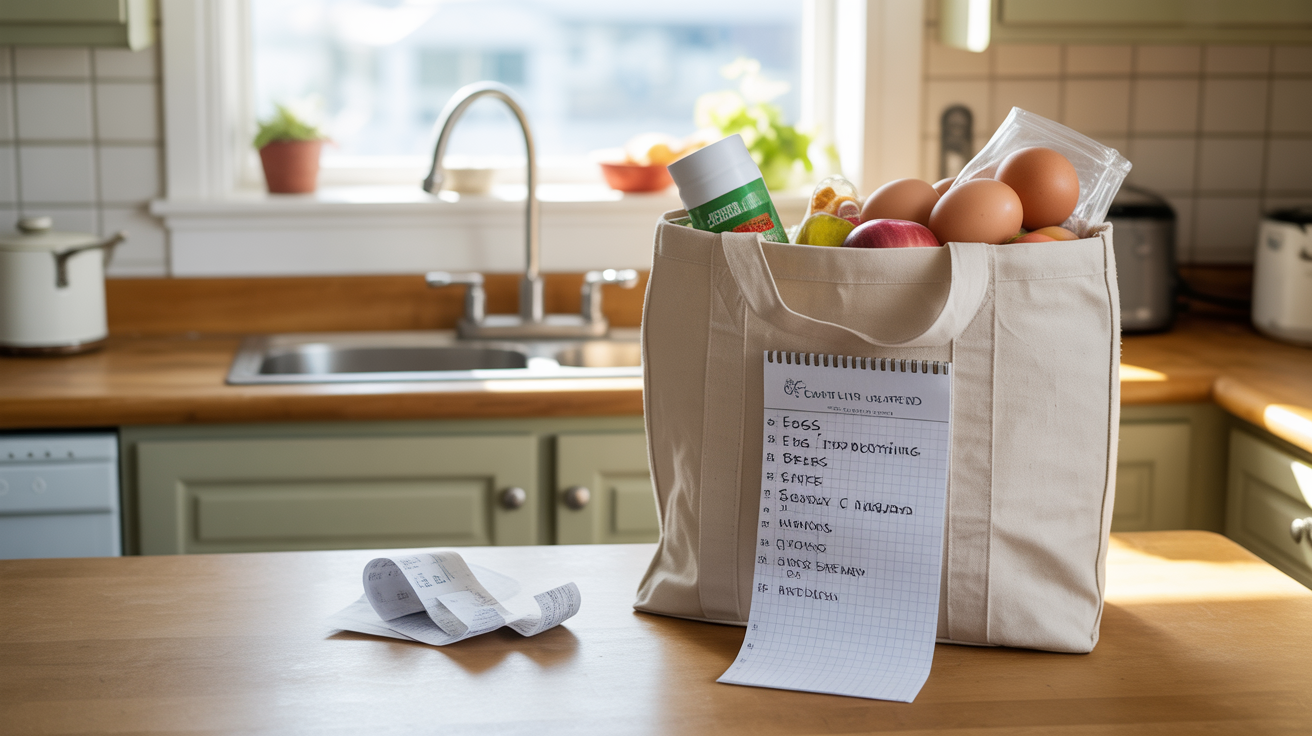
How Grocery Costs Feel in Enterprise
Grocery prices in Enterprise sit slightly below the national baseline, with the region’s overall price level at 97 on the regional price parity index. That modest advantage shows up in staple pricing—bread, rice, and eggs trend toward the lower end of typical ranges, while proteins like ground beef and cheese reflect broader national pressures. For a household earning the local median income of $91,165 per year, baseline grocery costs don’t dominate the budget the way housing or transportation might. But that doesn’t mean groceries feel effortless, especially as household size grows or income tightens.
Singles and couples often notice grocery costs as a controllable line item—one where small changes in behavior (buying store brands, skipping prepared foods) produce visible results. Families with children, on the other hand, feel grocery pressure more acutely. A household feeding four or five people can’t easily trim volume, and even modest per-item price differences compound quickly when you’re buying multiples of everything. The difference between a $4.59-per-pound block of cheese and a $3.50 store-brand equivalent might seem minor on its own, but across a cart with ten or fifteen staples, those gaps add up. Grocery costs in Enterprise aren’t punishing, but they’re not invisible either—particularly for households managing volume, dietary restrictions, or tight margins.
What makes grocery costs feel more or less manageable here isn’t just the baseline pricing—it’s how intentionally households approach store choice and trip planning. Enterprise’s grocery landscape is clustered along corridors rather than evenly distributed, meaning access to different store tiers requires some planning. You’re not always walking to the nearest option; you’re often driving to the store that matches your budget strategy. That structure rewards households who think ahead and penalizes those who default to convenience without considering cost tiers.
Grocery Price Signals (Illustrative)
These prices illustrate how staple items tend to compare locally—not a full shopping list. They’re derived estimates based on national baseline data adjusted by regional price parity, and they reflect typical pricing patterns rather than any specific store or week. Use them as anchors for understanding relative cost positioning, not as checkout-accurate figures.
| Item | Price |
|---|---|
| Bread | $1.78/lb |
| Cheese | $4.59/lb |
| Chicken | $1.96/lb |
| Eggs | $2.63/dozen |
| Ground Beef | $6.49/lb |
| Milk | $3.93/half-gallon |
| Rice | $1.04/lb |
Staples like rice, bread, and chicken sit on the lower end of the cost spectrum, making them reliable building blocks for budget-conscious meal planning. Ground beef and cheese, meanwhile, reflect tighter margins—households buying these regularly will notice price swings more acutely. Eggs and milk fall in the middle, offering decent value for the nutritional density they provide. None of these prices are extreme, but they’re not negligible either, especially when you’re filling a cart for a family of four or managing a fixed grocery allowance.
Store Choice & Price Sensitivity
Grocery price pressure in Enterprise varies more by store tier than by any single “average” experience. The city’s food retail landscape includes discount-focused stores, mid-tier grocers, and premium or specialty markets, and the gap between these tiers can be substantial. A household shopping exclusively at a discount chain might spend 20–30% less on the same cart than someone defaulting to a premium grocer, even before factoring in store brands or sales. That spread matters—not just for low-income households, but for anyone managing volume or trying to keep grocery costs predictable.
Discount-tier stores offer the tightest pricing, often through a combination of store brands, no-frills presentation, and limited selection. These stores work well for households who plan meals around what’s available rather than shopping from a fixed list. Mid-tier grocers—often regional or national chains—strike a balance between price, selection, and convenience. They’re where most households do the bulk of their shopping, especially when they need variety or specific brands. Premium stores, meanwhile, cater to households prioritizing organic options, specialty ingredients, or prepared foods. The pricing reflects that focus, and while the quality or convenience might justify the cost for some, it’s rarely the most efficient choice for budget-conscious families.
Because grocery access in Enterprise is corridor-clustered rather than evenly distributed, store choice isn’t always frictionless. You might pass a mid-tier grocer on your commute but need to make a separate trip to reach a discount store. That dynamic rewards households who batch errands intentionally and penalizes those who shop impulsively or prioritize proximity over price. For families managing tight budgets, the discipline to drive an extra few minutes to a lower-cost store can translate into meaningful monthly savings. For higher-income households, the convenience of a nearby premium grocer might feel worth the premium—but it’s still a choice, not a necessity.
What Drives Grocery Pressure Here
Grocery pressure in Enterprise isn’t uniform—it’s shaped by household size, income level, and how intentionally people approach shopping. For singles and couples, grocery costs are often manageable even without aggressive optimization. A household of two can absorb occasional premium purchases or convenience-driven trips without destabilizing what a budget has to handle in Enterprise. But as household size grows, volume sensitivity kicks in. A family of four or five can’t easily trim quantities, and even small per-item price differences compound quickly when you’re buying multiples of everything. The difference between a $1.78 loaf of bread and a $2.50 artisan loaf might seem trivial for one household, but for a family buying two or three loaves a week, it’s a recurring cost that adds up.
Income level also shapes how grocery costs feel. For households earning near or above the median income of $91,165, grocery spending rarely feels like a crisis—it’s a line item that can flex when needed. But for households earning below that threshold, especially those with children, grocery costs become a source of ongoing negotiation. Do you buy the store brand or the name brand? Do you stock up during sales or buy only what you need this week? Do you drive to the discount store or settle for the mid-tier grocer that’s closer? These aren’t abstract questions—they’re weekly decisions that shape how much financial margin a household retains.
Regional distribution and access patterns also matter. Because grocery stores in Enterprise cluster along corridors rather than spreading evenly across neighborhoods, access to lower-cost tiers isn’t guaranteed by proximity. Households without reliable transportation or those living farther from major retail corridors may find themselves limited to whichever stores are reachable, even if those stores don’t offer the best pricing. That structural reality doesn’t make grocery costs unmanageable, but it does mean that convenience and cost don’t always align—and households have to choose which one matters more on any given trip.
Practical Ways People Manage Grocery Costs
Managing grocery costs in Enterprise isn’t about finding a secret store or a magic coupon—it’s about building habits that reduce waste, maximize value, and align spending with priorities. One of the most effective strategies is meal planning around sales and seasonal availability rather than shopping from a fixed list. If chicken is on sale, plan three meals around it. If ground beef is expensive this week, swap in beans or eggs. That kind of flexibility doesn’t require extreme couponing or hours of research—it just means checking weekly ads before you shop and being willing to adjust.
Store brand substitution is another high-impact lever. For most staples—rice, pasta, canned goods, dairy—the quality gap between name brands and store brands is minimal, but the price gap can be significant. A household that defaults to store brands for pantry staples and reserves name-brand spending for items where quality or taste truly matters can reduce grocery costs without feeling deprived. Similarly, buying in bulk for non-perishables (rice, beans, pasta, canned tomatoes) smooths out week-to-week volatility and reduces the per-unit cost over time, as long as you have the storage space and upfront cash to make it work.
Reducing food waste also plays a role, though it’s less about dramatic intervention and more about small adjustments—using leftovers intentionally, freezing proteins before they spoil, planning meals that share ingredients so nothing sits unused. These behaviors don’t eliminate grocery costs, but they do ensure that the money you spend translates into meals eaten rather than food discarded. For families managing tight budgets, that efficiency can be the difference between staying on track and feeling constant pressure.
Groceries vs Eating Out (Directional)
The tradeoff between cooking at home and eating out isn’t purely financial—it’s also about time, energy, and convenience. Cooking at home almost always costs less per meal than dining out, but it requires planning, prep time, and cleanup. For busy households, especially those with two working adults or complex schedules, the time cost of cooking can feel as significant as the dollar cost of takeout. That doesn’t mean eating out is always the wrong choice—it means the decision depends on what you’re optimizing for in any given week.
For households trying to control food costs, the most effective approach is usually a hybrid: cooking at home most nights, with occasional restaurant meals treated as intentional spending rather than default behavior. That structure keeps grocery costs predictable while preserving flexibility for weeks when time is tight or you just don’t want to cook. The key is recognizing that every restaurant meal represents a choice—not a failure—and that choice should align with your household’s broader financial priorities rather than happening on autopilot.
FAQs About Grocery Costs in Enterprise (2026)
Is it cheaper to shop in bulk in Enterprise? Bulk buying can reduce per-unit costs for non-perishables like rice, beans, pasta, and canned goods, especially if you have storage space and upfront cash. The savings depend on your household size and whether you can use the volume before items expire.
Which stores in Enterprise are best for low prices? Discount-tier stores generally offer the tightest pricing, particularly for staples and store brands. Mid-tier grocers balance price and selection, while premium stores cater to specialty or organic preferences at higher price points.
How much more do organic items cost in Enterprise? Organic products typically carry a premium over conventional equivalents, though the gap varies by item and store. For households prioritizing organic options, focusing on high-impact categories (like produce or dairy) rather than converting the entire cart can help manage costs.
How do grocery costs for two adults in Enterprise tend to compare to nearby cities? Enterprise’s regional price level sits slightly below the national baseline, which generally translates to modest savings compared to higher-cost metros. The actual difference depends on store choice and shopping habits as much as baseline pricing.
How do households in Enterprise think about grocery spending when cooking at home? Most households treat grocery costs as a controllable line item, using meal planning, store brand substitution, and strategic shopping to keep spending predictable. Families with children or tight budgets tend to be more intentional about store choice and waste reduction.
Does shopping at different stores for different items save money? Shopping multiple stores can reduce costs if you’re targeting loss leaders or specific discounts, but it also adds time and transportation costs. For most households, the savings are modest unless you’re managing a very tight budget or buying in high volume.
How does grocery spending in Enterprise compare to dining out? Cooking at home almost always costs less per meal than restaurant dining, but the tradeoff involves time, effort, and convenience. Most households find a hybrid approach—cooking most nights, with occasional dining out—offers the best balance between cost control and flexibility.
How Groceries Fit Into the Cost of Living in Enterprise
Grocery costs in Enterprise aren’t the dominant line item in most household budgets—that role typically belongs to housing, followed by transportation and utilities. But groceries occupy a unique position: they’re one of the few major expenses where behavior and intentionality can produce visible, recurring savings without requiring a major lifestyle change. You can’t easily reduce your rent or mortgage payment, and you can’t eliminate your commute, but you can choose which store to shop at, which brands to buy, and how much food waste to tolerate. That controllability makes grocery spending a useful lever for households trying to build financial margin or adapt to income changes.
For a complete picture of how grocery costs interact with housing, transportation, utilities, and other expenses, see what a budget has to handle in Enterprise. That article breaks down the full cost structure and explains how different household types allocate income across competing priorities. Groceries are one piece of that puzzle—not the biggest, but not negligible either, and one where small, consistent choices compound over time.
If you’re moving to Enterprise or recalibrating your budget here, the key takeaway is this: grocery costs won’t make or break your financial stability on their own, but how you approach them—store choice, meal planning, waste reduction—will shape how much margin you retain for everything else. The baseline pricing is reasonable, the store options are varied, and the opportunity to control costs through behavior is real. What matters most is whether you treat grocery shopping as a default errand or an intentional financial decision.
How this article was built: In addition to public economic data, this article incorporates location-based experiential signals derived from anonymized geographic patterns—such as access density, walkability, and land-use mix—to reflect how day-to-day living actually feels in Enterprise, NV.