

The common assumption? Enterprise costs more because it’s closer to Las Vegas employment centers, while Boulder City offers small-town savings. The reality in 2026 is more textured. Both communities sit in the Las Vegas metro with identical utility rates and regional price levels, but where cost pressure shows up—and which households feel it—depends less on proximity and more on how daily life is structured. Boulder City’s median rent of $1,262 per month sits well below Enterprise’s $1,700, but that headline difference doesn’t account for commute friction, errands logistics, or the time cost of car dependency in a place where food and grocery options fall below density thresholds. Enterprise’s higher rent comes with different tradeoffs: closer access to employment corridors, potentially denser retail infrastructure, and housing stock that may reduce the gap between rent and ownership exposure.
This isn’t a decision about which city is cheaper—it’s about which cost structure aligns with your household’s non-negotiables. Renters prioritizing monthly cash flow may see Boulder City’s lower baseline as decisive, but dual-income couples managing two commutes may find that time and fuel costs reshape the equation. Families evaluating school access, playground density, and errands convenience face a different calculation entirely. The cities share a metro, a climate, and a regional economy, but the mechanics of how money and time get spent differ enough to matter.
What follows is a granular comparison of housing, utilities, groceries, transportation, taxes, and lifestyle fit—designed not to declare a winner, but to explain where each city’s cost pressure concentrates, and which households are more exposed.
Housing Costs
Boulder City’s median home value of $401,100 and median rent of $1,262 per month establish a lower entry threshold than Enterprise’s $413,800 median home value and $1,700 monthly rent. For renters, that $438 monthly difference is immediate and recurring—it affects lease signing, renewal exposure, and the baseline budget available for everything else. But the housing decision isn’t just about the monthly check. Boulder City’s lower rent reflects a market with different availability patterns, housing stock age, and proximity to employment centers. Renters in Boulder City may find more single-family rental options or older apartment stock, which can mean lower rent but higher variability in maintenance responsiveness and utility efficiency. Enterprise’s higher rent often corresponds to newer construction, denser apartment communities, and amenities bundled into the lease—factors that don’t lower the monthly cost but can reduce friction and unpredictability.
For buyers, the $12,700 gap in median home values is less decisive than it appears. Both cities require substantial down payments and similar mortgage structures, and the difference between the two doesn’t fundamentally change affordability for most households already positioned to buy. What does change is what you get for that price. Boulder City’s housing stock skews older and lower-rise, with detached homes and established neighborhoods that appeal to buyers prioritizing yard space, quiet streets, and a small-town feel. Enterprise’s housing market includes more recent development, townhomes, and planned communities with HOA structures that bundle landscaping, trash, and sometimes water—costs that don’t appear in the purchase price but shift ongoing obligations from variable to predictable.
The rent-versus-own calculation also plays out differently depending on household composition. Single adults renting in Boulder City gain immediate monthly savings, but those savings can erode quickly if commute costs, errands logistics, or the need for a second vehicle enter the picture. Dual-income couples may find Boulder City’s lower rent attractive initially, but if both partners commute to Las Vegas or Henderson, the time cost and fuel exposure can offset the housing savings within months. Families evaluating long-term stability face a different tradeoff: Boulder City’s lower home values ease entry, but the limited family infrastructure—school density and playground access both fall below thresholds—means that convenience and access gaps persist even after buying. Enterprise’s higher housing costs come with denser retail corridors, closer proximity to employment centers, and housing communities designed around family logistics, which can reduce the hidden costs of managing a household with kids.
How this article was built: In addition to public economic data, this article incorporates location-based experiential signals derived from anonymized geographic patterns—such as access density, walkability, and land-use mix—to reflect how day-to-day living actually feels in Boulder City, NV.
Housing takeaway: Renters prioritizing monthly cash flow will find Boulder City’s lower rent baseline appealing, but those savings assume tolerance for longer commutes and sparser errands infrastructure. Buyers face similar entry costs in both cities, but Boulder City’s housing stock favors space and quiet over convenience, while Enterprise’s newer communities bundle predictability and proximity at a higher ongoing cost. Families sensitive to school access and daily logistics may find Enterprise’s higher housing costs offset by reduced friction in managing household routines.
Utilities and Energy Costs
Both Boulder City and Enterprise share identical utility rate structures: electricity at 13.77¢/kWh and natural gas at $14.46/MCF. That parity eliminates rate-driven differences and shifts the comparison entirely to usage patterns, housing stock, and seasonal exposure. The Las Vegas metro’s desert climate means cooling dominates annual utility costs, with extended summers driving air conditioning loads from May through September. Heating needs exist but remain modest, concentrated in December and January when overnight lows occasionally require furnace use. The result is a cost structure that’s predictable in its seasonality but variable in its intensity depending on home size, insulation quality, and thermostat discipline.
Boulder City’s housing stock skews older and lower-rise, with many single-family homes built before modern energy efficiency standards became widespread. Older construction often means less effective insulation, single-pane windows, and HVAC systems that work harder to maintain comfort during triple-digit summer heat. For homeowners, that translates to higher cooling costs during peak months, with bills spiking in July and August as daytime temperatures routinely exceed 105°F. Renters in older Boulder City apartments face similar exposure, though landlords sometimes cover water or trash, which can reduce the number of separate bills even if total utility costs remain high. The variability comes from how much control tenants have over usage—central air systems in older buildings may lack programmable thermostats, and poor insulation makes it harder to reduce consumption without sacrificing comfort.
Enterprise’s housing stock includes more recent construction, with townhomes and apartment communities built to newer energy codes that emphasize better insulation, dual-pane windows, and more efficient HVAC systems. That doesn’t eliminate cooling costs, but it does reduce the intensity of summer spikes and makes bills more predictable month-to-month. Newer construction also tends to include programmable or smart thermostats, which give residents more granular control over when and how cooling runs. For families or dual-income couples who are out of the home during the day, that control can translate to meaningful reductions in peak usage without requiring lifestyle changes. Enterprise’s denser housing forms—townhomes and multi-story apartments—also benefit from shared-wall insulation, which reduces the surface area exposed to exterior heat and lowers per-unit cooling loads compared to detached single-family homes.
Household size and home type interact with these structural differences in ways that matter for budgeting. Single adults in smaller Boulder City apartments may see lower absolute utility costs simply because they’re cooling less square footage, but they’re also more exposed to the inefficiencies of older stock. Families in larger Boulder City single-family homes face the highest cooling exposure: more square footage, older insulation, and detached construction all push summer bills higher. In Enterprise, families in newer townhomes benefit from shared-wall efficiency and better insulation, which can partially offset the cost of cooling a larger space. Dual-income couples in Enterprise apartments gain predictability—bills stay more stable month-to-month, and energy-efficient construction reduces the risk of unexpectedly high summer spikes.
Utility takeaway: Identical rates mean the difference comes down to housing stock and usage control. Boulder City’s older, detached homes create higher cooling exposure during summer months, with less predictability and fewer efficiency tools. Enterprise’s newer construction and denser housing forms reduce peak usage intensity and offer more control, making bills more stable even if baseline costs remain similar. Families in larger homes feel the difference most acutely, while single adults in smaller units may see less variation between the two cities.
Groceries and Daily Expenses
Both Boulder City and Enterprise operate within the same regional price environment, with a regional price parity index of 97—slightly below the national baseline. That shared index means grocery staples, household goods, and everyday purchases don’t differ in price between the two cities when shopping at comparable retailers. What does differ is how accessible those retailers are, how much time and fuel it takes to reach them, and whether convenience spending fills gaps left by limited nearby options. Boulder City’s food and grocery establishment density both fall below thresholds, meaning residents often travel farther for weekly shopping trips, and the lack of nearby options increases reliance on convenience stores, gas station snacks, or takeout when time is tight. Enterprise’s denser retail infrastructure—closer proximity to big-box stores, chain grocers, and discount options—reduces the friction of stocking a household and makes it easier to avoid premium pricing on last-minute purchases.
For single adults, grocery pressure in Boulder City comes less from prices and more from logistics and time cost. A weekly shopping trip may require a 15–20 minute drive each way, and the lack of walkable grocery options means every trip demands a car, planning, and a block of time. That structure works fine for disciplined planners, but it penalizes spontaneity and increases the temptation to rely on convenience spending—grabbing lunch out, stopping for coffee, or picking up overpriced essentials at a gas station because the nearest grocery store isn’t on the way home. Enterprise’s denser retail corridors reduce that friction: grocery stores, discount chains, and prepared food options cluster along main roads, making it easier to stop on the way home from work or run a quick errand without dedicating a separate trip. The time savings don’t show up on a receipt, but they reduce the hidden costs of managing a household.
Families managing larger grocery volumes feel the access difference more acutely. In Boulder City, weekly shopping trips become a planned event, often requiring a drive to Henderson or Las Vegas to access big-box stores with better selection and lower per-unit pricing on bulk staples. That’s manageable for households with flexible schedules and storage space, but it adds friction for working parents juggling school pickups, activities, and meal planning. The lack of nearby options also increases vulnerability to convenience spending: if you run out of milk or bread mid-week, the nearest option may be a gas station charging premium prices rather than a grocery store five minutes away. In Enterprise, families benefit from shorter distances to full-service grocers, more frequent discount promotions, and the ability to split shopping across multiple smaller trips without burning extra time or fuel. That flexibility doesn’t lower the cost of food itself, but it reduces the likelihood of paying convenience premiums or wasting time on logistics.
Dining out and prepared food access also differ structurally. Boulder City’s limited restaurant density means fewer options for quick takeout, casual dining, or late-night food runs. Residents who eat out regularly often drive to nearby cities, which adds time and fuel costs to the meal itself. Enterprise’s proximity to Las Vegas employment and retail corridors brings more restaurant variety, food delivery coverage, and fast-casual options within a short drive or even walking distance in some neighborhoods. That access doesn’t make dining out cheaper, but it does make it more convenient—and convenience often drives frequency, which can quietly increase monthly spending for households that default to takeout when time is tight.
Groceries takeaway: Prices don’t differ, but access friction does. Boulder City’s sparse grocery infrastructure increases time cost, fuel use, and vulnerability to convenience spending, especially for families managing large volumes or households with unpredictable schedules. Enterprise’s denser retail corridors reduce logistics friction, making it easier to avoid premium pricing and manage weekly shopping without dedicating separate trips. Single adults with disciplined routines may not feel the difference, but families and dual-income couples juggling competing demands will notice the time and flexibility gap.
Taxes and Fees
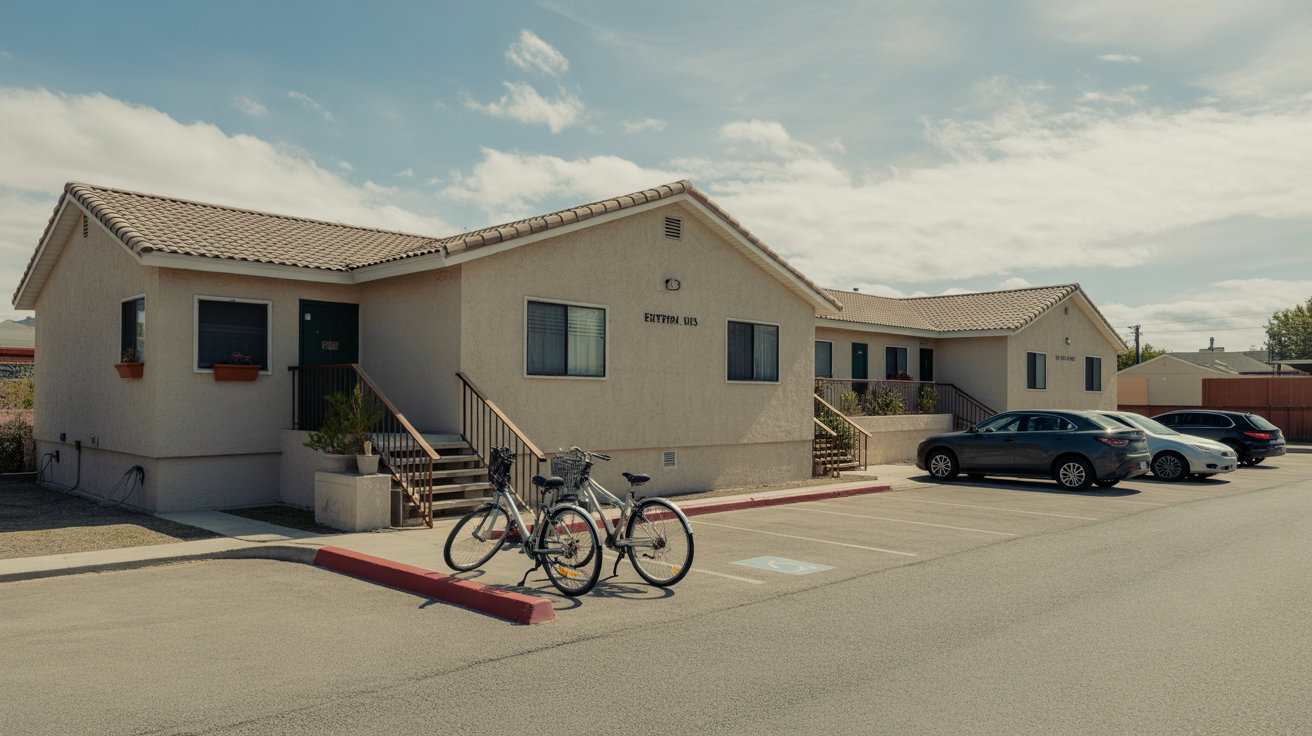
Nevada’s statewide tax structure applies equally to Boulder City and Enterprise: no state income tax, a statewide sales tax base, and property taxes assessed at the county level. That shared framework means the primary differences come from local fees, HOA prevalence, and how municipalities fund services. Boulder City operates as an independent municipality with its own fee structures for utilities, trash collection, and services, while Enterprise functions as an unincorporated community within Clark County, relying on county-level administration for most public services. The distinction matters less for what you pay in taxes and more for how predictable and bundled those costs are.
Property taxes in both cities are assessed by Clark County using the same millage rates and valuation methods, so homeowners with similar property values face similar annual tax bills. The difference shows up in how those taxes interact with other recurring fees. Boulder City homeowners often pay separate bills for water, sewer, and trash collection directly to the city, which means more line items to track but also more transparency into what each service costs. Enterprise homeowners in newer planned communities frequently encounter HOA fees that bundle landscaping, trash, and sometimes water into a single monthly charge. Those HOA fees don’t replace property taxes, but they do shift some costs from variable and usage-based to fixed and predictable. For households that value budget stability, bundled HOA fees can simplify planning even if the total annual cost is similar. For households that want control over usage and the ability to reduce costs by cutting consumption, separate billing offers more flexibility.
Renters face different exposure depending on lease structures. In Boulder City, landlords sometimes cover water and trash, which reduces the number of bills tenants manage but also removes any incentive to reduce usage. In Enterprise, renters in larger apartment communities often pay a flat monthly fee for water, sewer, and trash as part of the lease, while utilities like electricity and gas remain tenant-paid. That structure makes monthly costs more predictable but less responsive to conservation efforts. The difference isn’t about total cost—it’s about whether you prefer predictability or control.
Sales taxes apply uniformly across the metro, so everyday purchases—groceries, gas, household goods—carry the same tax burden in both cities. The impact comes from spending patterns rather than rates: households that rely more on dining out, retail shopping, or convenience purchases will see higher cumulative sales tax exposure, but that’s driven by behavior and access rather than location. Boulder City’s sparser retail infrastructure may reduce impulse spending simply because there are fewer nearby options, while Enterprise’s denser commercial corridors make it easier to shop frequently, which can increase total taxable purchases over time.
Taxes and fees takeaway: Property taxes and sales taxes don’t differ meaningfully between the two cities, but the structure of recurring fees does. Boulder City homeowners face more separate bills with greater transparency and control, while Enterprise homeowners in HOA communities encounter bundled fees that simplify budgeting but reduce flexibility. Renters experience similar dynamics depending on lease terms. The primary difference is predictability versus control, not magnitude.
Transportation & Commute Reality
Boulder City’s average commute of 23 minutes reflects a community where most residents work outside city limits, often traveling to Las Vegas, Henderson, or other parts of the metro for employment. Only 4.2% of workers report working from home, and 35.8% face long commutes—defined as 30 minutes or more each way. That structure creates high car dependency and recurring fuel exposure, with most households requiring at least one reliable vehicle and many needing two. Gas prices at $3.35 per gallon apply uniformly across the metro, so the cost difference comes entirely from distance traveled and frequency of trips. For dual-income couples where both partners commute, the time cost compounds: two 23-minute commutes mean nearly an hour per day per household spent in transit, plus the fuel, maintenance, and vehicle depreciation that comes with regular highway driving.
Boulder City’s experiential signals show walkable pockets with a pedestrian-to-road ratio that exceeds high thresholds in some areas, but those pockets don’t extend to daily errands or employment access. The city has bus service, but transit coverage is limited and doesn’t serve as a practical alternative for most commuters. Bike infrastructure exists in some pockets, but the distances involved and the desert climate make cycling a recreational option rather than a commuting solution for most residents. The result is a transportation structure where nearly every trip requires a car, whether it’s commuting to work, running errands, or accessing services. That car dependency doesn’t just affect fuel costs—it also means higher insurance premiums for households with multiple vehicles, more frequent maintenance cycles, and the ongoing risk of unexpected repair costs.
Enterprise lacks commute-specific data in the feed, but its proximity to Las Vegas employment centers and denser retail corridors suggests shorter average trip distances for many households. The lack of experiential signals for Enterprise means we can’t directly compare mobility texture or transit viability, but the city’s location within the metro and its newer housing stock suggest a structure where commutes may be shorter on average, and daily errands require less driving. That doesn’t eliminate car dependency—Las Vegas metro as a whole is car-oriented—but it does reduce the cumulative time and fuel exposure for households where one or both partners work in nearby corridors. For families managing school drop-offs, grocery runs, and activity shuttling, shorter distances between home, work, and services can reduce the number of trips that require dedicated planning and separate vehicle use.
The time cost of commuting also interacts with household logistics in ways that affect overall cost structure. Boulder City’s longer average commute and high percentage of long commuters mean that dual-income couples and working parents spend more time in transit, which reduces flexibility for managing errands, childcare pickups, and household tasks. That time pressure can increase reliance on convenience spending—grabbing takeout instead of cooking, paying for delivery instead of shopping in person, or outsourcing tasks that would otherwise be handled during non-work hours. Enterprise’s closer proximity to employment centers doesn’t eliminate those pressures, but it does reduce the likelihood that commute time becomes the primary constraint on household logistics.
Transportation takeaway: Boulder City’s 23-minute average commute and high percentage of long commuters create recurring fuel exposure and time costs that affect dual-income couples and working parents most acutely. The city’s walkable pockets don’t extend to employment or errands access, making car dependency nearly universal. Enterprise’s proximity to employment centers likely reduces average commute distances and daily driving, which lowers cumulative fuel costs and time pressure even if car dependency remains high. Households sensitive to commute time and logistics friction will feel the difference more than those with flexible schedules or remote work arrangements.
Cost Structure Comparison
Housing pressure concentrates differently in the two cities. Boulder City’s lower rent and home values ease entry, but that advantage assumes tolerance for longer commutes, sparser errands access, and limited family infrastructure. Renters gain immediate monthly savings, but those savings erode if commute costs, convenience spending, or the need for a second vehicle enter the picture. Enterprise’s higher housing costs—both rent and purchase—come with proximity to employment centers, denser retail corridors, and housing stock that reduces utility volatility. For households where both partners commute or where daily logistics involve frequent trips, Enterprise’s higher rent may be offset by lower time and fuel exposure.
Utilities introduce similar exposure in both cities due to identical rates, but the difference shows up in housing stock and usage control. Boulder City’s older, detached homes create higher cooling costs during summer months, with less insulation and fewer efficiency tools to manage peak usage. Enterprise’s newer construction and denser housing forms reduce summer spikes and offer more predictable bills, which matters most for families in larger homes or households managing tight monthly budgets. Single adults in smaller units may see less variation, but families cooling 1,500+ square feet will notice the difference between older Boulder City stock and newer Enterprise townhomes.
Daily living and groceries don’t differ in price, but access friction does. Boulder City’s sparse food and grocery density means more time spent planning, driving, and managing logistics, which increases vulnerability to convenience spending and reduces flexibility for households with unpredictable schedules. Enterprise’s denser retail infrastructure shortens trip distances, reduces the need for dedicated shopping runs, and makes it easier to avoid premium pricing on last-minute purchases. Families managing large grocery volumes or dual-income couples juggling competing demands will feel the access gap more than single adults with disciplined routines.
Transportation patterns matter more in Boulder City, where longer commutes and high car dependency create recurring fuel costs and time pressure that affect dual-income households and working parents most acutely. Enterprise’s proximity to employment centers likely reduces average commute distances, which lowers cumulative fuel exposure and frees up time for household logistics. The difference isn’t about whether you need a car—both cities require one—but about how much you use it and how much time you spend in it.
The better choice depends on which costs dominate your household. For renters prioritizing monthly cash flow and willing to absorb commute time and errands friction, Boulder City’s lower housing baseline is decisive. For dual-income couples managing two commutes and tight schedules, Enterprise’s higher rent may be offset by shorter trip distances and better access to services. Families sensitive to school density, playground access, and daily logistics will find Boulder City’s lower housing costs undermined by limited family infrastructure, while Enterprise’s higher costs come with denser amenities and reduced friction in managing household routines.
How the Same Income Feels in Boulder City vs Enterprise
Single Adult
In Boulder City, lower rent leaves more room for discretionary spending, but that flexibility assumes discipline around commute costs and errands logistics. The first non-negotiable cost is the car itself—insurance, fuel, and maintenance become baseline obligations because nearly every trip requires driving. Flexibility exists in housing choice and the ability to absorb unexpected expenses, but time pressure from longer commutes can push spending toward convenience options that erode the rent savings. In Enterprise, higher rent tightens the monthly budget from the start, but shorter trip distances and denser retail access reduce the hidden costs of managing daily life. The non-negotiable costs shift toward housing itself, with less margin for discretionary spending but also less vulnerability to convenience spending creep.
Dual-Income Couple
In Boulder City, the lower housing baseline creates initial breathing room, but two commutes mean double the fuel exposure and time cost. Non-negotiable costs include two vehicles, higher cumulative fuel bills, and the time pressure that comes from spending nearly two hours per day in transit. Flexibility disappears quickly if one partner changes jobs or if household logistics require frequent trips for errands or services. In Enterprise, higher rent or mortgage payments dominate the budget, but shorter commutes and better access to employment centers reduce the likelihood that transportation costs spiral. The non-negotiable costs are front-loaded into housing, with more predictability around ongoing expenses and less exposure to time-driven convenience spending.
Family with Kids
In Boulder City, lower housing costs ease entry, but the lack of nearby schools, playgrounds, and family infrastructure means more time spent driving kids to activities, managing errands, and coordinating logistics. Non-negotiable costs include multiple vehicles, higher fuel exposure, and the time cost of managing a household where nothing is walkable and few services are nearby. Flexibility exists in housing choice and the ability to afford more space, but that space comes with higher utility costs and ongoing logistics friction. In Enterprise, higher housing costs dominate the budget, but denser family infrastructure and closer proximity to schools and services reduce the time and fuel costs of managing daily routines. The non-negotiable costs are concentrated in housing and childcare, with less margin for discretionary spending but also less exposure to the hidden costs of car dependency and errands friction.
Decision Matrix: Which City Fits Which Household?
| Decision factor | If you’re sensitive to this… | Boulder City tends to fit when… | Enterprise tends to fit when… |
|---|---|---|---|
| Housing entry + space needs | You prioritize lower monthly rent or home values and value space over proximity | You can absorb commute time and errands friction in exchange for lower baseline housing costs | You prioritize proximity to employment centers and are willing to pay higher rent for reduced logistics friction |
| Transportation dependence + commute friction | You manage two commutes or have limited schedule flexibility | You work remotely or have a flexible schedule that reduces the impact of longer commutes | You commute to Las Vegas or Henderson and value shorter trip distances and reduced time pressure |
| Utility variability + home size exposure | You live in a larger home and want predictable cooling costs during summer months | You can tolerate higher summer spikes in exchange for lower housing costs and more space | You prioritize newer construction with better insulation and more stable utility bills year-round |
| Grocery strategy + convenience spending creep | You want nearby options and short trip distances to avoid premium pricing on last-minute purchases | You plan weekly shopping trips in advance and have the time and discipline to avoid convenience spending | You value denser retail access and want to reduce the time and fuel costs of managing errands |
| Fees + friction costs (HOA, services, upkeep) | You want predictable bundled fees or prefer transparency and control over separate bills | You prefer separate billing for utilities and services and want control over usage-based costs | You value bundled HOA fees that simplify budgeting and reduce the number of bills to track |
| Time budget (schedule flexibility, errands, logistics) | You manage tight schedules with limited margin for commute time or errands friction | You have flexible work arrangements or a high tolerance for logistics planning and longer trip distances | You need shorter commutes and nearby services to manage dual-income schedules or family logistics |
Lifestyle Fit
Boulder City offers a small-town feel with established neighborhoods, low-rise housing, and a quieter pace that appeals to households prioritizing space, privacy, and distance from the Las Vegas metro’s density. The city’s walkable pockets create pleasant residential streets in some areas, and the presence of parks and water features provides outdoor recreation options without requiring long drives. Bus service exists but doesn’t serve as a practical alternative to car ownership, and the limited density of restaurants, shops, and entertainment means most social and recreational activities require travel to nearby cities. For households that value a slower pace, lower housing costs, and the ability to afford more space, Boulder City delivers on those priorities—but it requires tolerance for commute time, errands logistics, and the reality that most services and employment opportunities lie outside city limits.
Enterprise’s proximity to Las Vegas employment centers and denser retail corridors creates a different lifestyle structure. The city functions as a suburban extension of the metro, with newer housing communities, planned developments, and commercial strips that cluster along main roads. That density brings convenience—shorter distances to work, more restaurant variety, better grocery access—but it also brings traffic, noise, and the tradeoffs that come with living closer to urban infrastructure. For dual-income couples managing tight schedules, working parents coordinating school and activities, or households that prioritize access over space, Enterprise’s structure reduces friction and saves time. The lifestyle is less about quiet streets and more about proximity, predictability, and the ability to manage daily routines without dedicating separate trips to every task.
Both cities share the desert climate, with extended summers, rare freezing nights, and outdoor recreation opportunities shaped by proximity to Lake Mead, Red Rock Canyon, and other regional attractions. Boulder City’s location near Lake Mead makes it appealing for households that prioritize water-based recreation, hiking, and weekend escapes from metro density. Enterprise’s location within the metro means shorter drives to entertainment, dining, and cultural amenities in Las Vegas, which matters for households that value frequent access to urban options without committing to urban housing costs. The lifestyle fit comes down to whether you prioritize space and separation or proximity and convenience—and whether you’re willing to absorb the cost structure that comes with each choice. Boulder City’s median household income of $76,402 per year reflects a community where housing affordability trades off against commute exposure, while Enterprise’s median household income of $91,165 per year suggests a population with higher earnings that offset the city’s higher housing costs.
FAQ Section
Is Boulder City cheaper than Enterprise for renters in 2026?
Boulder City’s median rent of $1,262 per month is lower than Enterprise’s $1,700, which creates immediate monthly savings for renters.