
Can you live in Costa Mesa without a car? It’s one of the first questions people ask when they’re weighing a move to Orange County, and the answer depends heavily on where you land and how you structure your day. Costa Mesa sits in a part of Southern California where mobility is mixed: some neighborhoods support walking and transit use, while others assume you’ll drive nearly everywhere. Understanding transportation options in Costa Mesa means recognizing that this city doesn’t fit neatly into “car-dependent suburb” or “transit-friendly urban core”—it’s somewhere in between, and that in-between space creates real tradeoffs for households trying to balance cost, time, and convenience.
Costa Mesa’s layout reflects decades of Orange County development: a blend of single-family neighborhoods, commercial corridors, and mixed-use pockets. Some areas have sidewalks, bike lanes, and bus stops within easy reach; others are quieter, more residential, and farther from services. The result is a city where your transportation reality is shaped less by Costa Mesa as a whole and more by the specific neighborhood you choose. For newcomers, the biggest surprise is often how much your daily routine—and your monthly expenses—hinge on that choice.
How People Get Around Costa Mesa
Most people in Costa Mesa drive most of the time. That’s the baseline. But it’s not the whole story. The city has bus service, bike infrastructure that exceeds what you’d find in many Orange County suburbs, and pockets where walking to groceries, coffee, or errands is genuinely practical. The question isn’t whether you can get by without a car—it’s whether your specific circumstances align with the parts of Costa Mesa where that’s realistic.
In practice, the city’s mobility texture varies by corridor. Near South Coast Metro and along Bristol Street, you’ll find higher density, more mixed-use development, and better access to transit and services. In these areas, people walk to lunch, bike to the gym, or catch a bus to work. But move a few blocks into quieter residential streets, and the infrastructure shifts: fewer sidewalks, longer distances between destinations, and less frequent transit. It’s not that those neighborhoods are poorly designed—they’re just built around a different assumption about how people move.
What this means day-to-day is that households in Costa Mesa often operate in a hybrid mode. You might walk or bike for errands close to home, drive when you need flexibility or speed, and use transit occasionally if your commute or routine aligns with bus routes. The city doesn’t force you into one mode, but it also doesn’t make any single mode effortless across the board. That flexibility is useful, but it also means you need to think carefully about where you live and how you’ll actually get around once you’re here.
Public Transit Availability in Costa Mesa
Costa Mesa has bus service, and in certain corridors, it’s a real option for daily commuting and errands. The city is served by regional bus routes that connect to neighboring cities, employment centers, and commercial districts. If you live near a major corridor—particularly along Harbor Boulevard, Bristol Street, or Newport Boulevard—you’ll have access to stops with reasonable frequency during weekday commuting hours. For someone working along one of these routes or commuting to a nearby city with a direct connection, transit can be a practical, cost-effective choice.
But Costa Mesa does not have rail service, and bus coverage is uneven. If you live in a quieter residential neighborhood away from the main corridors, your nearest stop might be a 15- or 20-minute walk, and service frequency drops off in the evenings and on weekends. This makes transit a strong fit for people with predictable, corridor-aligned commutes—and a poor fit for anyone who needs to make multi-stop trips, travel late at night, or reach destinations outside the bus network.
The other reality is that transit in Costa Mesa works best when paired with other modes. If you can bike to a bus stop, walk to errands near your home, and drive occasionally for trips that don’t align with transit schedules, you can reduce your car dependence significantly. But if you’re trying to rely on transit alone, you’ll run into gaps—especially for off-peak travel, weekend errands, or trips to areas with low service density.
Driving & Car Dependence Reality
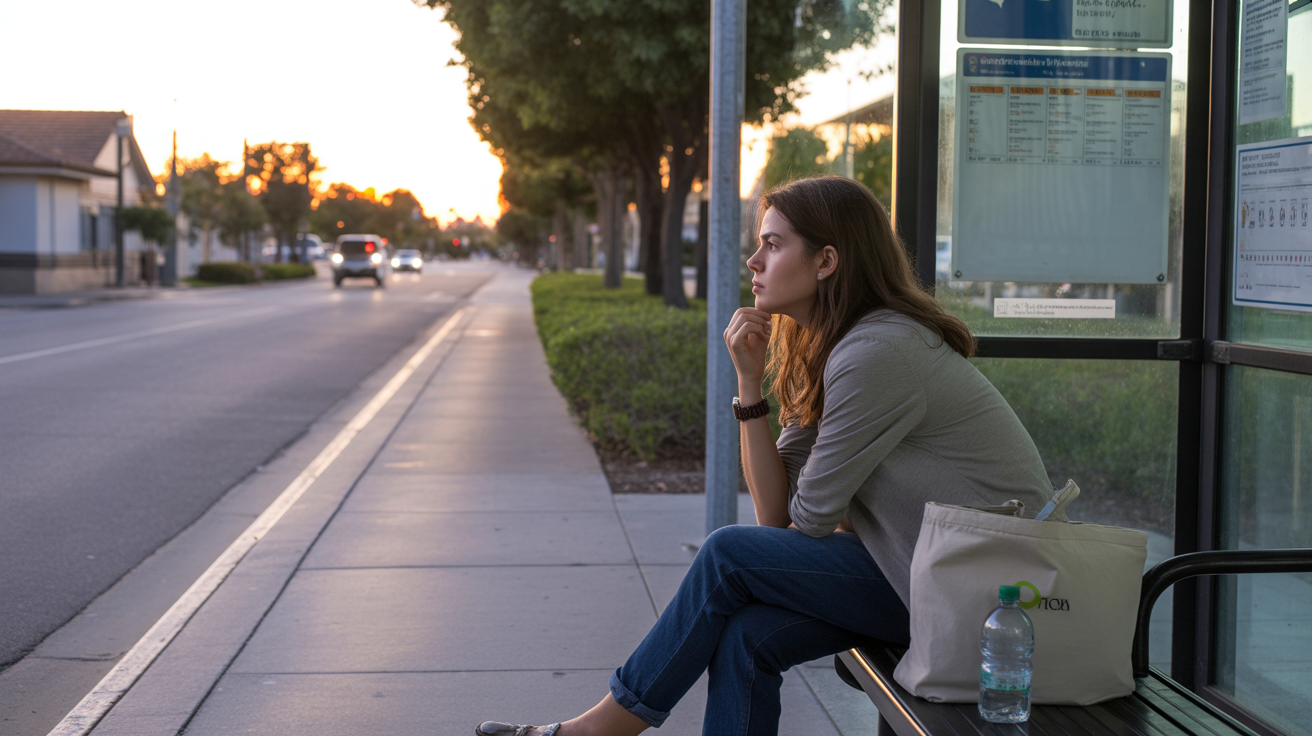
For most households in Costa Mesa, driving is the default because it solves the coverage and flexibility problems that transit doesn’t. If you need to get to work before 7 a.m., pick up kids from school, run errands across multiple parts of the city, or travel outside Costa Mesa regularly, a car makes those tasks manageable. Without one, you’re either spending significantly more time coordinating trips or limiting where you can go.
Parking in Costa Mesa is generally accessible. Most residential areas have driveways or street parking, and commercial districts offer surface lots. This isn’t a city where parking scarcity forces people onto transit—it’s a city where the ease of parking reinforces car use. That’s convenient in the short term, but it also means that households end up absorbing the full cost of car ownership: fuel, insurance, maintenance, and registration. With gas prices in the area currently at $4.34 per gallon, those costs add up, especially for households with long commutes or multiple vehicles.
The tradeoff is predictability. When you drive, you control your schedule, your route, and your timing. You’re not waiting for a bus that’s running late or planning around service gaps. For families, that control is often worth the cost. For singles or couples living in walkable pockets with good transit access, the calculus is different—they can reduce driving without sacrificing much convenience, which translates to real savings over time.
Commuting Patterns & Daily Mobility
Commuting in Costa Mesa tends to follow one of two patterns: either you work locally and keep your commute short, or you commute out to another part of Orange County (or beyond) and spend more time on the road. The city’s location near major employment centers like Irvine, Newport Beach, and Santa Ana makes it a practical base for regional commuters, but those commutes often require a car. Transit connections exist, but they’re slower and less direct than driving, especially for trips that don’t follow the main corridors.
For people who work in Costa Mesa itself—particularly in South Coast Metro, which has significant office and retail employment—the commute can be much simpler. If you live nearby, you might walk, bike, or take a short bus ride. That proximity reduces both time and cost, and it’s one of the reasons some households prioritize living close to where they work, even if it means paying slightly higher rent.
Daily mobility beyond commuting also varies by household type. Families with kids face more complex logistics: school drop-offs, after-school activities, grocery runs, weekend errands. Those multi-stop trips are hard to manage without a car, even in walkable neighborhoods. Singles and couples without kids have more flexibility—they can structure their routines around walking, biking, and transit more easily, especially if they live in areas where day-to-day costs align with denser errands access.
Who Transit Works For — and Who It Doesn’t
Transit in Costa Mesa works best for people whose lives align with the bus network: singles or couples living near major corridors, commuting to destinations with direct service, and comfortable supplementing transit with walking or biking. If your job, your home, and your errands all fall along the same transit-served route, you can reduce or eliminate car dependence without much friction. That’s a real advantage, both financially and logistically.
But transit doesn’t work well for families, for people living in peripheral neighborhoods, or for anyone whose schedule requires flexibility. If you need to make multiple stops in a day, travel during off-peak hours, or reach areas without bus service, you’ll find yourself relying on a car anyway. And if you’re splitting your time between transit and driving, you’re often paying for both—bus fares and car costs—which erodes the financial benefit of using transit in the first place.
Renters in walkable, transit-adjacent neighborhoods have the most to gain from Costa Mesa’s mixed mobility infrastructure. They can choose housing based on access, keep transportation costs low, and adjust quickly if their needs change. Homeowners in quieter, car-oriented neighborhoods face a different reality: they’ve likely bought into areas where driving is assumed, and their housing investment is tied to a car-dependent lifestyle. That’s not inherently worse, but it does mean their transportation costs are higher and less flexible.
Transportation Tradeoffs in Costa Mesa
The core tradeoff in Costa Mesa is between control and cost. Driving gives you control—over timing, routing, and access—but it’s expensive. Transit and biking reduce costs but require more planning, more time, and more tolerance for inconvenience. Walking works well for errands in dense pockets but doesn’t solve commuting or longer trips. Most households end up using a mix, which means they’re constantly negotiating between convenience and expense.
For people who value predictability and flexibility, driving is usually worth the cost. For people who prioritize minimizing fixed expenses and are willing to plan around transit schedules, bus service and biking can work. The key is recognizing that Costa Mesa doesn’t make either choice easy across the board—it rewards people who can align their housing, work, and routine with the city’s uneven infrastructure.
Another tradeoff is time versus money. Transit almost always takes longer than driving, especially for trips that require transfers or serve areas with lower frequency. If your time is constrained—because of work hours, family obligations, or other commitments—you’ll likely drive, even if it costs more. If you have more schedule flexibility, you can absorb the time cost of transit and come out ahead financially. That’s a real difference, and it shapes who ends up using which mode.
FAQs About Transportation in Costa Mesa (2026)
Is public transit usable for daily commuting in Costa Mesa?
Yes, if your commute aligns with the bus network. Transit works best for people living near major corridors like Harbor, Bristol, or Newport Boulevard and commuting to destinations with direct service. For off-peak travel, multi-stop trips, or routes outside the main network, transit becomes less practical, and most people drive instead.
Do most people in Costa Mesa rely on a car?
Yes. Driving is the dominant mode because it offers the most flexibility and coverage. Even in walkable neighborhoods with good transit access, many households keep a car for trips that don’t align with bus schedules or for errands that require hauling groceries, kids, or other cargo. The city’s infrastructure assumes car ownership, and most residents operate accordingly.
Which areas of Costa Mesa are easiest to live in without a car?
Neighborhoods near South Coast Metro, along Bristol Street, and in mixed-use corridors with high errands density and frequent bus service are the most car-optional. These areas have sidewalks, bike lanes, and access to groceries, dining, and transit within walking distance. Quieter residential areas farther from these corridors are harder to navigate without a car.
How does commuting in Costa Mesa compare to nearby cities?
Costa Mesa sits between the denser, more transit-rich cores of Santa Ana or parts of Long Beach and the more car-dependent suburbs farther inland. It has better bike infrastructure and more walkable pockets than many Orange County cities, but it lacks the rail access and comprehensive transit coverage of larger urban centers. For regional commuters, Costa Mesa offers proximity to major employment hubs, but most of those commutes still require driving.
Can you bike safely in Costa Mesa?
In many areas, yes. Costa Mesa has bike infrastructure that exceeds what you’d find in much of Orange County, with dedicated lanes and paths in key corridors. Biking works well for errands, short commutes, and trips within the city. But bike infrastructure is uneven—some neighborhoods have well-connected routes, while others require sharing the road with car traffic. Safety and comfort vary by location.
How Transportation Fits Into the Cost of Living in Costa Mesa
Transportation isn’t just a line item in your budget—it’s a structural factor that shapes where you can live, how much time you spend commuting, and how much flexibility you have in your daily routine. In Costa Mesa, your transportation costs are largely determined by where you choose to live. If you prioritize walkable, transit-accessible neighborhoods, you can reduce or eliminate car dependence, which lowers your fixed costs and gives you more control over your monthly expenses. If you choose a quieter, more residential area farther from services, you’ll likely need a car, and your transportation costs will be higher and less flexible.
The interaction between housing and transportation is especially important in a city like Costa Mesa, where the infrastructure varies so much by neighborhood. A cheaper apartment in a car-dependent area might cost you more overall once you factor in fuel, insurance, and maintenance. A more expensive rental in a walkable corridor might actually leave you with more disposable income if it lets you reduce driving. That’s the kind of tradeoff that doesn’t show up in rent comparisons but makes a real difference over time.
For a fuller picture of how transportation costs interact with housing, utilities, and other expenses, see A Month of Expenses in Costa Mesa: What It Feels Like, which breaks down the broader cost structure and helps you understand where your money actually goes. The goal isn’t to find the cheapest option in isolation—it’s to find the combination of housing and transportation that fits your routine, your priorities, and your budget without forcing you into tradeoffs you can’t sustain.
How this article was built: In addition to public economic data, this article incorporates location-based experiential signals derived from anonymized geographic patterns—such as access density, walkability, and land-use mix—to reflect how day-to-day living actually feels in Costa Mesa, CA.