

Beaverton and Tualatin sit just miles apart in the Portland metro, yet the decision between them rarely comes down to proximity alone. Both cities attract households looking for suburban space within reach of Portland’s job market, but the cost pressures that shape daily life—and the infrastructure that eases or intensifies those pressures—differ in ways that matter for renters, first-time buyers, and families managing tight schedules in 2026. This isn’t about finding the “cheaper” option; it’s about understanding where your money goes, what you get in return, and which tradeoffs align with how your household actually functions.
Beaverton offers a well-documented infrastructure advantage: substantial pedestrian pathways, rail transit access, high bike-to-road ratios, and dense access to groceries, parks, schools, and playgrounds. These aren’t abstract amenities—they directly reduce car dependence, shorten errand loops, and give households more control over time and transportation costs. Tualatin, meanwhile, commands a higher housing entry point and serves households with greater income capacity, but its day-to-day mobility and access patterns require ground-level verification. The comparison hinges not on totals, but on which costs dominate your household and whether infrastructure reduces or amplifies the friction of getting through the week.
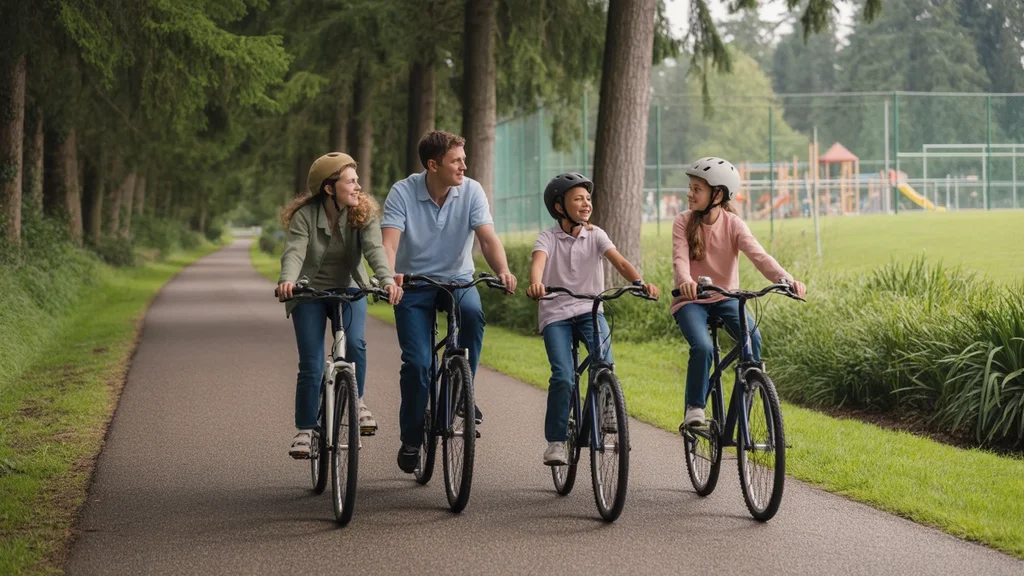
The Johnsons—a fictional family weighing this exact decision—capture the tension well. With two working parents, a kindergartener, and a tight weeknight schedule, they need a place where errands don’t require a 20-minute drive, where their child can bike to a friend’s house, and where one parent can occasionally take transit instead of juggling two cars. Beaverton’s documented walkability and rail access feel like operational relief. Tualatin’s higher home values and unclear transit picture make them wonder whether they’d trade affordability for car dependence they can’t yet measure. Their debate isn’t about preference—it’s about exposure.
Housing Costs
Housing entry costs separate these two cities more than any other factor. Beaverton’s median home value sits at $494,700, while Tualatin’s reaches $548,900—a difference that translates into higher down payment requirements, larger monthly mortgage obligations, and greater sensitivity to interest rate movements for buyers in Tualatin. For first-time buyers stretching to enter the market, that gap represents months of additional savings or the need to compromise on space, condition, or location within the city. Beaverton’s lower entry threshold doesn’t make homeownership easy, but it does widen the range of households who can realistically compete for single-family homes without relying on dual high incomes or family financial support.
Renters, by contrast, face nearly identical baseline exposure. Beaverton’s median gross rent stands at $1,663 per month, while Tualatin’s is $1,665 per month—a difference too narrow to drive decision-making on its own. What matters more is availability, unit type, and proximity to the services renters rely on daily. Beaverton’s documented density of food establishments, grocery stores, parks, and transit options means renters can more easily find units within walking or biking distance of errands, reducing the need for a second car or long drives for routine needs. Tualatin’s rental market, while comparable in price, lacks the same documented infrastructure density, meaning renters may face higher transportation costs or time burdens even if base rent feels similar.
For families, the housing decision extends beyond monthly payments to the operational realities of managing a household. Beaverton’s strong family infrastructure—schools and playgrounds meeting density thresholds across the city—means families can prioritize neighborhoods where kids can walk to school, access parks without a drive, and build routines that don’t require constant parental logistics. Tualatin’s higher home values may reflect demand for specific neighborhood character or school access, but without documented walkability or transit infrastructure, families should verify whether the premium buys convenience or simply space. The difference isn’t about affordability in isolation—it’s about whether housing costs come with infrastructure that reduces other expenses, or whether they’re the first cost in a longer chain of car dependence and time friction.
| Housing Type | Beaverton | Tualatin | What This Means |
|---|---|---|---|
| Median Home Value | $494,700 | $548,900 | Higher entry barrier in Tualatin; larger down payment and mortgage obligation |
| Median Gross Rent | $1,663/month | $1,665/month | Nearly identical baseline rent exposure; access and infrastructure matter more |
| Median Household Income | $88,899/year | $105,542/year | Tualatin households have higher income capacity to absorb housing costs |
Housing takeaway: Beaverton’s lower home values ease entry for first-time buyers, while renters in both cities face similar baseline costs but different infrastructure access. Tualatin’s higher entry point serves households with greater income capacity, but buyers and renters alike should verify whether that premium comes with walkability, transit access, and errand density—or whether it simply reflects demand for space and specific school zones. Families sensitive to daily logistics may find Beaverton’s documented infrastructure reduces the hidden costs of car dependence and time friction that housing prices alone don’t capture.
Utilities and Energy Costs
Utility cost structures in Beaverton and Tualatin are identical by design—both cities draw from the same regional energy infrastructure, with electricity rates at 16.16¢/kWh and natural gas prices at $16.82/MCF. This removes one variable from the comparison: households in either city face the same per-unit energy costs, meaning differences in utility exposure come down to housing stock, home size, insulation quality, and household behavior rather than rate structures or provider differences. For renters in newer apartment complexes, utility bills may remain predictable and modest regardless of city. For owners of older single-family homes, heating and cooling costs can swing more dramatically with the seasons, but that volatility plays out the same way in both places.
Where the cities may diverge is in housing form and the operational realities that shape energy use. Beaverton’s mixed building height profile and documented land-use mix suggest a broader range of housing types—apartments, townhomes, and single-family homes—giving households more options to match their utility tolerance to their housing choice. Smaller units in multi-family buildings naturally insulate households from extreme seasonal swings, while larger detached homes expose owners to higher baseline usage and greater sensitivity to weather patterns. Tualatin’s higher median home values suggest a market skewed toward larger single-family homes, which typically carry higher utility baselines and more exposure to heating costs during wet, cool Pacific Northwest winters and cooling needs during occasional summer heat.
Household size and home age amplify these differences. A single adult in a newer one-bedroom apartment in either city will experience low, predictable utility costs year-round, with minimal seasonal variation. A family of four in an older three-bedroom home, however, faces higher baseline usage for heating, hot water, and laundry, with older construction often meaning less efficient insulation and HVAC systems. In Beaverton, the availability of smaller, newer housing stock gives households more flexibility to trade space for lower utility exposure. In Tualatin, where the housing market tilts toward larger homes, families may find themselves managing higher utility baselines even if rates are identical, simply because the housing stock available at their price point skews toward older, larger single-family construction.
Utility takeaway: Identical energy rates mean utility exposure depends on housing type, home age, and household size rather than location. Beaverton’s mixed housing stock offers more flexibility for households prioritizing predictable, low utility costs, while Tualatin’s market skew toward larger single-family homes may expose families to higher baselines and more seasonal volatility. Renters in newer apartments experience similar low exposure in both cities, but owners of older homes should budget for higher heating costs in winter and verify insulation quality before assuming utility bills will stay modest.
Groceries and Daily Expenses
Grocery and daily spending pressure in Beaverton and Tualatin reflects both price sensitivity and access structure. Both cities share the same regional price parity index (107), meaning staple grocery costs—bread, milk, eggs, chicken—track closely to one another when comparing similar store types. Derived estimates suggest bread around $1.92–$1.96 per pound, eggs near $2.90–$3.06 per dozen, and ground beef in the $7.00–$7.16 per pound range. These figures reflect regional pricing adjusted for cost of living, not observed local prices, but they establish that baseline grocery costs don’t diverge meaningfully between the two cities when shopping at comparable retailers.
What does differ is access density and the friction involved in getting groceries home. Beaverton’s documented high grocery establishment density means households can more easily walk, bike, or make quick trips to nearby stores without committing to a weekly mega-shop or long drives. This access structure reduces the need for bulk purchasing, lowers the risk of food waste, and gives households more flexibility to respond to sales or dietary changes without logistical burden. For single adults or couples without cars, this density translates directly into lower transportation costs and more control over spending patterns. For families managing larger volumes, the ability to split errands across multiple nearby stores—hitting a discount grocer for staples and a specialty shop for fresh produce—can reduce per-item costs without requiring elaborate planning.
Tualatin lacks the same documented grocery density, meaning households may need to drive farther for routine shopping or rely more heavily on single large-format stores. This doesn’t necessarily raise grocery prices, but it does increase the operational cost of feeding a household: more driving, more time, more planning, and less flexibility to adjust on the fly. For families with two working parents, the inability to grab missing ingredients on the way home or send a teenager to pick up milk on foot adds friction that shows up as time pressure and convenience spending—takeout on nights when no one has time to shop, or higher per-unit costs at the nearest convenience store when the main grocery run didn’t cover everything.
Dining out and convenience spending follow similar patterns. Beaverton’s documented high food establishment density and mixed land use mean more options within walking or short driving distance, which can paradoxically increase spending if households default to takeout or casual dining more often. But it also means more competition, more variety, and more ability to choose lower-cost options when budgets tighten. Tualatin’s dining landscape, while present, lacks the same documented density, meaning households may drive farther for restaurant meals or rely more on chain options along commercial corridors. For households sensitive to convenience creep—the slow accumulation of coffee runs, lunch pickups, and weeknight takeout—Beaverton’s density can either enable or expose that spending, depending on household discipline.
Grocery takeaway: Baseline grocery prices track closely in both cities, but Beaverton’s documented high grocery and food establishment density reduces the friction and transportation costs of feeding a household. Single adults and couples benefit most from walkable access, while families gain flexibility to split errands and respond to sales without elaborate planning. Tualatin households may face similar per-item costs but higher time and driving burdens, increasing the risk of convenience spending when schedules tighten. Households managing larger grocery volumes or tight weeknight schedules should weigh access density as heavily as price when comparing day-to-day costs.
Taxes and Fees
Property taxes, local fees, and recurring service charges shape long-term cost exposure differently for homeowners and renters, even when headline housing costs look similar. Oregon’s property tax system relies on assessed value and local levies, meaning Tualatin’s higher median home value of $548,900 translates into a larger annual property tax bill compared to Beaverton’s $494,700 median, assuming similar millage rates. For homeowners, this difference compounds over time—higher assessed values mean higher baseline tax obligations, and any future levy increases or bond measures apply to a larger base. First-time buyers stretching to afford Tualatin’s entry point should account for this ongoing obligation, which doesn’t shrink with mortgage paydown and can rise with reassessments or voter-approved measures.
Renters don’t pay property taxes directly, but landlords pass those costs through in rent pricing and annual increases. Tualatin’s higher property tax baseline may contribute to upward pressure on rents over time, particularly in single-family rentals or smaller apartment buildings where landlords operate on tighter margins. Beaverton’s lower assessed values may offer renters slightly more insulation from tax-driven rent increases, though both cities’ rental markets remain subject to broader regional demand pressures. For renters planning to stay several years, the difference in property tax exposure between cities may show up as cumulative rent increases rather than immediate monthly costs.
Local fees—trash collection, water, sewer, stormwater management—vary by provider and service area rather than city boundaries, but housing type and neighborhood age can influence total fee burdens. Newer developments in either city may include HOA fees that bundle landscaping, common area maintenance, or shared amenities, adding $100–$300 or more per month to housing costs. Older single-family neighborhoods typically avoid HOA fees but may face higher individual costs for yard maintenance, pest control, or emergency home repairs. Tualatin’s market skew toward newer, larger single-family homes suggests a higher likelihood of HOA exposure for buyers in certain neighborhoods, while Beaverton’s mixed housing stock offers more variety in fee structures, from fee-free older homes to HOA-managed townhome communities.
Tax and fee takeaway: Tualatin’s higher home values drive larger property tax obligations for owners and may contribute to cumulative rent increases for long-term renters. Beaverton’s lower assessed values ease ongoing tax exposure, though both cities face similar local fee structures depending on housing type and service area. Homeowners planning to stay several years should account for property taxes as a fixed, rising cost that doesn’t shrink with mortgage paydown, while renters should consider how tax baselines influence landlords’ pricing power over time. HOA fees vary more by neighborhood and housing type than by city, but Tualatin’s newer housing stock may expose more buyers to bundled service fees.
How People Actually Get Around Beaverton and Tualatin
Transportation costs and commute realities differ sharply between Beaverton and Tualatin, not because of gas prices—which sit nearly identical at $3.34 and $3.35 per gallon—but because of infrastructure, access density, and the degree to which households can avoid driving for daily needs. Beaverton’s documented high pedestrian-to-road ratio, rail transit presence, and notable bike infrastructure mean households have real alternatives to car dependence. The city’s rail service connects residents to Portland’s job centers and regional destinations without the need for parking, tolls, or fuel costs, while walkable pockets and high bike-to-road ratios allow residents to handle errands, school drop-offs, and social trips on foot or by bike. For single adults or couples, this infrastructure can eliminate the need for a second car entirely, cutting insurance, maintenance, and registration costs in addition to fuel.
Commute data for Beaverton shows an average of 24 minutes, with 34.7% of workers facing long commutes and just 4.9% working from home. These figures suggest that most Beaverton households still rely on cars for work trips, but the presence of rail transit and high-density errands accessibility means non-work trips—groceries, appointments, recreation—don’t require the same car dependence. For families, this distinction matters: one parent might drive to work while the other uses transit or bikes for errands, reducing the household’s total vehicle miles traveled and the associated fuel, wear, and time costs. Tualatin lacks comparable commute data and has no documented transit, walkability, or bike infrastructure signals, meaning households should assume car dependence for both work and non-work trips unless they verify alternatives on the ground.
The operational difference shows up most clearly in household logistics. In Beaverton, a parent can walk a child to school, bike to a nearby grocery store, and take rail transit to a medical appointment downtown without coordinating car access or burning fuel. In Tualatin, the same tasks likely require a car for each trip, adding time, mileage, and the mental load of managing vehicle availability across multiple household members. For dual-income families or single parents managing tight schedules, this friction compounds: more driving means more time in traffic, more exposure to fuel price swings, and less flexibility when one car is in the shop or a teenager needs to borrow it for after-school activities.
Transportation takeaway: Beaverton’s documented rail transit, walkable pockets, and notable bike infrastructure reduce car dependence for errands and non-work trips, allowing some households to eliminate a second vehicle or rely on transit for commuting. Tualatin’s lack of documented mobility infrastructure suggests higher car dependence for both work and daily errands, increasing fuel costs, vehicle wear, and time burdens. Families managing multiple schedules or single adults trying to avoid car ownership should prioritize Beaverton’s infrastructure, while Tualatin households should verify ground-level transit and walkability before assuming they can reduce transportation costs.
Where Cost Pressure Concentrates
Housing dominates the cost experience in both cities, but the nature of that pressure differs. Beaverton’s lower median home value eases entry for first-time buyers, while Tualatin’s higher threshold serves households with greater income capacity willing to pay for specific neighborhood access or housing characteristics. Renters face nearly identical baseline costs, but Beaverton’s documented infrastructure—walkability, transit, errands density—means that baseline rent comes with operational advantages that reduce other costs. Tualatin’s rental market, while comparable in price, lacks the same documented access density, meaning renters may face higher transportation and time burdens even if monthly rent feels similar.
Utilities introduce identical per-unit costs but different exposure depending on housing type and home age. Beaverton’s mixed housing stock offers more flexibility for households prioritizing predictable, low utility bills, while Tualatin’s market skew toward larger single-family homes may expose families to higher baselines and more seasonal volatility. For renters in newer apartments, utility costs remain modest and predictable in both cities. For owners of older homes, heating costs can swing more dramatically in winter, but that volatility plays out the same way regardless of location.
Transportation patterns matter more in Tualatin, where the absence of documented transit, walkability, or bike infrastructure suggests higher car dependence for both work and errands. Beaverton’s rail access, walkable pockets, and notable bike infrastructure allow households to reduce vehicle miles traveled, eliminate second cars, and avoid the time friction of coordinating car access across multiple household members. For families managing tight schedules or single adults trying to avoid car ownership, this infrastructure difference translates directly into lower fuel costs, less vehicle wear, and more flexibility in daily logistics.
Groceries and daily expenses track closely in baseline pricing, but Beaverton’s documented high grocery and food establishment density reduces the friction of feeding a household. Families can split errands across multiple nearby stores, respond to sales without elaborate planning, and avoid convenience spending driven by poor access. Tualatin households may face similar per-item costs but higher time and driving burdens, increasing the risk of takeout and convenience purchases when schedules tighten.
Decision framing: The better choice depends on which costs dominate your household and whether infrastructure reduces or amplifies the friction of daily life. Households sensitive to housing entry costs may prefer Beaverton’s lower threshold, while those with higher income capacity and specific neighborhood priorities may find Tualatin’s premium worthwhile. For households prioritizing transit access, walkability, and errands density, Beaverton’s documented infrastructure offers operational relief that extends beyond baseline rent or mortgage costs. For households willing to verify mobility and access patterns on the ground, Tualatin may offer space and neighborhood character that justify higher entry costs—but that verification step is critical, as the absence of documented infrastructure signals suggests car dependence for most daily needs.
How the Same Income Feels in Beaverton vs Tualatin
Single Adult
For a single adult, housing becomes the first non-negotiable cost, consuming a significant share of gross monthly income in either city. In Beaverton, lower home values ease entry for buyers, while renters benefit from documented walkability and transit access that can eliminate the need for a car or reduce it to occasional use. Flexibility exists in transportation and convenience spending—biking to work, walking to groceries, and using rail transit for social trips all reduce cash outflow without requiring major lifestyle compromise. In Tualatin, higher housing entry costs and the absence of documented transit or walkability infrastructure mean car ownership becomes non-negotiable, adding insurance, fuel, and maintenance costs that compress discretionary spending even if base rent or mortgage feels manageable.
Dual-Income Couple
For a dual-income couple, housing remains the largest fixed cost, but the ability to split expenses across two earners creates more flexibility in both cities. In Beaverton, documented rail transit and walkable errands density mean one partner might commute by transit while the other drives, reducing the need for two cars and lowering transportation costs without requiring major schedule coordination. Flexibility exists in dining out, entertainment, and travel, as lower transportation baselines free up cash for discretionary spending. In Tualatin, higher home values and car dependence for both work and errands mean two vehicles become non-negotiable, adding fixed costs that reduce flexibility even when combined income feels comfortable. The primary difference isn’t income adequacy—it’s whether infrastructure allows the couple to reduce fixed costs and preserve discretionary flexibility, or whether car dependence locks in higher baselines that compress other spending categories.
Family with Kids
For a family with kids, non-negotiable costs expand rapidly: housing, childcare, groceries, and transportation all compete for limited income, and the ability to reduce any one category determines how tight the budget feels. In Beaverton, documented strong family infrastructure—schools and playgrounds meeting density thresholds—means kids can walk to school, bike to friends’ houses, and access parks without parental driving, reducing both time costs and vehicle miles traveled. Flexibility exists in how the family manages errands and activities, as walkable grocery access and transit options allow parents to split logistics without constant car coordination. In Tualatin, higher housing entry costs and the absence of documented walkability or transit infrastructure mean parents must drive for school drop-offs, errands, and activities, adding time friction and fuel costs that compress flexibility even when income feels adequate. The primary pressure isn’t affordability in isolation—it’s whether infrastructure reduces the operational burden of managing a household, or whether car dependence and time friction amplify the cost of getting through the week.
Decision Matrix: Which City Fits Which Household?
| Decision Factor | If You’re Sensitive to This… | Beaverton Tends to Fit When… | Tualatin Tends to Fit When… |
|---|---|---|---|
| Housing entry + space needs | You’re stretching to afford a down payment or need flexibility in housing type | You prioritize lower entry costs and access to mixed housing stock over maximum square footage | You have higher income capacity and prioritize specific neighborhood character or larger single-family homes |
| Transportation dependence + commute friction | You want to avoid owning two cars or need transit access for work or errands | You value rail transit, walkable errands, and bike infrastructure that reduce car dependence | You’re willing to verify ground-level mobility options and accept car dependence for most trips |
| Utility variability + home size exposure | You want predictable utility bills or live in a smaller household | You prioritize mixed housing stock that offers smaller, newer units with lower utility baselines | You’re comfortable managing higher utility baselines in larger, older single-family homes |
| Grocery strategy + convenience spending creep | You want to avoid long drives for groceries or reduce takeout spending driven by poor access | You value high grocery density and walkable food access that reduce time and transportation costs | You’re willing to drive farther for groceries and plan larger shopping trips to reduce frequency |
| Fees + friction costs (HOA, services, upkeep) | You want to avoid bundled HOA fees or prefer flexibility in managing home services | You prioritize older neighborhoods with lower fee exposure and more control over service spending | You’re comfortable with HOA fees in newer developments that bundle landscaping and maintenance |
| Time budget (schedule flexibility, errands, logistics) | You manage tight weeknight schedules or need to reduce time spent coordinating household logistics | You value infrastructure that reduces driving, shortens errand loops, and allows kids to move independently | You have flexible schedules or can absorb longer drives and car-dependent logistics without friction |
Lifestyle Fit
Beaverton and Tualatin offer distinct lifestyle textures shaped by infrastructure, access density, and the degree to which daily life requires a car. Beaverton’s documented walkable pockets, rail transit presence, and integrated park access mean residents can build routines that don’t revolve around driving—walking to coffee shops, biking to farmers markets, taking rail transit to Portland for dining or entertainment. The city’s strong family infrastructure supports households with kids, offering schools and playgrounds within walking or biking distance that reduce parental logistics and give children more independence. For households prioritizing active transportation, outdoor access, and the ability to run errands on foot, Beaverton’s infrastructure delivers operational relief that extends beyond cost savings into quality of life.
Tualatin’s lifestyle character requires more ground-level verification, as the absence of documented mobility or access signals means households should visit neighborhoods, test commute routes, and confirm whether daily needs are within walking distance or require driving. The city’s higher median income suggests a population with the capacity to absorb car-dependent logistics, but that doesn’t mean all households will find the tradeoff worthwhile. For families prioritizing larger homes, specific school access, or neighborhood character over walkability, Tualatin may offer the space and community feel they’re seeking—but that decision should follow verification, not assumption.
Recreation and outdoor access differ meaningfully between the cities. Beaverton’s integrated park density and documented water features mean residents can access green space, trails, and outdoor amenities without long drives, supporting active lifestyles and reducing the need for paid recreation or gym memberships. Tualatin’s outdoor access patterns aren’t documented in the same way, meaning households should confirm whether parks, trails, and natural areas are accessible from their specific neighborhood or require car trips. For households with dogs, young children, or a preference for daily outdoor activity, Beaverton’s documented park access offers predictable convenience, while Tualatin’s outdoor amenities may require more intentional planning.
Beaverton quick facts: Rail transit connects residents to Portland’s job centers and cultural destinations without parking hassles. High grocery and food establishment density means most neighborhoods support walkable errands and dining options.
Tualatin quick facts: Higher median household income of $105,542 per year suggests a population with capacity to absorb car-dependent logistics. Median home value of $548,900 reflects demand for larger single-family homes and specific neighborhood access.
Common Questions About Beaverton vs Tualatin in 2026
Is Beaverton or Tualatin cheaper for renters in 2026? Baseline rent costs are nearly identical—Beaverton’s median gross rent is $1,663 per month, while Tualatin’s is $1,665 per month. The meaningful difference lies in