
Understanding how people actually get around Portland means recognizing a city built in layers—walkable cores with strong pedestrian infrastructure and rail service, surrounded by lower-density neighborhoods where driving remains the default. Newcomers often assume Portland’s reputation for alternative transportation translates uniformly across the metro, but the reality is more textured: transportation options in Portland work exceptionally well in specific pockets and corridors, while much of the city still requires a car for daily flexibility.
Portland’s layout reflects a mix of older, grid-based neighborhoods with substantial pedestrian-to-road ratios and newer suburban zones where car access dominates. The presence of rail transit and high food and grocery establishment density in central areas creates genuine transit viability for those who live and work within those corridors. But the city’s predominantly low-rise building character and sprawling footprint mean that proximity to transit doesn’t guarantee freedom from driving—especially for households managing multi-stop errands, school pickups, or jobs outside the core.
The average commute in Portland runs 24 minutes, with 34.8% of workers facing longer commutes and just 5.0% working from home. These figures hint at a metro where commute length varies widely depending on neighborhood choice and job location, and where the decision to rely on transit versus driving shapes not just transportation costs, but daily time, flexibility, and household logistics.
How People Get Around Portland
Portland’s dominant mobility pattern is hybrid by necessity. In neighborhoods with strong pedestrian infrastructure and rail access—particularly in inner eastside and close-in northwest areas—residents can realistically handle daily errands, commutes, and social trips without a car. Grocery density exceeds high thresholds in these zones, and the pedestrian-to-road ratio supports walking as a practical mode, not just a recreational one.
Outside these pockets, driving becomes essential. The city’s low-rise building character and mixed land use mean that even areas with some walkability often lack the density needed to support frequent transit service or eliminate the need for a car entirely. Households in outer neighborhoods—whether renting or owning—typically structure their lives around vehicle access, using transit occasionally for downtown commutes but relying on cars for flexibility, speed, and multi-destination trips.
What newcomers often misunderstand is that Portland’s bike-friendly reputation and rail presence don’t override the fundamental geography: this is a spread-out city where proximity to a single transit line doesn’t guarantee access to jobs, schools, or services without transfers, wait times, or significant time penalties compared to driving.
Public Transit Availability in Portland
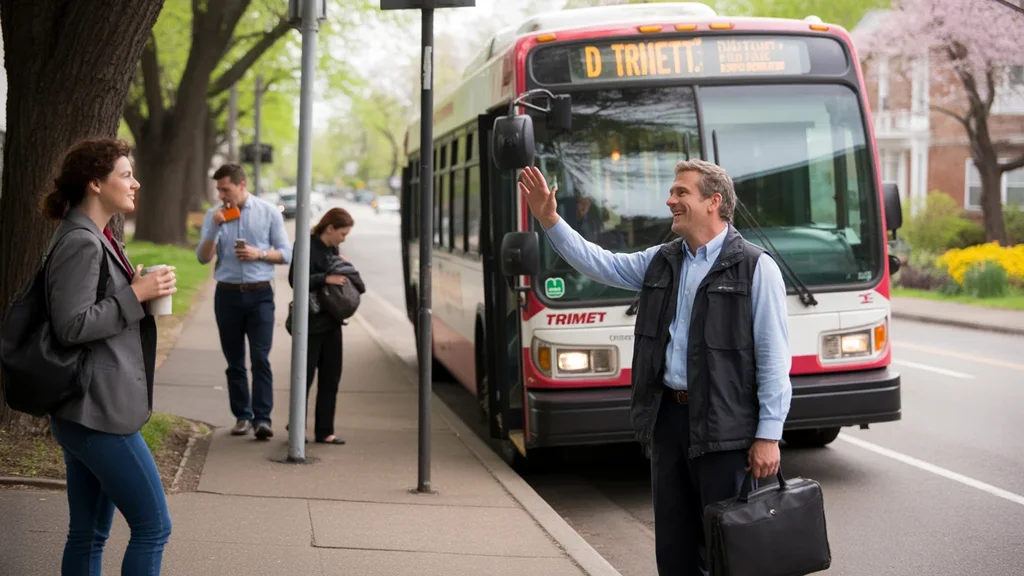
Public transit in Portland often centers around systems such as TriMet, which operates bus and rail service across the metro. Rail transit is present and plays a meaningful role in connecting core neighborhoods, downtown, and select suburban nodes. For residents living near rail stations in walkable pockets, transit can handle commutes, errands, and social trips with reasonable reliability.
But coverage is uneven. Rail lines serve specific corridors, and bus service—while more widespread—varies significantly in frequency and convenience depending on the route and time of day. Neighborhoods outside the core often experience longer waits, fewer direct routes, and service that tapers off in the evenings and on weekends. For households in these areas, transit functions as a supplementary option rather than a primary mode.
Transit works best for commuters traveling along established corridors during peak hours. It tends to fall short for those managing complex trip chains (errands + childcare + work), living in outer neighborhoods, or working non-traditional hours. The presence of rail doesn’t eliminate the need for a car—it reduces it, but only for households whose daily patterns align with where the system actually goes.
Driving & Car Dependence Reality
For most Portland households, driving remains necessary. Even in neighborhoods with decent pedestrian infrastructure and nearby grocery access, the city’s low-rise, spread-out form means that jobs, schools, healthcare, and social destinations often sit beyond comfortable walking or biking range. Parking is generally available and less constrained than in denser metros, which reinforces car use as the path of least resistance.
Car dependence in Portland isn’t about preference—it’s about structure. The metro’s development pattern prioritizes single-family homes and lower-density commercial strips, which require longer trips and make transit coverage expensive to maintain. Households that attempt to go car-free outside the core often find themselves spending significantly more time on basic errands, dealing with transfers, or simply unable to access certain services without ride-hailing or borrowing a vehicle.
Gas prices in Portland currently sit at $4.99 per gallon, a reminder that driving here carries ongoing fuel exposure. But for many households, the alternative—restricting housing choice to the narrow set of neighborhoods where transit truly replaces a car—means accepting higher rent or home prices, smaller units, or less access to green space and schools.
Commuting Patterns & Daily Mobility
Commuting in Portland typically follows one of three patterns: rail or bus into downtown or another core employment zone; driving to a suburban office park or industrial area; or a hybrid approach where someone drives to a park-and-ride and takes transit the rest of the way. The 24-minute average commute masks significant variation—workers in outer neighborhoods or those commuting against the grain of transit lines often face much longer trips.
Single-job commuters with predictable schedules benefit most from transit, especially if their route aligns with a rail line. But households managing multiple stops—dropping kids at school, running errands, or working flexible hours—find that transit’s fixed routes and schedules add friction that driving eliminates. The 34.8% of workers with long commutes suggests that a substantial share of Portland’s labor force lives far from job centers, either by choice (seeking larger homes or lower housing costs) or necessity (priced out of closer-in neighborhoods).
Daily mobility in Portland rewards proximity. Households near rail stations in walkable neighborhoods enjoy genuine optionality: they can take transit, bike, or drive depending on the trip. Households in the periphery face a different reality—they can technically use transit, but doing so often means doubling or tripling trip times compared to driving.
Who Transit Works For — and Who It Doesn’t
Transit in Portland works best for renters and owners in core neighborhoods who commute to downtown or other rail-served job centers, don’t have school-age children requiring complex pickup schedules, and whose daily errands fall within walking distance or along frequent bus routes. For this group—often younger professionals, empty nesters, or couples without kids—transit can genuinely replace car ownership, saving on insurance, maintenance, and parking while maintaining reasonable convenience.
Transit works less well for families with children, especially those in outer neighborhoods. School boundaries, after-school activities, and the need to manage multiple simultaneous trips make car dependence nearly unavoidable. Similarly, workers whose jobs sit in suburban office parks, industrial zones, or dispersed service locations find that transit either doesn’t serve their destination or requires transfers and wait times that make driving the only practical option.
Renters in peripheral neighborhoods face a particular bind: they often choose those areas for lower rent, but the lack of transit viability forces them into car ownership, which offsets much of the housing savings. Owners in the same areas typically accept car dependence as part of the tradeoff for larger homes, yards, and access to higher-rated schools.
Transportation Tradeoffs in Portland
Choosing between transit and driving in Portland isn’t about cost alone—it’s about control, predictability, and flexibility. Transit offers lower direct expenses (no fuel, insurance, or maintenance) and eliminates parking hassles in dense areas, but it imposes fixed schedules, limited coverage, and time penalties for non-linear trips. Driving offers speed, flexibility, and the ability to manage complex errands, but it exposes households to fuel price swings, parking costs in some areas, and the ongoing burden of vehicle ownership.
For households weighing monthly expenses, the transportation decision shapes more than just the budget line—it determines where you can live, how much time you spend commuting, and how much spontaneity you retain in daily life. Proximity to rail doesn’t eliminate these tradeoffs; it shifts them. Living near a station in a walkable pocket often means paying more for housing, but gaining back time and reducing transportation exposure. Living farther out means lower housing costs but higher transportation dependence and less flexibility to go car-free.
The presence of bike infrastructure in some pockets adds a third option for certain trips, but Portland’s wet winters and hilly terrain in some neighborhoods limit year-round bike commuting for many households. Biking works well as a supplement—especially for short errands or fair-weather commutes—but rarely replaces either transit or driving entirely.
FAQs About Transportation in Portland (2026)
Is public transit usable for daily commuting in Portland?
Yes, but only if your commute aligns with rail or frequent bus routes and your housing sits in or near core neighborhoods. Transit works well for downtown commutes and trips along established corridors, but it becomes impractical for jobs in suburban zones or trips requiring multiple transfers.
Do most people in Portland rely on a car?
Yes. While transit and biking are viable in select neighborhoods, the majority of Portland households depend on cars for daily errands, commuting, and flexibility. The city’s low-rise, spread-out form makes car-free living difficult outside a narrow set of core areas.
Which areas of Portland are easiest to live in without a car?
Inner eastside neighborhoods and close-in northwest areas with rail access and high pedestrian-to-road ratios offer the best chance of going car-free. These zones combine walkable errands, transit access, and sufficient density to support daily life without driving.
How does commuting in Portland compare to nearby cities?
Portland’s 24-minute average commute is moderate, but the experience varies widely depending on neighborhood and job location. Compared to Seattle, Portland offers less traffic congestion but also less transit frequency outside core routes. Compared to smaller Oregon cities, Portland provides more transit options but also more sprawl.
Can I rely on biking for transportation in Portland year-round?
Biking is feasible for some trips and some people, especially in flatter, closer-in neighborhoods. But Portland’s wet winters, hilly terrain in certain areas, and bike infrastructure that exists in pockets rather than uniformly mean that biking typically supplements rather than replaces transit or driving for most households.
How Transportation Fits Into the Cost of Living in Portland
Transportation in Portland functions as a structural factor that shapes housing choice, time allocation, and household flexibility. The decision to live near rail and walkable errands versus farther out in a car-dependent neighborhood determines not just how much you spend on transportation, but how much time you spend commuting, how easily you can manage daily logistics, and how much control you retain over your schedule.
Households that prioritize transit access often pay more for housing but gain predictability and reduce exposure to fuel price swings. Households that prioritize space, yards, or school access often accept car dependence and the ongoing costs that come with it. Neither choice is wrong—both involve tradeoffs between money, time, and convenience.
For a fuller picture of how transportation costs interact with housing, utilities, and other expenses, see the Monthly Spending in Portland: The Real Pressure Points article. Portland’s transportation landscape rewards intentionality: understanding where you’ll work, how you’ll manage errands, and what mobility pattern fits your household type helps you choose a neighborhood that aligns with your priorities rather than forcing you into a mode you didn’t plan for.
How this article was built: In addition to public economic data, this article incorporates location-based experiential signals derived from anonymized geographic patterns—such as access density, walkability, and land-use mix—to reflect how day-to-day living actually feels in Portland, OR.