
What does it actually feel like to live in Gastonia? Beyond the housing prices and commute times, there’s an emotional texture to daily life here—a set of tradeoffs that tend to reward certain priorities while frustrating others. For some, Gastonia offers exactly the balance they’ve been looking for: affordability near Charlotte, space to breathe, and a pace that doesn’t demand constant hustle. For others, the same qualities read as limitation—too much driving, too few walkable options, not enough spontaneity built into the everyday.
This isn’t about declaring Gastonia “good” or “bad.” It’s about understanding who tends to feel at home here, and who tends to feel friction. The city’s vibe reflects a specific set of structural realities: car-oriented infrastructure, corridor-based shopping, rail access to Charlotte, and a community identity shaped by proximity to a major metro without being absorbed by it. Those realities create patterns in how people experience life here—and those patterns show up consistently in how locals talk about the place.
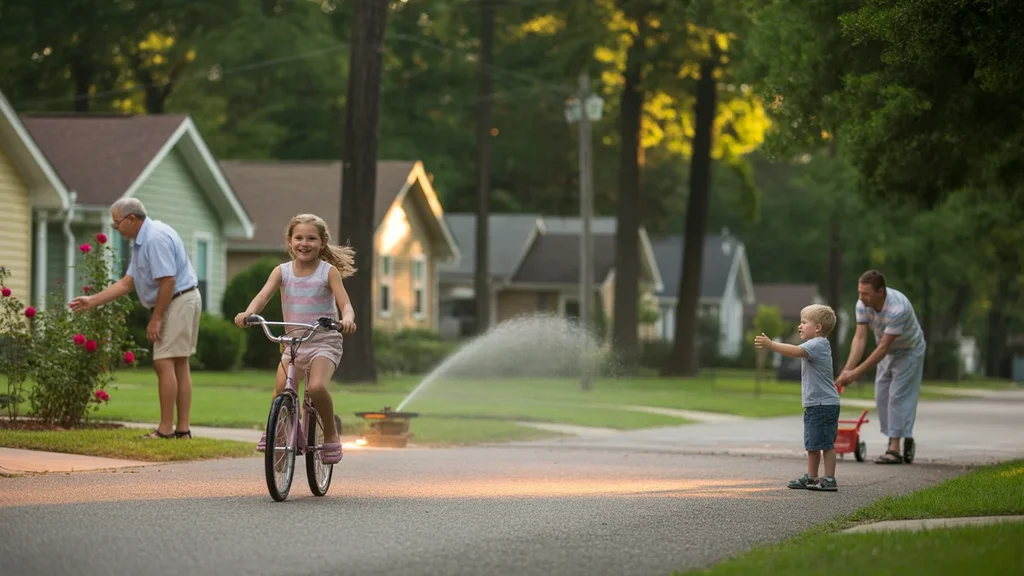
The Emotional Landscape of Gastonia
Gastonia’s overall sentiment revolves around a central tradeoff: affordability and space versus convenience and walkability. People who prioritize lower housing pressure and quieter neighborhoods tend to describe Gastonia as a relief—a place where they can afford a yard, a driveway, and breathing room without stretching every paycheck. The city feels manageable, less frantic than Charlotte, and more forgiving for families trying to build stability on a modest income.
But that same structure creates friction for people who value spontaneous errands, walkable neighborhoods, or easy access to diverse dining and entertainment. Because errands and amenities cluster along commercial corridors rather than being woven into residential areas, daily life requires intentional planning and car trips. There’s no “pop out for coffee” culture here—you drive to the plaza, park, and return home. For some, that’s just suburban life. For others, it’s a daily reminder of what’s missing.
The presence of rail transit to Charlotte adds an interesting layer. It signals connection and access, but it doesn’t change the fact that getting around within Gastonia still means driving. People who commute to Charlotte for work often appreciate the option, but they also describe the tension of living in a place that feels oriented around the car while being one train ride away from a walkable urban core.
Long-time residents tend to express comfort and loyalty. They know where things are, they’ve built routines, and they value the predictability. Newcomers—especially those relocating from denser cities or expecting more neighborhood-level walkability—often describe a learning curve. The city doesn’t reveal itself quickly. You have to learn which corridors matter, where the reliable spots are, and how to structure your week around driving.
Social Media Buzz in Gastonia
On platforms like Facebook and Reddit, Gastonia discussions tend to center on a few recurring themes: affordability, proximity to Charlotte, traffic along certain corridors, and the tension between growth and identity. The tone is rarely extreme—it’s more often pragmatic, protective, and occasionally weary.
Affordability comes up constantly, usually framed as Gastonia’s primary advantage. People describe it as a place where you can still find reasonable rent or buy a starter home without competing against all-cash offers. There’s pride in that accessibility, especially among families who feel priced out of Charlotte or even some of its closer suburbs.
“We moved here because we could actually afford a house with a yard. It’s not fancy, but it’s ours, and we’re not drowning in payments.”
At the same time, there’s a persistent undercurrent of comparison—Gastonia measured against Charlotte, Gastonia defending itself against stereotypes, Gastonia wrestling with what it wants to become. Some residents push back against the idea that Gastonia is “just” a budget alternative, pointing to local businesses, community events, and neighborhood character. Others acknowledge the limitations candidly, framing Gastonia as a practical choice rather than a dream destination.
“It’s not Charlotte, and that’s fine. You just have to know what you’re getting. If you need walkable neighborhoods and tons of options, this isn’t it. But if you want space and lower costs, it works.”
Traffic and corridor congestion generate frequent complaints, particularly along major commercial routes. People describe frustration with stoplights, strip mall parking lots, and the time it takes to run a simple errand when everything requires a drive. There’s also recurring discussion about growth—new development, new residents, changing demographics—and what that means for the city’s identity and infrastructure.
“It feels like we’re stuck between being a small town and being a suburb. We’re growing, but the roads and services haven’t caught up.”
Local News Tone
Local coverage of Gastonia tends to frame the city through themes of transition, proximity, and community debate. The tone is rarely celebratory or alarmist—it’s more observational, tracking changes and surfacing tensions without declaring clear winners or losers.
Here are some of the recurring topic buckets that shape how Gastonia is discussed in local media:
- “Affordability Draws Families as Charlotte Costs Rise”
- “Residents Debate What Growth Should Look Like”
- “New Retail and Dining Options Arrive Along Main Corridors”
- “Commuters Weigh Train Access Against Daily Driving Needs”
- “Community Groups Push for More Walkable Neighborhood Investment”
These frames reflect the city’s position: close enough to Charlotte to be shaped by its growth, but distinct enough to have its own identity and concerns. The coverage often highlights the gap between what’s changing (new development, new residents) and what feels slow to adapt (infrastructure, walkability, neighborhood cohesion).
There’s also a recurring theme of “potential”—Gastonia described as a city that could become something more, if the right investments happen, if the right planning takes hold. That framing can feel hopeful or frustrating, depending on whether you’re optimistic about change or skeptical that it will arrive in time to matter.
Review-Based Public Perception
On platforms like Google Reviews, Yelp, and Nextdoor-style community boards, Gastonia’s public perception reflects a mix of appreciation, resignation, and unmet expectations. The praise tends to focus on affordability, space, and specific businesses or parks that people rely on. The criticism tends to focus on limited walkability, repetitive dining options, and the feeling that you have to leave town for variety or quality.
People who moved to Gastonia specifically for suburban comfort and lower costs tend to leave positive reviews. They describe finding what they needed: a yard, a driveway, a manageable monthly budget, and proximity to Charlotte when they want it. They appreciate the slower pace and the sense that Gastonia hasn’t been overtaken by the same development pressure that’s reshaping closer-in suburbs.
“We were tired of apartment living and couldn’t afford anything in Charlotte. Gastonia gave us space and a chance to save. It’s quiet, and that’s exactly what we wanted.”
People who expected more neighborhood-level amenities or walkable errands tend to express disappointment. They describe having to drive for everything, limited local dining variety, and a sense that the city is designed around the car in a way that makes spontaneous outings difficult. This frustration is especially common among younger professionals and people relocating from denser cities.
“I thought living near Charlotte would mean easy access to everything, but Gastonia itself feels pretty car-dependent. You can’t just walk to a coffee shop or grab dinner without planning a trip.”
Neighborhood variation shows up in reviews, though usually in broad terms: newer planned areas described as clean and family-friendly but somewhat generic, older pockets described as more affordable but sometimes showing wear. Parks and schools receive mixed feedback—present and functional, but not abundant or standout.
Healthcare access is generally described as adequate for routine needs, with clinics and pharmacies available, but people note the need to travel to Charlotte or nearby areas for hospital services or specialized care.
Comparison to Nearby Cities
| Category | Gastonia | Charlotte | Belmont |
|---|---|---|---|
| Overall Vibe | Affordable, car-oriented, quieter suburban feel | Urban energy, walkable pockets, higher costs | Small-town charm, tight-knit, limited amenities |
| Walkability | Low; errands require driving | Moderate to high in core areas | Very low; rural-suburban blend |
| Dining & Entertainment | Corridor-based, limited variety | Extensive, diverse, constantly evolving | Minimal; locals drive to Gastonia or Charlotte |
| Affordability | Strong advantage; accessible housing | High pressure; competitive market | Moderate; smaller inventory |
| Commute to Charlotte | Manageable via rail or car | N/A (already there) | Slightly shorter drive than Gastonia |
Gastonia sits in an interesting middle position. It’s more affordable and spacious than Charlotte, but less walkable and less amenity-rich. It’s more developed and accessible than Belmont, but less intimate and less “small-town” in character. The comparison that matters most depends on what you’re optimizing for.
If you’re a family trying to balance quality of life factors with budget constraints, Gastonia offers more breathing room than Charlotte without requiring the isolation of a truly rural area. If you’re a young professional who values walkable neighborhoods and spontaneous social options, Charlotte will feel more aligned—even if it costs more. If you’re drawn to tight-knit community feel and don’t mind driving for most services, Belmont might offer the charm Gastonia lacks, though with even fewer local options.
The rail connection to Charlotte is a meaningful differentiator. It gives Gastonia residents access to urban amenities without requiring a full relocation, though it doesn’t change the car-dependent reality of daily life within Gastonia itself.
What Locals Are Saying
“We moved here from Charlotte three years ago, and it was the right call for our budget. We have a yard, the kids have space, and we’re not stressed about rent going up every year. But yeah, you drive everywhere. That’s just how it is.”
— Family with young children
“I work remotely, so I thought Gastonia would be perfect—affordable and close enough to Charlotte when I need it. But I underestimated how much I’d miss being able to walk to things. Everything here is a car trip, and that gets old.”
— Remote worker, late 20s
“I’ve lived here my whole life, and I’m not going anywhere. People complain about what Gastonia isn’t, but they miss what it is—affordable, stable, and not trying to be something it’s not. If you want fancy, go to Charlotte. If you want practical, stay here.”
— Long-time resident, retiree
“The train to Charlotte is great when I need it, but day-to-day, Gastonia feels pretty isolated. I wish there were more local spots—coffee shops, bars, places to just hang out without driving 20 minutes.”
— Young professional, commuter
“It’s fine for what it is. We knew we were trading walkability for affordability, and we’re okay with that. But I do think the city could do more to make neighborhoods feel more connected. Right now, it’s just houses and strip malls.”
— Couple, mid-30s, new homeowners
“Gastonia gets a bad rap, but honestly, it’s been good to us. We found a house we could afford, the schools are decent, and we’re close enough to Charlotte that we don’t feel stuck. It’s not perfect, but it works.”
— Family, relocated from out of state
“I like the quiet, but I do wish there were more parks and trails nearby. We have some green space, but it’s not as accessible as I’d like. You have to drive to the good spots, which kind of defeats the purpose.”
— Retiree, active lifestyle
Does Gastonia Feel Like a Good Fit?
Gastonia’s emotional profile is shaped by a clear tradeoff: affordability and space in exchange for car dependence and limited walkable convenience. The city tends to work well for people who prioritize budget flexibility, quieter surroundings, and proximity to Charlotte without the pressure of living there. It tends to frustrate people who value spontaneous errands, neighborhood-level walkability, and easy access to diverse local amenities.
If you’re a family trying to build stability on a modest income, Gastonia offers breathing room that’s increasingly hard to find in the Charlotte metro. If you’re a commuter willing to drive or take the train, the city provides a practical base without the financial strain of closer-in suburbs. If you’re a long-time resident who values predictability and knows how to navigate the corridors, Gastonia feels like home.
But if you’re relocating from a denser city and expecting walkable neighborhoods, or if you’re a young professional who wants local nightlife and dining variety, Gastonia will likely feel limiting. The city’s structure rewards planning and car ownership; it doesn’t reward spontaneity or pedestrian exploration.
Ultimately, Gastonia’s vibe reflects its position: a car-oriented suburb with rail access to Charlotte, affordable housing, and a community still negotiating what growth should look like. It’s not trying to be urban, and it’s not quite small-town. It’s practical, accessible, and shaped by the needs of people who chose affordability and space over walkability and density. Whether that feels like a good fit depends entirely on which side of that tradeoff you’re on.
How this article was built: In addition to public economic data, this article incorporates location-based experiential signals derived from anonymized geographic patterns—such as access density, walkability, and land-use mix—to reflect how day-to-day living actually feels in Gastonia, NC.
The perspectives shown reflect commonly expressed local sentiment and recurring themes in public discussion, rather than individual accounts.