
According to a composite sentiment analysis, 74 out of 100 residents say they’re happy in Cary. But what does that number really mean when you’re deciding whether this place will feel like home? Happiness scores tell you where people land — but not why, or whether you’ll land there too. The real question isn’t whether Cary makes people happy in general. It’s whether the things that tend to satisfy people here match what you actually need from a place.
What Cary’s Emotional Tone Actually Feels Like
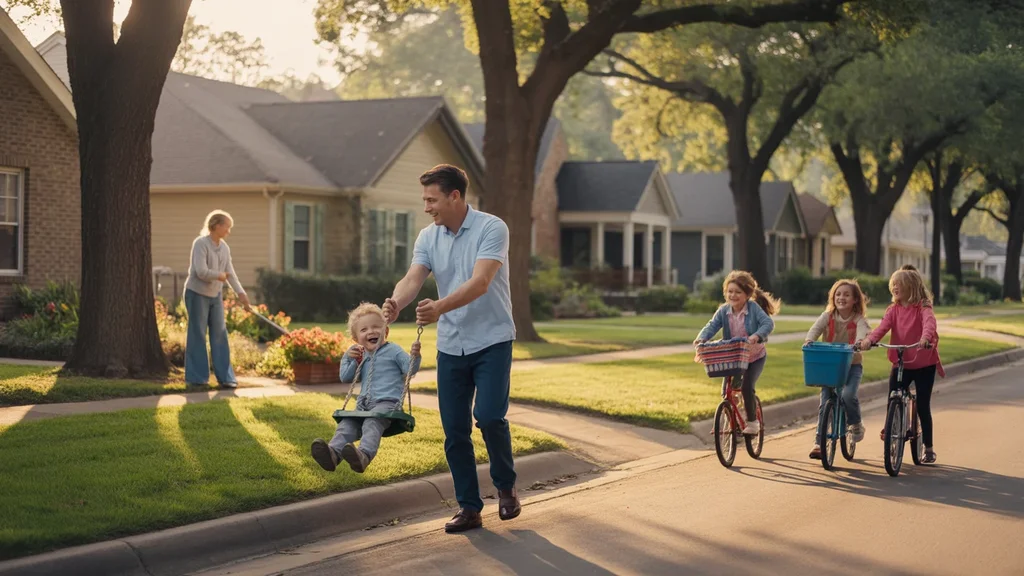
Cary’s vibe is defined by a specific kind of suburban confidence: planned, accessible, and family-forward. This is a place where the infrastructure works, errands don’t require strategy, and the day-to-day logistics of life feel manageable. People who thrive here tend to value predictability, convenience, and a sense that the community is designed with intention. There’s pride in the schools, the greenways, the accessible grocery options, and the general sense that things are taken care of.
But that same intentionality can feel limiting to people who crave spontaneity, texture, or a less polished social scene. Cary doesn’t offer the kind of walkable downtown where you stumble into something unexpected on a Tuesday night. It’s not gritty, and it’s not trying to be. The tradeoff is clear: you get ease and order, but you sacrifice edge and serendipity. People who feel at home here tend to be those who wanted exactly that exchange. People who feel restless are often those who thought they did — until they realized how much they missed the unpredictability of a place with more character.
The city’s infrastructure reflects this balance in tangible ways. Cary has rail transit access, notable cycling infrastructure, and pedestrian-friendly pockets that make it easier to run errands on foot or bike than many suburban peers. Grocery stores and food options are broadly accessible, and parks are woven into neighborhoods with enough consistency that families don’t need to drive far for outdoor time. For households managing school drop-offs, weekend errands, and after-school activities, this setup reduces friction. You’re not constantly calculating drive time or wondering if you’ll need to make three stops in three different directions. But for someone who wants to walk out their door and feel the energy of a bustling street, Cary’s walkable pockets don’t always deliver that urban hum — they deliver convenience, not atmosphere.
What People Talk About on Social Media
On platforms like Reddit and local Facebook groups, Cary residents tend to discuss the city in terms of growth, identity, and the tension between suburban comfort and evolving expectations. There’s a recurring theme of protectiveness — people who moved here for a specific kind of life and want to preserve it, even as the region changes around them. At the same time, there’s a pragmatic acknowledgment that Cary is no longer a sleepy suburb. It’s part of a booming metro, and that brings both opportunity and adjustment.
Common threads include:
- Pride in schools and safety: “We moved here for the schools, and they’ve delivered. It’s not perfect, but it’s exactly what we needed.”
- Frustration with sameness: “Everything feels a little too planned. Sometimes I just want a weird coffee shop that isn’t part of a plaza.”
- Debate over growth: “I love that Cary is growing, but I also miss when it felt smaller and quieter. It’s hard to have both.”
The tone is rarely angry, but it’s not always satisfied either. People tend to express a kind of wistful pragmatism — they know what they signed up for, but they’re still negotiating what they’re willing to give up.
How Local Coverage Frames the City
Local news and community blogs tend to frame Cary through the lens of managed growth and civic identity. The city is often portrayed as a model of planning and livability, but also as a place grappling with what it wants to become as it matures. Coverage doesn’t dwell on crisis or conflict; instead, it focuses on incremental change, new amenities, and the ongoing conversation about what kind of place Cary should be.
Recurring topic buckets include:
- “Community Debates What Growth Should Look Like”
- “New Amenities Arrive as Town Identity Evolves”
- “Residents Weigh Convenience vs Quiet”
- “Greenway Expansions Connect Neighborhoods”
- “Schools and Development Shape Long-Term Planning”
The framing is generally optimistic but not uncritical. There’s an implicit acknowledgment that Cary is in transition, and that not everyone agrees on where it should land.
What Review Platforms Reveal About Expectations
On Google, Yelp, and Nextdoor-style platforms, Cary tends to earn praise for the things it was designed to do well: accessibility, cleanliness, and family-friendliness. People who wanted a well-maintained suburban environment with good schools and low friction tend to feel their expectations were met or exceeded. But people who wanted more variety, character, or spontaneity often express mild disappointment — not because Cary failed, but because it succeeded at being exactly what it is.
Positive themes include:
- Errands are easy and don’t require excessive planning
- Parks and greenways are accessible and well-kept
- Neighborhoods feel safe and family-oriented
- Proximity to Raleigh and Durham offers options without requiring urban living
Critical themes include:
- Lack of walkable downtown or central gathering space
- Limited nightlife and cultural diversity
- Newer planned areas can feel sterile or repetitive
- Older pockets offer more character but fewer modern amenities
The dividing line isn’t quality — it’s alignment. People who wanted suburban ease tend to be happy. People who wanted urban texture tend to feel something’s missing.
How Cary Compares to Nearby Cities
| Dimension | Cary | Raleigh | Durham |
|---|---|---|---|
| Overall Vibe | Planned suburban ease | Growing urban energy | Eclectic, artsy, diverse |
| Walkability | Pockets, not pervasive | Strong in core areas | Mixed, neighborhood-dependent |
| Family Appeal | High, school-focused | Moderate, varied by area | Moderate, less suburban |
| Nightlife/Culture | Limited, family-oriented | Expanding, vibrant | Strong, independent scene |
| Character | Polished, newer | Evolving, mixed | Historic, textured |
Cary, Raleigh, and Durham sit within the same metro, but they offer distinct emotional experiences. If you want the ease of suburban logistics with access to urban amenities nearby, Cary tends to deliver that balance. If you want to live in the middle of the action and prioritize walkable nightlife and cultural variety, Raleigh or Durham may feel more aligned. If you value historic character and a scrappier, more independent vibe, Durham often resonates more strongly. None of these is objectively better — they’re solving for different priorities.
What Locals Are Saying
“We moved here from a bigger city, and Cary was exactly the reset we needed. It’s quiet, the schools are solid, and we’re not spending our weekends stuck in traffic. I don’t miss the chaos.”
“I thought I wanted suburban life, but I didn’t realize how much I’d miss being able to walk somewhere interesting. Everything here requires a car, even if it’s just a short drive.”
“Cary gets a bad rap for being boring, but honestly, boring is what we wanted. We have two kids, and we needed a place where the day-to-day stuff just works.”
“The greenways are fantastic. We bike as a family almost every weekend, and it feels safe and accessible. That’s been a huge quality-of-life win for us.”
“I love that we’re close to Raleigh and Durham. When we want culture or nightlife, it’s there. But we don’t have to live in it every day.”
“It’s a little too polished for my taste. I wish there were more local spots with personality instead of the same chains you see everywhere.”
“We’ve been here for ten years, and it’s changed a lot. It’s busier, more crowded, and it doesn’t feel as quiet as it used to. But the infrastructure has kept up, so it’s not worse — just different.”
Does Cary Feel Like a Good Fit?
Cary tends to work for people who value order, accessibility, and a family-friendly environment where the logistics of daily life don’t require constant negotiation. It’s a place where schools are a priority, errands are straightforward, and the infrastructure supports a predictable routine. If you’re looking for suburban ease with some walkable infrastructure and proximity to larger cities, Cary delivers that combination more reliably than many peers.
But it tends to frustrate people who crave spontaneity, texture, or a less curated social scene. If you want to walk out your door and feel the energy of a bustling street, or if you prioritize cultural diversity and independent venues over convenience and polish, Cary may feel limiting. The city isn’t trying to be something it’s not — and that clarity is part of its appeal for the people it fits.
The question isn’t whether Cary is happy. It’s whether the things that make people happy here are the things that matter to you. If they are, the alignment tends to be strong. If they’re not, the friction shows up quickly. Understanding what makes life feel tight in Cary can help clarify whether the tradeoffs work for your household, and exploring your monthly budget in Cary can help you understand the financial side of that decision. If you’re weighing housing pressure and availability, that context can shape whether the lifestyle tradeoffs feel worth it.
How this article was built: In addition to public economic data, this article incorporates location-based experiential signals derived from anonymized geographic patterns—such as access density, walkability, and land-use mix—to reflect how day-to-day living actually feels in Cary, NC.
The perspectives shown reflect commonly expressed local sentiment and recurring themes in public discussion, rather than individual accounts.