
You’re thinking about Brandon—maybe you’ve got a job offer in Tampa, maybe you’re tired of high rent somewhere else, maybe you just want a yard and some breathing room. But here’s the real question: Will you actually like living here? Not just afford it, not just survive it—but feel like it fits?
Brandon sits east of Tampa, a sprawling suburban community where strip malls meet residential streets, where commuters fuel up before the drive west, and where families look for space without the price tag of South Tampa or the isolation of rural Hillsborough. It’s a place that works really well for some people and feels like a mismatch for others. The difference usually comes down to what you need from your everyday surroundings—and how much you’re willing to drive to get it.
What Brandon Actually Feels Like
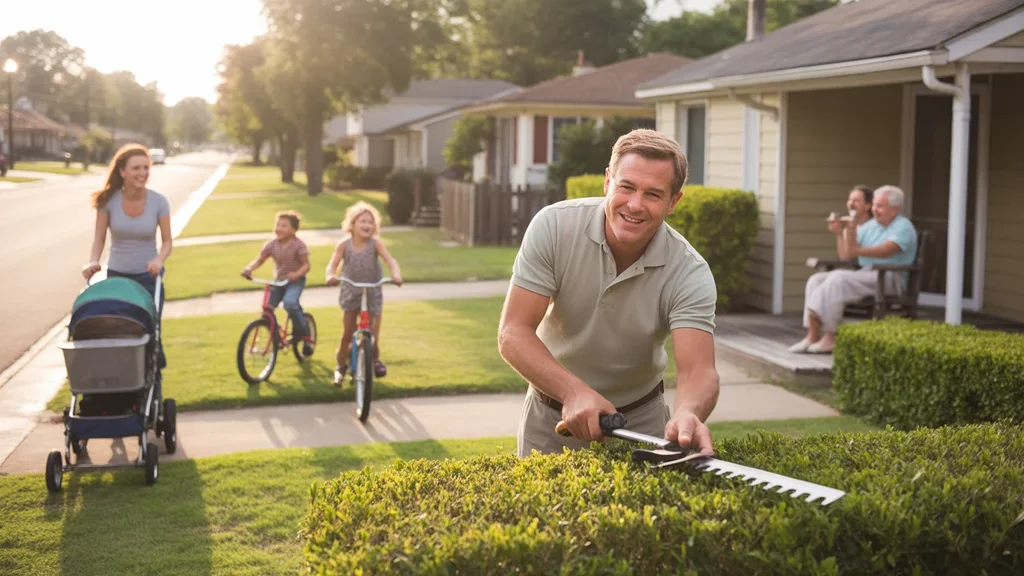
Brandon’s emotional tone is rooted in suburban pragmatism. It’s not trying to be a walkable downtown or a sleepy small town—it’s a car-oriented community built around convenience corridors. You’ll find your groceries, your gas station, your chain restaurants, your urgent care clinic. But you won’t stumble into a neighborhood café on a Sunday walk, and you won’t find much happening after 9 p.m. unless you’re willing to drive.
The structure of daily life here reflects that. Errands are corridor-clustered rather than neighborhood-integrated: grocery density is high, but you’re driving to a shopping center, not walking to a corner store. Pedestrian infrastructure exists in pockets—some subdivisions have sidewalks, some don’t—but the overall texture is car-first. Bus service is present, but without rail transit, most households rely on personal vehicles for nearly everything.
For people who wanted suburban affordability with Tampa access, Brandon delivers. For people who wanted walkable errands, spontaneous social life, or transit viability, it often feels like a compromise they didn’t fully anticipate.
The Emotional Tradeoffs People Talk About
Across local social media—Facebook groups, Reddit threads, neighborhood apps—the recurring themes aren’t about whether Brandon is “good” or “bad.” They’re about tradeoffs.
“It’s affordable and you get space, but you’re driving everywhere. If that bothers you, this isn’t it.”
“I like the quiet. I don’t like that there’s nothing to do unless you get in the car.”
“Great for families who want a yard and don’t mind a commute. Not great if you’re looking for walkable date nights or a town square vibe.”
The tone is generally pragmatic rather than passionate. People who feel aligned with Brandon tend to appreciate what it is—a functional, affordable suburban base near a bigger city. People who feel friction tend to miss what it isn’t—walkable, spontaneous, or self-contained.
How Local Coverage Frames the Community
Local news and community discussion tend to frame Brandon through a few recurring lenses: growth and change, traffic and commute burden, and the tension between suburban character and increasing density.
You’ll see topic threads like:
- “New Shopping Centers Open as Residential Growth Continues”
- “Commuters Weigh Drive Time Against Housing Affordability”
- “Residents Debate What Suburban Growth Should Look Like”
- “Brandon’s Identity: Bedroom Community or Self-Sufficient Suburb?”
The framing reflects a community in transition—not from small town to city, but from quieter suburb to busier suburb. The emotional undertone is often one of adjustment: people who moved here for peace and space now navigate more traffic, while newer arrivals expect more amenities than the older infrastructure was designed to provide.
What Reviews and Public Perception Reveal
On platforms like Google Reviews, Yelp, and neighborhood forums, Brandon’s public perception breaks along expectation lines.
What tends to get praised: Affordability relative to Tampa proper, access to big-box retail and chain dining, family-friendly subdivisions with pools and playgrounds (within planned communities), and the ability to “get more house for the money.”
What tends to get critiqued: Traffic on major corridors during commute hours, limited walkability outside of specific neighborhoods, lack of local nightlife or cultural venues, and the feeling that “everything looks the same.”
Neighborhood variation exists but is often framed generically—newer planned areas with HOA amenities versus older pockets with larger lots and fewer shared facilities. The common thread: Brandon rewards people who wanted suburban function and car-based convenience. It frustrates people who wanted neighborhood texture, walkable errands, or a sense of “place” beyond residential streets and shopping centers.
One recurring sentiment: “It’s fine if you know what you’re getting. Just don’t expect it to feel like a town.”
Brandon Compared to Nearby Alternatives
| Attribute | Brandon | Riverview | Temple Terrace |
|---|---|---|---|
| Overall Vibe | Suburban convenience, car-dependent, functional | Newer growth, family-focused, more isolated | Quieter, slightly older, closer to USF |
| Walkability | Pockets only, mostly car-oriented | Very limited, newer subdivisions | Moderate in some areas, still car-reliant |
| Commute to Tampa | Moderate drive, traffic-dependent | Longer drive, more suburban sprawl | Shorter to downtown, closer to I-275 |
| Affordability | Mid-range suburban pricing | Slightly lower, newer construction | Similar, older housing stock |
| Nightlife/Dining | Chain-heavy, limited local spots | Very limited, drive required | Modest local options, quieter overall |
Brandon sits in the middle: more established than Riverview, more affordable than Temple Terrace, but without the proximity advantages of Temple Terrace or the “blank slate” appeal of Riverview’s newer developments. If you prioritize a shorter Tampa commute and don’t mind older neighborhoods, Temple Terrace might feel better. If you want the newest construction and don’t mind driving farther, Riverview might fit. If you want the balance of access, affordability, and established infrastructure—and you’re comfortable with car dependency—Brandon tends to work.
Voices from Different Life Stages
“We moved here from an apartment in Tampa and finally have a yard and a garage. The commute is real, but the space makes it worth it. Just wish there was more to do locally on weekends.”
“I’m remote, so the commute doesn’t hit me. But I do notice that if I want to meet friends or go out, I’m driving to Tampa or St. Pete. Brandon itself doesn’t have much of a social scene.”
“Good place to raise kids if you’re in the right neighborhood. Our subdivision has a pool and playground. But outside of that, there’s not much for them to walk to—we drive them everywhere.”
“Retired here a few years ago. It’s quiet, affordable, and we’re close to everything we need. We don’t mind driving, so it works for us.”
“I thought suburban would mean neighborhood feel. It’s more like residential streets next to big shopping centers. Functional, but not cozy.”
“If you’re okay with a car-first lifestyle and you want housing pressure that’s manageable compared to Tampa, Brandon delivers. If you wanted walkable urbanism, you’re going to feel the friction.”
“Honestly, it’s fine. It’s not exciting, but it’s stable, affordable, and practical. That’s what we needed.”
Does Brandon Feel Like a Good Fit?
Brandon doesn’t try to be everything. It’s a suburban community built for people who want space, affordability, and access to Tampa—without paying Tampa prices or dealing with Tampa density. It works really well for families and professionals who are comfortable with car dependency, who value function over walkability, and who don’t need their immediate surroundings to provide nightlife, culture, or spontaneous social opportunities.
It tends to frustrate people who wanted neighborhood texture, pedestrian-friendly errands, or a sense of “town center.” The infrastructure here is designed around corridors and subdivisions, not main streets and mixed-use blocks. If that structure feels limiting to you, Brandon will likely feel like a compromise.
The question isn’t whether Brandon is happy or unhappy—it’s whether the tradeoffs it offers align with what you actually need from daily life. If you wanted suburban pragmatism with Tampa proximity, this tends to work. If you wanted walkable spontaneity or transit viability, it probably won’t.
Before you decide, it’s worth understanding your monthly budget in Brandon and what makes life feel tight here. The emotional fit often comes down to whether the financial and logistical structure supports the life you’re trying to build—not just whether the place “feels nice.”
How this article was built: In addition to public economic data, this article incorporates location-based experiential signals derived from anonymized geographic patterns—such as access density, walkability, and land-use mix—to reflect how day-to-day living actually feels in Brandon, FL.
The perspectives shown reflect commonly expressed local sentiment and recurring themes in public discussion, rather than individual accounts.