
“Apex is great if you want the suburbs but don’t want to feel totally car-locked. There are trails, greenways, decent grocery access… but if you’re moving here for top-tier schools and playgrounds on every block, you might be surprised. It’s more ‘active adult-friendly’ than ‘Disney suburb.’”
That’s the kind of nuanced take you’ll find when people talk about living in Apex, NC. It’s a town that sits comfortably in the Raleigh metro, close enough to feel connected, far enough to keep a distinct identity. But the vibe here isn’t one-note. Apex tends to attract people looking for a specific blend: suburban ease, outdoor access, and a bit of walkable texture — without the density or transit infrastructure of a true urban core.
What makes Apex emotionally interesting is the gap between expectation and structure. People arrive hoping for a polished, amenity-rich family suburb and discover a place that’s actually more layered: pockets of walkability, strong park access, notable cycling infrastructure, but also corridor-based errands, limited family amenities, and bus-only transit. That mismatch creates friction for some, delight for others.
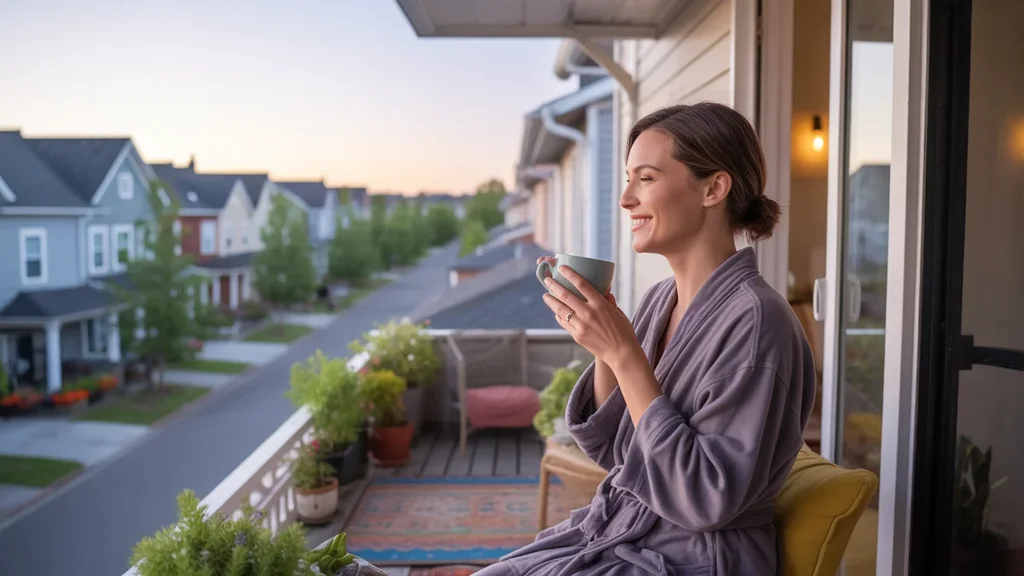
What It Actually Feels Like to Live Here
Apex’s emotional tone is shaped by tradeoffs that aren’t immediately obvious from the marketing. The town has genuinely integrated green space — park density is high, water features are present, and outdoor access feels woven into daily life rather than bolted on. If you value trail access, greenways, and the ability to get outside without driving across town, Apex delivers.
But the family infrastructure is surprisingly thin. School density and playground density both fall below typical suburban thresholds. That doesn’t mean schools don’t exist or that kids don’t play here — it means the amenity density that families often expect in a “top suburb” isn’t uniformly present. If you’re moving here assuming every neighborhood has a playground within walking distance and multiple school options nearby, you may need to adjust.
Mobility is another layer. Apex has walkable pockets — the pedestrian-to-road ratio is high, and bike infrastructure is notable throughout parts of the city. But transit is bus-only, and errands are clustered along corridors rather than distributed evenly. That creates a lived experience where some residents can walk or bike to groceries and feel genuinely less car-dependent, while others find themselves driving for nearly everything despite the infrastructure existing somewhere nearby.
The urban form is mixed-height with both residential and commercial land use present, which signals a town in transition. Apex isn’t a static bedroom community. It’s adding density, evolving its character, and that evolution creates tension: long-time residents feel the pace of change, newcomers sometimes feel caught between suburban quiet and urban convenience.
Social Media Buzz in Apex
Online discussion about Apex tends to circle around a few recurring emotional themes: pride in the town’s outdoor quality, frustration with growth and traffic, protectiveness over what makes Apex distinct, and a low-level fatigue with the “Peak of Good Living” branding that doesn’t always match day-to-day logistics.
On platforms like local Facebook groups and regional subreddits, you’ll see celebration of the greenways and parks — people genuinely appreciate that outdoor access is strong here. But you’ll also see complaints about how hard it is to get anywhere without a car, even though bike lanes exist. The gap between infrastructure presence and transit utility comes up often.
“I love that we have trails and bike paths, but let’s be real — you still need a car for basically everything. The bus isn’t going to get you to work or daycare on time.”
“Apex has this reputation as family-perfect, but we struggled to find a neighborhood with a playground that wasn’t a 10-minute drive. It’s green, sure, but it’s not as walkable-with-kids as we thought.”
“If you want quiet, space, and access to Raleigh when you need it, Apex is great. If you want nightlife, walkable downtown energy, or not owning a car — look elsewhere.”
There’s also a thread of ambivalence about growth. People acknowledge that Apex is changing, adding amenities, getting denser — but there’s worry about whether the infrastructure (roads, schools, services) is keeping up with the population.
Local News Tone
Local coverage of Apex tends to frame the town through the lens of growth management, identity preservation, and infrastructure adaptation. The tone is rarely crisis-oriented, but it’s not purely celebratory either. There’s a steady hum of “how do we grow without losing what we are?”
Here are the kinds of recurring topic frames you’ll see in Apex-related coverage:
- “Community Debates What Growth Should Look Like”
- “New Retail and Dining Options Arrive as Town Expands”
- “Residents Weigh Convenience Against Charm”
- “Greenway Expansions Continue to Draw Outdoor Enthusiasts”
- “Traffic and Commute Times Become Growing Concern”
The framing reflects a town caught between two identities: the small-town suburb it was, and the denser, more commercial place it’s becoming. That tension isn’t resolved, and the coverage reflects that ambiguity.
Review-Based Public Perception
When people leave reviews or post about their experience in Apex on platforms like Google, Yelp, or neighborhood apps, the tone splits predictably along expectation lines.
People who wanted suburban comfort, outdoor access, and proximity to Raleigh tend to be pleased. They praise the greenways, the grocery options (grocery density is genuinely high), the relative quiet, and the sense of safety. They describe Apex as “exactly what we needed after city life” or “a great place to raise kids if you don’t mind driving.”
People who wanted walkable urbanism, transit utility, or dense family amenities tend to feel let down. They mention that the walkability is “patchy,” that you can’t rely on the bus, that housing tradeoffs often mean choosing between affordability and access, and that the town feels more car-dependent than the bike lanes suggest.
Neighborhood variation matters here, but it’s not always clear upfront. Newer planned areas may have sidewalks and greenway access but lack nearby schools or parks. Older pockets may have charm and trees but fewer pedestrian connections. The experience of Apex depends heavily on which part of town you land in, and that’s not always obvious during a weekend visit.
Comparison to Nearby Cities
| Dimension | Apex | Cary | Holly Springs |
|---|---|---|---|
| Outdoor Access | Strong, integrated greenways and parks | Excellent, highly developed park system | Growing, but less mature infrastructure |
| Walkability | Pockets of high walkability, not uniform | More consistent across neighborhoods | Limited, newer development patterns |
| Family Amenities | Lower density of schools and playgrounds | High density, strong reputation | Moderate, expanding with growth |
| Transit Options | Bus-only, limited utility | Bus-only, slightly more routes | Minimal, car-dependent |
| Growth Pace | Steady, visible change | Rapid, well-established infrastructure | Very rapid, infrastructure catching up |
| Vibe | Active, transitional, slightly edgier | Polished, family-optimized, predictable | Newer, quieter, still forming identity |
Apex sits between Cary’s polished suburban density and Holly Springs’ rapid-growth newness. If you want the most consistent family infrastructure and don’t mind paying for it, Cary tends to deliver more uniformly. If you want newer construction and are willing to trade some amenity maturity for space and price, Holly Springs may fit. Apex offers a middle path: more texture and outdoor access than Holly Springs, less predictability and family density than Cary, and a vibe that feels slightly less manicured.
None of these towns will work if you need transit-based living or dense urban walkability. But within the car-dependent suburban spectrum, they offer different emotional experiences.
What Locals Are Saying
“We moved here from Raleigh and love the greenway access. I can bike to the grocery store from our neighborhood, which I didn’t expect in a suburb. But getting to work still means driving — the bus schedule doesn’t line up.”
— Remote worker who values outdoor access
“Apex has a lot going for it, but we were surprised how few playgrounds there are near us. We thought ‘top suburb’ meant parks everywhere. It’s green, but not always kid-infrastructure green.”
— Parent of young children
“If you like the idea of a downtown but don’t need it every day, Apex is great. You’re close to Raleigh and Durham when you want energy, but you come home to quiet and trees.”
— Young professional couple
“Traffic has gotten noticeably worse in the last few years. It’s not terrible, but it’s not the sleepy suburb it was when we moved here.”
— Long-time resident
“I appreciate that Apex has bike lanes and greenways, but I still drive everywhere. The infrastructure is there, but the distances and lack of transit make it hard to actually use it for daily errands.”
— Mid-career professional
“We love it here. It’s safe, the schools are good, and we’re close to everything we need. Yes, you need a car, but that’s true everywhere around here.”
— Family who prioritized space and safety
“Apex feels like it’s trying to be two things at once — a small town and a growing suburb. That’s fine, but it creates some friction. You get the growth without always getting the amenities that come with it.”
— Newcomer adjusting expectations
Does Apex Feel Like a Good Fit?
Apex works well for people who value outdoor access, want proximity to Raleigh without living in it, and are comfortable with car dependency despite the presence of bike and pedestrian infrastructure. It works for active adults, remote workers who prioritize greenways and trails, and families who can navigate the lower density of schools and playgrounds without frustration.
It tends to frustrate people who expect uniform suburban amenities, who want transit utility, or who assume “walkable pockets” means “walkable everywhere.” The gap between infrastructure presence and daily convenience creates friction for households that don’t choose their neighborhood carefully.
Apex is in transition. It’s adding density, evolving its character, and that means the experience of living here depends heavily on timing, location, and expectations. If you’re drawn to a place that’s layered, outdoorsy, and a bit less predictable than the polished suburban norm, Apex may feel right. If you want consistency, deep family infrastructure, and a stable identity, you may feel the growing pains more sharply.
Understanding what a budget has to handle in Apex and what ‘enough’ actually means can help you decide whether the tradeoffs here align with how you actually live.
How this article was built: In addition to public economic data, this article incorporates location-based experiential signals derived from anonymized geographic patterns—such as access density, walkability, and land-use mix—to reflect how day-to-day living actually feels in Apex, NC.
The perspectives shown reflect commonly expressed local sentiment and recurring themes in public discussion, rather than individual accounts.