
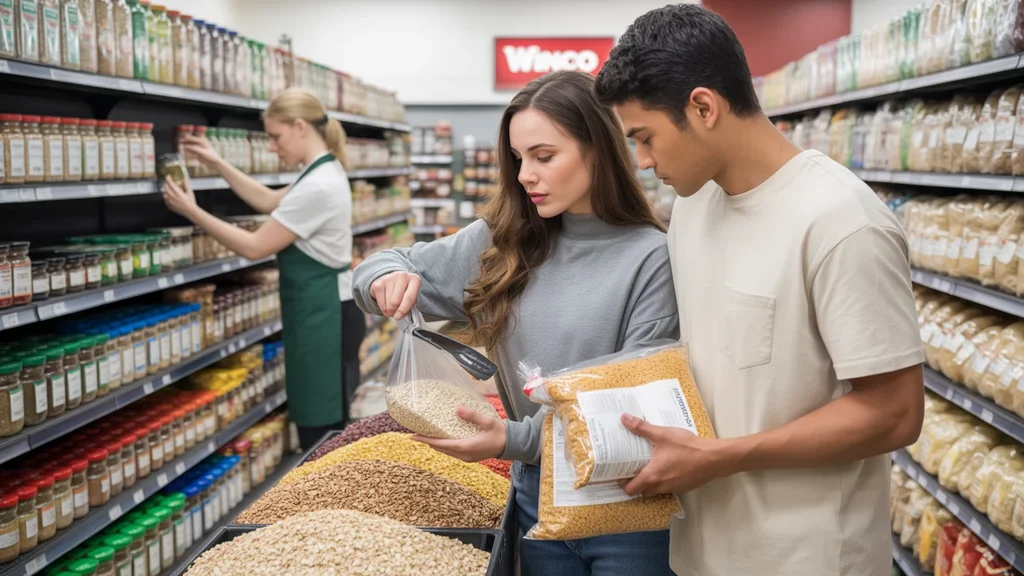
How Grocery Costs Feel in Oklahoma City
Grocery prices in Oklahoma City sit below the national average, thanks to a regional price parity index of 91—meaning the same basket of goods costs roughly 9% less here than in a typical U.S. metro. That difference shows up most clearly for families buying in volume: a pound of chicken runs around $1.86, ground beef $6.13, and a dozen eggs $2.27. For households stretching a paycheck, those gaps add up over the course of a month. But the experience of grocery shopping here isn’t just about unit prices—it’s shaped by where stores are located and how far you’re willing to drive to find them.
Singles and young professionals notice grocery costs differently than families do. When you’re buying for one, a few dollars saved per item doesn’t move the needle as much as it does when you’re filling a cart for four. The lower baseline helps, but smaller households also can’t take full advantage of bulk pricing or multi-pack discounts. Families with children, on the other hand, feel the benefit of Oklahoma City’s below-average prices more acutely. Buying chicken, rice, milk, and bread week after week means every percentage point of savings compounds. For retirees on fixed incomes, the pressure depends heavily on store choice—discount grocers offer meaningful relief when the regional baseline is already lower than most of the country.
Grocery shopping in Oklahoma City often means driving to specific corridors where stores cluster, rather than walking to a nearby neighborhood market. Food establishments are concentrated in certain areas, and while grocery density is moderate, it’s not evenly distributed across the city. This changes how households think about trip frequency and bulk buying. If your nearest discount grocer is a 15-minute drive, you’re more likely to shop once a week and load up, rather than making quick stops for fresh items. That pattern favors households with cars, storage space, and the ability to plan meals in advance—and it quietly disadvantages anyone relying on transit or living in areas farther from those retail corridors.
Grocery Price Signals (Illustrative)
These prices illustrate how staple items tend to compare locally—not a full shopping list. They’re derived estimates based on national baselines adjusted for regional price differences, and they don’t reflect store-level promotions, seasonal variation, or brand choice. Think of them as anchors for understanding relative cost pressure, not as checkout-accurate figures.
| Item | Price |
|---|---|
| Bread | $1.68/lb |
| Cheese | $4.26/lb |
| Chicken | $1.86/lb |
| Eggs | $2.27/dozen |
| Ground Beef | $6.13/lb |
| Milk | $3.66/half-gallon |
| Rice | $0.98/lb |
Derived estimate based on national baseline adjusted by regional price parity; not an observed local price.
Ground beef and cheese sit at the higher end of this list, which matters for households that rely on those proteins regularly. Rice and bread, by contrast, remain inexpensive staples that stretch across multiple meals. The gap between the cheapest and most expensive items on this list hints at where substitution and meal planning can reduce pressure—but only if you have the time, knowledge, and kitchen setup to cook from scratch.
Store Choice & Price Sensitivity
Grocery price pressure in Oklahoma City varies more by store tier than by a single “average” experience. Discount grocers—think no-frills layouts, limited brands, and frequent private-label options—offer the lowest prices and appeal most to households managing tight budgets or trying to maximize savings. Mid-tier chains provide more variety, better produce selection, and name-brand options, but at a noticeable markup over discount competitors. Premium grocers emphasize organic selections, specialty items, and prepared foods, and their pricing reflects that positioning. The same cart of staples can swing by 20% or more depending on where you shop, and that gap widens further if you’re buying organic, pre-prepped, or specialty diet items.
For families, the choice between discount and mid-tier stores often comes down to trade-offs between time and money. Discount grocers save dollars but may require visiting multiple stores to find everything on your list, especially if you need fresh herbs, specialty flours, or ethnic ingredients. Mid-tier stores consolidate that effort but charge for the convenience. Singles and young professionals, who buy smaller quantities and prioritize speed, often lean toward mid-tier or premium options even when they know they’re paying more per item. Retirees on fixed incomes tend to favor discount grocers, especially when they have the flexibility to shop during off-peak hours and the patience to compare unit prices carefully.
Store location also plays a role. In Oklahoma City, grocers cluster along major corridors rather than spreading evenly across neighborhoods. If you live near a discount grocer, you benefit from both lower prices and shorter drive times. If your closest option is a premium chain, you’re either paying the markup or driving farther to save. That geography quietly reinforces cost differences between households, even when incomes are similar.
What Drives Grocery Pressure Here
Income is the most obvious factor shaping grocery pressure, but it’s not the only one. Oklahoma City’s median household income sits at $64,251 per year, which positions many families in a zone where groceries are affordable in aggregate but still require conscious planning. A household earning near the median can handle the city’s below-average grocery prices without severe strain, but there’s little room for waste, impulse buys, or frequent premium-tier shopping. Households earning below the median—especially those with children—feel the pressure more acutely, and store choice becomes a necessity rather than a preference.
Household size amplifies cost sensitivity in both directions. A single adult buying chicken, eggs, and rice for the week spends less in absolute terms but can’t take advantage of bulk pricing or family-pack discounts. A family of four buying the same items in larger quantities benefits from per-unit savings but faces a much higher total at checkout. That dynamic makes Oklahoma City’s lower baseline prices more valuable for larger households, but it also means those households are more exposed to price swings on high-volume staples like milk, bread, and ground beef.
Regional distribution and access patterns also matter. Because grocery stores cluster along corridors rather than spreading evenly, some households face longer drives to reach their preferred store tier. That adds time and fuel costs to the grocery equation, and it can push households toward shopping less frequently and buying more per trip. Seasonal variability—while not extreme in Oklahoma City—still affects produce prices and availability, especially for items that don’t grow well in the region’s hot summers. Households that cook seasonally and adjust their shopping habits around what’s abundant tend to experience less price pressure than those buying the same items year-round.
Practical Ways People Manage Grocery Costs
Households in Oklahoma City use a mix of behavioral strategies to keep grocery spending under control. Shopping at discount grocers is the most direct lever—switching from a mid-tier chain to a discount option reduces per-item costs without requiring any change in what you buy. Buying store brands instead of name brands offers similar savings, especially on pantry staples like rice, pasta, canned goods, and dairy. Planning meals around what’s on sale each week helps avoid paying full price for proteins and produce, though it requires flexibility in what you cook and the willingness to adjust recipes based on availability.
Buying in bulk works well for non-perishable items and proteins that freeze easily, but it requires upfront cash and storage space. Households with chest freezers and pantry room benefit most from this approach. Cooking from scratch rather than buying pre-prepped or convenience items reduces costs significantly, but it assumes time, skill, and access to a functional kitchen. For households working multiple jobs or managing unpredictable schedules, that trade-off doesn’t always pencil out.
Reducing food waste—using leftovers intentionally, storing produce properly, and freezing items before they spoil—helps stretch what you’ve already bought. It’s not glamorous, but it’s one of the most effective ways to lower effective grocery costs without spending less at the store. Avoiding impulse purchases and sticking to a list also helps, though it requires discipline and a clear sense of what you actually need versus what looks appealing in the moment.
Groceries vs Eating Out (Directional)
The tradeoff between cooking at home and eating out shapes grocery pressure in ways that aren’t always obvious. Cooking at home in Oklahoma City benefits from below-average ingredient costs, but it also requires time, energy, and planning. A household that cooks most meals from scratch will spend less on food overall than one that relies heavily on takeout or dining out, but the gap depends on what you’re cooking and where you’re eating. A home-cooked meal built around chicken, rice, and vegetables costs a fraction of a restaurant entrée, but a quick fast-food meal can sometimes undercut a poorly planned grocery trip that results in wasted produce or unused ingredients.
For singles and young professionals, the convenience of eating out often outweighs the cost savings of cooking, especially when factoring in the time required to shop, prep, cook, and clean. For families, the math tilts heavily toward home cooking—feeding four people at a restaurant adds up quickly, while the same staples stretched across multiple meals at home keep costs manageable. Retirees with more time and fixed incomes tend to cook at home more consistently, both to control costs and because they’re less pressed for time.
The key insight is that groceries and dining out aren’t strictly substitutes—they serve different needs around convenience, time, and social experience. Households that treat them as interchangeable often end up spending more on both, because they’re not optimizing for either. The most cost-effective approach is usually cooking at home most of the time and eating out selectively, but that requires the kind of routine and meal-planning discipline that doesn’t come naturally to everyone.
FAQs About Grocery Costs in Oklahoma City (2026)
Is it cheaper to shop in bulk in Oklahoma City? Bulk buying reduces per-unit costs on non-perishables and proteins that freeze well, but it requires upfront cash and storage space. Households with freezers and pantry room benefit most from this approach.
Which stores in Oklahoma City are best for low prices? Discount-tier grocers offer the lowest prices, though they may carry fewer brands and require visiting multiple locations for specialty items. Mid-tier chains cost more but consolidate variety and convenience.
How much more do organic items cost in Oklahoma City? Organic premiums vary by item and store tier, but they generally add noticeable cost. Households prioritizing organic products should expect to pay more and may need to shop at premium-tier grocers for consistent selection.
How do grocery costs for two adults in Oklahoma City tend to compare to nearby cities? Oklahoma City’s below-average regional price parity (91) suggests lower grocery costs than many metros, though the actual difference depends on store choice, diet, and shopping habits. Nearby cities with higher price indices will generally feel more expensive for the same basket of goods.
How do households in Oklahoma City think about grocery spending when cooking at home? Most households balance cost, convenience, and variety by mixing discount grocers for staples with mid-tier stores for fresh produce and specialty items. Cooking from scratch and planning meals around sales are common strategies for managing pressure.
Does grocery pressure in Oklahoma City vary by neighborhood? Yes—store access clusters along corridors rather than spreading evenly, so households farther from those retail zones face longer drives and may shop less frequently. That geography quietly reinforces cost differences even when incomes are similar.
Are grocery costs in Oklahoma City rising faster than income? Price trends shift over time, but the regional baseline remains below the national average. Households feel pressure most when income growth lags behind price increases on high-volume staples like milk, eggs, and meat.
How Groceries Fit Into the Cost of Living in Oklahoma City
Groceries sit in the middle tier of household expenses in Oklahoma City—less dominant than housing, but more variable than utilities. For a household earning near the median income of $64,251 per year, food costs are manageable when approached with planning and discipline, but they’re also one of the few categories where behavior and store choice create immediate, controllable savings. That makes groceries a useful lever for households trying to reduce overall cost pressure without moving, changing jobs, or renegotiating fixed expenses.
The interplay between groceries, housing, and transportation matters more than any single category in isolation. A household that saves money by living farther from grocery corridors may spend those savings—and more—on commute time and fuel. A household that prioritizes walkable access to mid-tier grocers may pay more per item but save on transportation costs and time. These tradeoffs don’t resolve neatly into a single “right answer,” and they shift depending on household size, income, and priorities. For a full picture of what a budget has to handle in Oklahoma City, including how groceries interact with rent, utilities, and transportation, the Monthly Budget article provides the detailed breakdown this piece intentionally avoids.
The most useful way to think about groceries in Oklahoma City is as a category where small, repeated decisions compound over time. Choosing a discount grocer over a premium chain, planning meals around sales, and reducing food waste won’t transform your financial situation overnight, but they create consistent, measurable relief in a city where the baseline is already below the national average. That advantage is real, but it’s not automatic—it requires the kind of intentional shopping and cooking habits that take effort to build and maintain.
How this article was built: In addition to public economic data, this article incorporates location-based experiential signals derived from anonymized geographic patterns—such as access density, walkability, and land-use mix—to reflect how day-to-day living actually feels in Oklahoma City, OK.