
“We thought we’d have more breathing room here. The rent was lower than Dallas, sure—but between the AC bills in summer and driving everywhere, it didn’t feel like we’d actually saved anything.”
That’s how a lot of people describe their first year in Oklahoma City: not disappointed, exactly, but surprised by where the money actually goes. The sticker prices look manageable. The pressure shows up in the details.
This article explains how income pressure and comfort actually work in Oklahoma City—not through budgets or calculators, but by walking through the tradeoffs that define daily life here. It’s written for people trying to judge whether their income and expectations align with what this place asks of you.
What “Living Comfortably” Means in Oklahoma City
Comfort in Oklahoma City doesn’t mean luxury. It means your housing choice isn’t dictated by desperation, your utility bills don’t rewrite your month, and you’re not calculating whether a second errand trip is worth the gas.
It means you can absorb a $150 summer electricity spike without rearranging other spending. It means you have more than one viable neighborhood to choose from. It means transportation is a time question, not a cost question.
For many households, comfort also means space—a yard, a second bedroom, a garage. Oklahoma City delivers on that expectation more easily than many metro areas. But space comes with its own costs: cooling it, maintaining it, and driving to and from it.
Comfort here is less about income level and more about whether your lifestyle assumptions match the city’s structure. If you expect walkable errands, frequent transit, or stable monthly costs, you’ll feel pressure even at higher incomes. If you’re comfortable driving, planning around corridors, and managing seasonal swings, the same income stretches further.
Where Income Pressure Shows Up First
Housing is the first decision, but it’s not the biggest source of stress for most people. At $1,012 per month, median rent is accessible compared to many metros. Ownership at a median home value of $196,700 is within reach for households with stable income and some savings.
The pressure comes from the tradeoff between location and cost. Affordable housing exists, but it’s often far from the walkable pockets or mixed-use corridors where errands and amenities cluster. Proximity costs more—not because rents are extreme, but because the supply of convenient housing is limited.
Utility costs create the second wave of pressure, and it’s seasonal. Summers in Oklahoma City bring extended heat, and cooling dominates household energy use. An electricity rate of 12.62¢ per kilowatt-hour is moderate, but high usage months can double bills. Natural gas at $11.08 per thousand cubic feet supports heating in winter, but the cooling season is longer and more intense.
Households that budget tightly feel this volatility acutely. Comfort means having enough cushion to absorb a $100–$200 summer spike without cutting other spending.
Transportation is the third pressure point, and it’s structural. Oklahoma City has rail transit and notable bike infrastructure in some areas, but daily errands remain corridor-clustered. Groceries, pharmacies, and routine needs are accessible—but usually by car, and usually with planning.
Gas at $3.26 per gallon and a 22-minute average commute mean most households spend meaningful money and time in the car each week. For families, this compounds: school runs, activities, and errands don’t align geographically, so trips multiply.
For families specifically, infrastructure is strong—schools and playgrounds meet density thresholds across much of the city—but they’re dispersed. That means logistics complexity, not cost per se, becomes the hidden expense. Time spent coordinating, driving, and managing schedules adds pressure that doesn’t show up in a budget.
How the Same Income Feels Different by Household
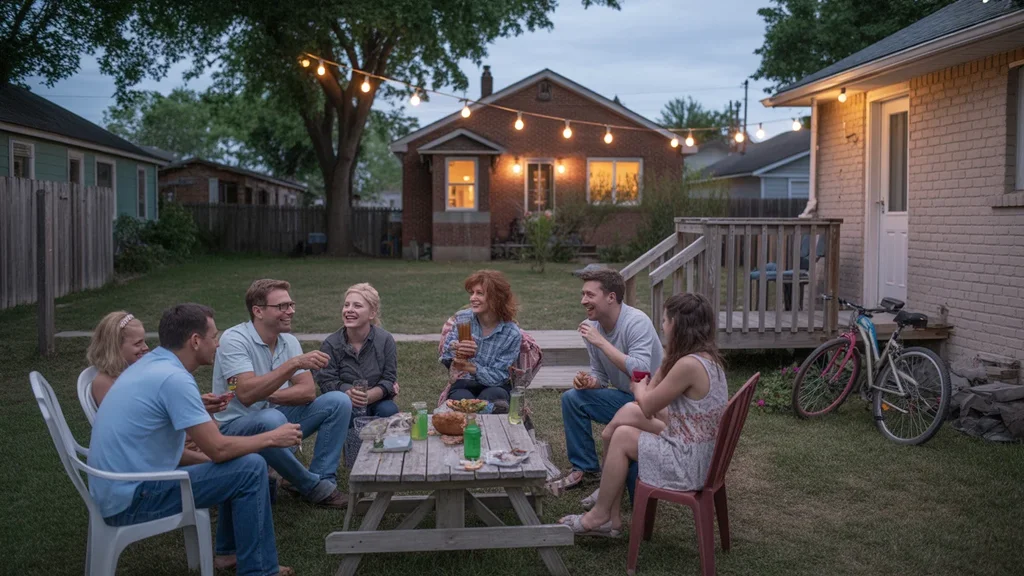
A single adult earning $50,000 gross annually (about $4,165 per month before taxes) can live comfortably in Oklahoma City if they’re willing to drive and plan. Rent on a one-bedroom apartment is manageable, utilities are controllable in a smaller space, and transportation costs are predictable. The limitation is convenience: walkable neighborhoods with frequent amenities cost more, and without them, errands require intention.
A couple with no children and a combined gross income of $75,000 annually (roughly $6,250 per month before taxes) has more flexibility. They can choose proximity over space, or space over walkability, depending on priorities. Dual incomes also create cushion against seasonal utility swings and transportation variability. Comfort, for this household, comes from choice—they’re not locked into one housing type or one part of town.
A family of four at $85,000 gross annually (about $7,085 per month before taxes) faces tighter margins, even though the income is higher. Larger housing means higher cooling costs. Multiple drivers or activity schedules mean more transportation spending and time. Strong school and playground infrastructure supports family life, but it doesn’t reduce the logistics burden—it just makes it viable.
Households at similar income levels often experience very different pressure depending on how much driving they’re willing to do, how much seasonal bill volatility they can absorb, and whether their expectations include walkable access or just functional access.
The Comfort Threshold (Qualitative)
Comfort in Oklahoma City begins when you stop choosing housing based solely on affordability and start choosing based on fit. It’s the point where you have two or three viable options in different parts of town, not just one.
It’s when a $150 summer utility bill is annoying, not destabilizing. When you can decide whether to combine errands into one trip or make two without checking your account first.
It’s when transportation becomes a question of time and convenience rather than cost and feasibility. When saving becomes plausible, not aspirational.
For some households, this threshold arrives at $60,000 gross annually. For others—especially families or those with specific location expectations—it’s closer to $80,000 or $90,000. The difference isn’t income alone. It’s how much flexibility you need, how much volatility you can manage, and how much time you’re willing to spend in the car.
Why Online Cost Calculators Get Oklahoma City Wrong
Most cost-of-living calculators treat Oklahoma City as a data point: median rent, average utilities, typical transportation. They produce a total, and that total looks reasonable.
But totals don’t explain why two households at the same income feel completely different levels of pressure. They don’t capture the difference between living near a mixed-use corridor and living in a neighborhood where the nearest grocery store is a 15-minute drive. They don’t account for the fact that cooling costs vary wildly depending on housing age, insulation, and exposure.
Calculators assume you’ll behave like the median household. But comfort depends on whether your actual behavior—how often you drive, how much space you need, how you react to bill swings—aligns with the city’s structure.
People feel surprised after moving because they assumed affordability meant ease. In Oklahoma City, affordability is real, but it comes with conditions: you’ll drive more than you expect, plan more than you’d prefer, and absorb more monthly variability than a single average suggests.
How to Judge Whether Your Income Fits Oklahoma City
Instead of asking “Is my income enough?”, ask these questions:
How sensitive are you to housing tradeoffs? If you need walkable access to groceries, dining, and services, you’ll pay more and have fewer options. If you’re comfortable driving and planning, your housing dollar stretches further.
Can you absorb seasonal utility swings? If a $150–$200 summer spike would force you to cut other spending, you’ll feel pressure even at moderate income levels. If you can smooth that volatility with savings or flexible spending, it’s manageable.
Is time or money your limiting factor? Oklahoma City trades lower costs for higher time investment. Errands, commutes, and family logistics require driving and coordination. If your schedule is tight, that tradeoff may cost more than the rent you save.
How much month-to-month flexibility do you expect? Bills here aren’t stable. Utilities swing with the season. Transportation costs vary with gas prices and trip frequency. Comfort requires either income cushion or spending discipline.
Do you have access to the infrastructure you need? Schools and parks are well-distributed. Healthcare is locally available for routine needs, but hospital access may require travel. If your household has specific medical, educational, or accessibility needs, proximity becomes a cost factor.
Living Comfortably in Oklahoma City: What People Really Want to Know
Is $60,000 a year enough to live comfortably in Oklahoma City?
For a single adult or a couple without children, $60,000 gross annually (about $5,000 per month before taxes) usually provides comfort—assuming you’re willing to drive for errands and can absorb seasonal utility swings. For a family, that income creates tighter margins, especially if you need larger housing or have multiple transportation needs.
Why do people say Oklahoma City is affordable but still feel financially stretched?
Because affordability here isn’t about low costs—it’s about tradeoffs. Rent and home prices are accessible, but transportation, utilities, and time costs are higher than many people expect. The structure of the city requires planning, driving, and flexibility, and those demands add pressure that doesn’t show up in a median rent figure.
Do you need a car to live comfortably in Oklahoma City?
For most households, yes. Rail transit exists, and some neighborhoods have strong bike infrastructure, but daily errands remain car-dependent for the majority of residents. Groceries, pharmacies, and services are corridor-clustered, not neighborhood-integrated. Comfort without a car is possible in a few walkable pockets, but it limits housing choice and requires significant lifestyle adjustment.
How much do utilities actually cost in the summer?
That depends on housing size, age, and insulation—but extended heat and long cooling seasons mean summer electricity bills often run $100–$200 higher than winter months for typical households. The rate is moderate, but usage is high. Comfort means budgeting for that swing, not being surprised by it.
Is Oklahoma City a good place for families on a budget?
It can be, but only if your budget includes time as well as money. Schools and playgrounds are well-distributed, and housing is more accessible than in many metros. But family logistics—driving kids to school, activities, and errands—require coordination and fuel. Families feel comfortable here when they have enough income to absorb transportation and utility variability, and enough schedule flexibility to manage the driving.
How this article was built: In addition to public economic data, this article incorporates location-based experiential signals derived from anonymized geographic patterns—such as access density, walkability, and land-use mix—to reflect how day-to-day living actually feels in Oklahoma City, OK.
Oklahoma City can work well for some households—but only if expectations match reality. Comfort here isn’t about hitting an income threshold. It’s about understanding where your money goes, what the city asks of you in return, and whether that tradeoff aligns with how you actually want to live.